What makes a true leader? Fancy job title, fat salary or the courage to stand up for what you believe in?

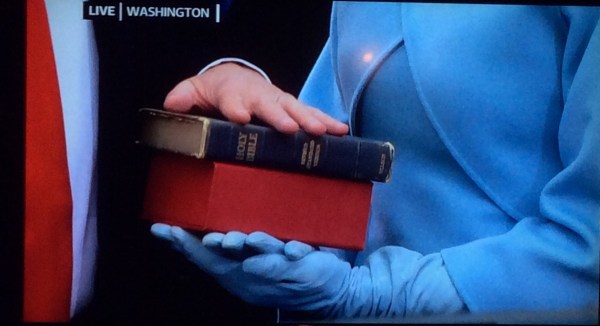
Watching President Trump’s inauguration and the events that have followed has made me think about the history of the civil rights movement in America. It’s clear to see that civil rights and human rights in the US are at threat under the new president. His first day was marked by women’s marches in major cities throughout the world and he is already taking forward decisions that many people feared.

The first action has been to sign an executive order begin the process to repeal Obamacare. He has reinstated the Mexico City Policy known as the Global Gag rule which withholds US foreign aid money to NGOs that provide abortions and abortion counselling. He has signed two executive orders which will build that wall he’s talked so much about, boost border patrol forces and increase the number of immigration enforcement officers who carry out deportations. And today he has been advocating torture which has made me especially glad to be an Amnesty International donor!

All of this has driven me to rewatch films like Selma and The Help to remind me of how far America has come and how much it has to lose. In turn, these films have reminded me of a key leadership quality – the courage of conviction and willingness to risk everything to defend what you believe in. This is what marks out the great leaders of the world.

Nelson Mandela gave a 3 hour speech at the Rivonia Trial in 1964 where he and others were accused of sabotage. He concluded his speech by setting out his vision for equality and harmony. So strong was his belief that he finished his speech saying that he would give his life to achieve the ideal he dreamed of:

“During my lifetime I have dedicated my life to this struggle of the African people. I have fought against white domination, and I have fought against black domination. I have cherished the ideal of a democratic and free society in which all persons will live together in harmony and with equal opportunities. It is an ideal for which I hope to live for and to see realised. But, My Lord, if it needs be, it is an ideal for which I am prepared to die. Nelson Mandela, 1964

In the film Selma, directed by Ava Duvernay, we see the great Martin Luther King lead a march from Selma to Montgomery which had been prevented previously by state troupers by force of violence. During his campaign for civil rights, King was arrested many times, had his house bombed and was finally assassinated in 1968. He believed so much that what he was calling for was the right thing that he continued even though he risked his own personal safety and freedom.

Disney’s The Help portrays the same conviction when a budding journalist asks the African-American maids to tell their stories. In the film, the women she interviewed knew that they were likely to lose their jobs if they were identified, they could have their house burned down or even be killed for telling their story. They did it anyway and showed great courage in doing so.

And that’s it for me – a fundamental leadership quality – the courage to stand up for what you believe in regardless of the consequences. If we didn’t have people like that, we would never achieve any change. These leaders often are not the leaders with the fancy job title and fat salary. These are community leaders and individuals who are willing to put themselves on the line to speak out against injustice. Those people are the real leaders in our society.

3minuteleadership.org
5 articles that explore Trump’s leadership style

Just a couple of days ago, people all around the world tuned into watch Donald Trump become the 45th President of the United States. This was a moment that evoked strong feelings from hope to horror amongst those who looked on.

Those who have suffered from the loss of jobs as industry moved on and moved elsewhere hope for a new economic strategy with more jobs for local people. Those who care about issues such as climate change, gender equality, race equality, disability and gay rights fear that this is a leader who could set the nation back several decades.

The feeling of progress and unification that came with Obama’s in auguration was sadly lacking. Instead, an environment of uncertainty and unrest was evident in the protest marches that followed.

Love him or hate him though, as a Sky news presenter commented ‘there is no denying that this is a leader of some significance’. Over the last 18 months, there has been a great deal of analysis and comment on Trump’s style and why, despite his divisive approach, he has gained enough support to win the election and become the world’s most powerful leader.

Here are 5 articles that explore his style, tactics and his influence on the leadership debate:
1) 5 things Donald Trump can teach us about leadership
Recognising that he doesn’t appeal to everyone, the new President of the United States can still teach us a few things about leadership. This article explores what we can learn from him on decision making, goal setting, confidence and more.

2) The leadership tactics of Donald Trump

This Psychology Today blog looks at some of Trump’s tactics such as a strong leader persona; how he has used ‘them and us’ to create a strong position and get people onside; and how he ‘gets things done’. This article also provides some thoughts on what might be considered good and bad leadership.

3) Donald Trump’s leadership style in 5 words

5 words from Management Today which describe Trump’s leadership style. Set out as a charismatic leader along side other names such as Martin Luther King and Adolf Hitler, this article pinpoints some secrets of success that leaders could emulate in their own place of work. These are mostly self-serving such as ‘aggression’, ‘deals’ and ‘ambition’, concentrating on individual success.

4) Does Trump’s rise spell the end of empathetic leadership?

In recent years, much of the debate around good leadership has been about authenticity, vulnerability, compassion and integrity. This article from The Fast Company explores what Trump’s success might mean for leadership in general and whether it means the end of empathetic leadership.

5) Leadership lessons from Donald Trump

Love him or hate him, there is no denying he has displayed strong leadership skills. He is certainly ‘rock-solid confident’, certain of the vision and able to communicate it in simple terms, capturing the interest of observers all over the world. This article explains what leadership lessons we can learn from the new US President and how this contrasts with a feminine leadership style.
And if, like me, you don’t think this could ever be your style, you might prefer this article from Inc.com: 5 leadership lessons from Obama.


3minuteleadership.org

Lessons from the ultimate women’s leadership role model in Netflix ‘The Crown’

As the longest serving British monarch, the Queen is one of the most prominent and powerful leaders in the world. She has reigned over the United Kingdom, Canada, Australia and New Zealand since 1952, is the Head of the Commonwealth and also holds the title of Commander in Chief of the British Armed Forces.

The ultimate role model, not only is she a prominent female leader but she was also a driver and mechanic in the Women’s Auxiliary Territorial Service during the Second World War, paving the way for women in non-traditional roles. Such a fascinating woman, it’s no surprise that Netflix have decided to dramatise the early years of her life on the throne.

Beginning the series as a princess, we are introduced to Elizabeth after Phillip officially becomes a Duke. We first see her framed in a doorway which indicates her on the outside rather than front and centre where she moves to not long after. During this early part of the series, Philip seems very much in charge. For example, in one of the early scenes, the princess asks him to stop smoking and he continues regardless, clearly indicating power and dominance.

In Episode 2, they travel to Nairobi on official business. The princess has to give a speech and we see her nervous, supported by her now husband Philip nodding his encouragement. On the trip, she is depicted as girlish; a young wife on a fabulous adventure with a husband she admires.

Then things change as Elizabeth receives the news that her father has passed away. All of a sudden, she is catapulted into the spotlight and it is suddenly ultra important that she is able to show leadership.

She spends her first days as Queen looking shocked at being thrust into a role with such responsibility at an unexpected time. The weight of what is happening is communicated in her wide eyes and meaningful looks between her and her husband not to mention the way her body freezes when she first hears the words ‘God save the Queen’.

Leadership Lesson 1 – Always look the part 

As monarch, it is important to always dress appropriately for the role.  After the news is announced that the King has passed away, Elizabeth must return home from Nairobi.  It becomes apparent that no-one has packed a black dress and so something has to be delivered to the plane before she can disembark in England Obviously, a Queen has to look the part at all times and when the outfit is complete we can see an immaculate presentation with full accessories perfectly in place.

Leadership lesson 2 – once you’re in that leadership role, you have a duty to be a leader at all times

As she is dressed in her mourning clothes, her grandmother is reading a letter to her:
‘Elizabeth Mountbatten has now been replaced by Elizabeth Regina. The two Elizabeth’s will frequently be in conflict with one another. The fact is, the Crown must win. must always win.’

She then prepares to leave the plane and step on to home soil as the Queen of England. For the first time, we see that her husband no longer has the upper hand. In an exchange with the Queen’s Private Secretary as they prepare to disembark, Philip says ‘It’s alright, I’ll escort her down from there’ to which the Private Secretary responds ‘No sir, if you don’t mind, the Crown takes precedence’.

The look of fear and horror from Elizabeth indicates the magnitude of the shift. She then turns towards the door and walks through it, in to the light and down the stairs as her husband follows quickly behind her.

Leadership lesson 3 – know your weaknesses and take action to develop knowledge or skills when necessary

Lots of things change for Elizabeth and one of my favourite episodes finds her asking for a tutor because her level of education prevents her from making meaningful discussion with politicians and statesmen. She recognises her shortcomings takes the positive step to increase her knowledge so that she can do the job more effectively.

Leadership lesson 4 – never give your word and break your promise

Finally, a criticism of what we see of her as a leader is the many u-turns she makes and promises she breaks. What that tells us is the importance of seeking good advice before making decisions. Something I believe a good leader should never do is give your word and then go back on it.

3minuteleadership.org

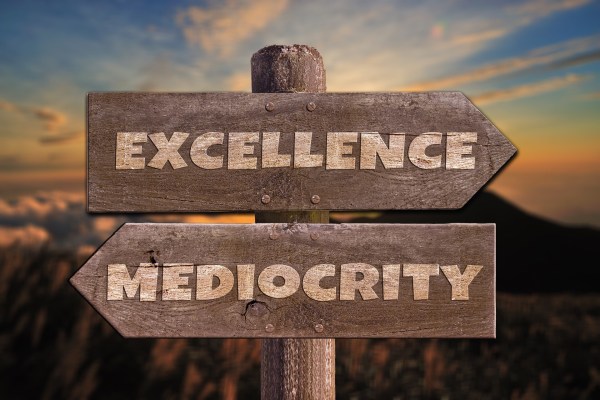
Why settle for mediocre? Aim to make your people outstanding

It’s that time of year for me when I’m talking to people about performance over the last six months. 

Committed to helping people be the best they can be and also to delivering maximum value with public funds, this is a process I’ve spent much time considering in order to ensure it delivers for the individuals I support.
My quest for perfection in performance management, has led to a number of steps that can provide a framework within which individuals can develop and deliver for your organisation.

Setting clear objectives is the first task if you want to create an environment where people can succeed. This step should provide clear direction in line with the organisation’s aims and ensure that person can meet their goals in a timely manner and know when the objective has been achieved. In particular, agreeing objectives which are SMART brings clarity to plans and ensures they can be completed within an agreed timeframe.

After this stage, it is important to work with the individual to agree what ‘good’ looks like. I’m not sure it’s possible for individuals to really excel in delivering their priorities if you haven’t discussed exactly what is required. Setting out expectations clearly from the beginning allows people to go the extra mile to ensure a high standard.

In observing performance management in a number of organisations, I’ve noticed that reviews too often become a process that people have to go through with little awareness of what they are about (see what’s wrong with performance management and annual reviews). In many cases, managers set objectives and sign off progress without much thought or discussion.

For me, it’s about creating a structure for people to succeed with a focus on encouraging and supporting them to exceed expectations. It seems to me that managers should consider it a priority to ensure their people are encouraged able to become ‘outstanding’ and concentrate their efforts on achieving this goal. I’m sure all organisations desire to have high performing teams so let’s stop thinking that mediocre is good enough and give people something to aim for.

Finally, I don’t believe that performance conversations looking back over a six month period go far enough to provide focus and motivation. Whilst my objectives might be set annually, I set out my plan to achieve them by looking forward over a three month period and reviewing progress on a monthly basis. This ensures the thinking time and prioritising which is necessary to make an impact. I’m then able to look back and see if I have achieved my goals, ensure my time is spent on the right things and to know if my objectives are the right ones.

As the year comes to a close, I wonder how your teams have performed over the last twelve months and offer a challenge to all of you to make a commitment for the new year to adopt a system that allows your people to shine in 2017.

3minuteleadership.org

How body language might be holding women back

Recently, I blogged about non-verbal communication in the US Presidential election. A chance encounter today has made me think further about how body language might be impacting women who want to get on in their career.

At an event, I bumped into someone I’m keen to work with on a project and it made me think about something I have noticed before around that classic greeting – the handshake.

Have you ever thought about how men and women use this differently? I’ve considered many times how the handshake can create connection and wondered if women are disadvantaged as a result of social norms surrounding this classic greeting.

What I’ve observed is that men shake hands with each other a lot. Every time they see each other, even informally, they tend to shake hands.  This creates a physical connection which is strengthened each time they meet.

A little online research told me that the handshake is linked to hierarchy and can be used to indicate power. Thinking about the gesture in this way made me wonder if this is a subtle reinforcement of patriarchy which unconsciously puts women at a disadvantage.

It seems that women might use this gesture when they are in a position of authority and want to indicate this. Interviews are a good example or also in a meeting with clients. In more informal situations, women are far less likely to use such a greeting unless responding to an offered hand.

So if the seemingly innocent handshake has this kind of impact, what else should we be looking out for?

Here are a few non-verbal messages that women should be aware of:

1) Space – men naturally take up space. They spread themselves out using arms, legs, paperwork and anything else to ensure they put their stamp on the environment around them. Women should be aware of this and mark themselves out in a similar way. For example, keeping arms above the table and keeping them open so that their presence is also known. [Amy Cuddy, Your body language shapes who you are]

2) Nodding – when a man nods, it means he agrees but when a woman nods, it means she is listening and empathising. Have you ever been in a situation where a man is saying something you disagree with and you are nodding politely to show they can go on? Try not to do that in future or your male colleagues might take it as the royal mark of approval. [Psychology Today, Nodding doesn’t mean ‘yes’]

3) Waiting your turn – women tend to be very polite in waiting for their turn to contribute or find a gap in the conversation to say their piece. Men are often more comfortable with interrupting and will hold the floor for as long as possible so assert yourself and make sure your voice is heard. [Deborah Tannen, You just don’t understand: men and women in conversation]

4) Failing to sit at the table – one of the key messages from Sheryl Sandberg’s book Lean In was to make sure you are at the table. Whatever happens, never sit around the periphery. You have every right to be there and should never allow yourself to take a back seat. [Sheryl Sandberg, Why we have too few women leaders]
Other relevant articles: How Donald is Trumping Hillary in the ultimate leadership race


3minuteleadership.org

Halloween, fancy dress and the ‘Trumpkin’

As Halloween approaches, many of us will be planning for parties and wondering what costume to wear. The festival marks the religious feast of ‘all hallows’ eve’ which is more commonly known in Christian communities as ‘all souls day’. It’s a day to remember the dead which is why it is linked to ghosts, ghouls and all things spooky.

It’s not clear whether this day has arisen from harvest festivals and pagan roots or if it was Christian all along. Celtic customs and beliefs are said to have had an influence – for example, the Welsh used to hold a festival called ‘calan gaeaf’ which was held on the 31st October to celebrate the beginning of winter. However it came about, this is typically the time of year that we enjoy activities such as pumpkin carving, apple bobbing, trick or treating and costume parties.

You might wonder what Halloween has to do with leadership but there a number of things that we can learn from this celebration of the supernatural.

1. Be yourself – Halloween is about dressing up in a clever disguise. This is great for a night of fun but if you are constantly pretending to be someone else as a leader, this will be noticed by others and impact your credibility, hindering your ability to develop trust in relationships. It takes a lot of energy to pretend so the mask could slip, revealing you as a fake. The best thing you can do as a leader is be yourself – even if you are a little ghoulish! People will respect you more for letting your imperfections show.

2. Be vulnerable – Dressing up in a silly outfit and leaving the house takes confidence. Leaders should have the confidence to be vulnerable. This is the very heart of authenticity as it takes confidence to reveal a part of you that might usually prefer to keep to yourself. Your team will respond well to you as an individual if you are able to reveal a fun centre and allow yourself to dress up in a Halloween costume.

3. Be engaging – an engaged team works harder because they want to achieve and succeed. The great thing about Halloween is that many people do engage and participate. If you can bring in a little Halloween magic into the workplace, you can develop a high performing team.

4. Be fun! – I’ve written about this before and I believe in it fully. Having fun for me is a central part of leadership. I want my team to enjoy their work which means finding the fun in the job that must be done (remember Mary Poppins?). If people enjoy what they do, they will do more of it and I certainly want my team to do as much as they possibly can! Fun is a great morale booster so celebrate every festival and allow them to loosen up from time to time.

A life size ‘Trumpkin’


Finally, another Halloween trend taking the U.S. by storm is the creation of a ‘Trumpkin’. In the run up to the election, pumpkins everywhere are being carved in to replicas of the man himself. We also saw a few carved Clintons during our recent tour of Massachusetts. Perhaps this is a trend we can adopt here in the UK with imitations of Theresa May, Boris Johnson or Jeremy Corbyn. If you do decide to recreate your favourite leader in a pumpkin fashion, be sure to share with me on Twitter @ChristineB_OS

You may also be interested to read my post Leadership is… which considers the importance of fun in leading others.

3minuteleadership.com

How Donald is trumping Hillary in the ultimate leadership race

As I sit in the airport lounge waiting to head home from the US, there is yet more analysis of Clinton and Trump being broadcast ahead of the final presidential debate which takes place tonight. The election is a hot topic which has been evident everywhere we have visited on our trip and a regular topic of conversation as we’ve travelled around Massachusetts.
In terms of the analysis, I have been most interested in the discussion around non-verbal communication and what that means for the leadership contest. How these candidates present themselves is probably even more important than the policy positions they are trying to promote. Conversely, women are even more likely to be subject to analysis on these terms, judged not only on what they say but also what they wear and how they come across.

So what can we say about Clinton and Trump from their performance within these debates?

Watching the third and final debate, what struck me first was the way they try to convey power and authority. As I watched them both at their lecterns, it brought to mind a TED talk I saw a while back by Amy Cuddy which explains how the power pose can increase testosterone. What I’ve noticed since then is that men tend to naturally take a bigger position when they speak. They might put their hands on their hips or elbow on the chair next to them so they take up more space. On the other hand, women quite often remain quite small with their hands on their lap and their legs crossed.

Watching the debates, I noticed exactly this.  Trump is already much bigger that Clinton and he builds on this by holding on to either side of the lectern which communicates strength and power. Clinton has her arms in side the lectern and hands together. What I get from her stance is more of a feeling of grounding. She is already smaller and stands steady and confident as she tries to communicate that she is reliable and grounded.

Commentators in the US are saying that Clinton isn’t doing well when it comes to authenticity. Watching her in action, I can see why this is that case. She comes across as a stateswoman – immaculately groomed and well polished with an air of constant calm and serenity. This is next to Trump with his crazy hair and ridiculous facial expressions which makes her look like she is wearing a mask to hide what she truly feels.

She may look presidential but this doesn’t appeal to many voters who have had enough of politicians who they believe tell lies and waste public money. Trump on the other hand isn’t afraid to make outrageous statements and even though he may not always have his facts straight, he shares his views with such passion and conviction, he gets away with it because people are currently seeming to prefer candidates who have no care for political correctness rather than those who toe the line.

From the rise of UKIP in Britain, the shock EU referendum result and now the very real possibility that Trump could become the next President of the United States, it is very clear that people want something different. Fed up with the political establishment telling them what to do and making decisions they don’t agree with, voters are starting to take a stand.

What the outcome will be of this next election, no-one can be quite sure but we do know that the world will be watching on November 8th to see what happens next.

3minuteleadership.org 


You might also be interested in: Authenticity and believing what you say 

But women have babies don’t they?

Last week, the Labour party announced a mentoring scheme for women in the name of Jo Cox MP which aims to support over 600 women leaders who will be able to make a strong contribution to public life.

The announcement made me think about the wide range of programmes in place and to wonder why we have seen a raft of women’s development schemes and still have a significant under-representation of women in leadership roles, even in sectors where women dominate.

Now, I am in favour of this and similar programmes as I know from personal experience that they are extremely valuable in developing self-confidence which women often seem to lack and is vital for putting yourself forward for opportunities and making your voice heard.

For women to be able to discuss the challenges is absolutely necessary in tackling this issue as they realise they are not alone and are able to learn from the experiences of others. Prominent women have begun sharing their own lessons and this can be invaluable. For example, ever since I read Sheryl Sandberg’s ‘Lean In’, I make sure I sit at the table, not at the periphery, and believe that my view is as valid as any other.

When you notice something that makes a difference, it’s important to pass on the message and encourage other women to do the same. For too long, women who have made it to the top have pulled the ladder up behind them and those of us climbing the ladder today have a duty to look back and help others to follow.

My belief is that whilst investment into development initiatives is to be welcomed, there are further commitments organisations can make if the really want to make an impact.

An article on women in British politics declares that ‘women aren’t the problem, the parties are’ and I have to agree that there is an entrenched gender bias which holds women back. It’s true in other organisations too.

Over the last seven years, I have been supporting organisations with gender equality initiatives, talking to a wide range of different groups about the barriers for women. You would be amazed by some of the comments I have heard along the way. A common assumption has been ‘but women have babies don’t they?’ and the most recent justification for women not getting involved in committees was ‘they don’t like driving at night’ (I was pretty stunned too).

It’s positive that I am starting to hear of individuals who commit to ensuring gender balance on recruitment panels or refusing to speak at events if there are no women on the programme. Women and indeed male supporters of our plight need to start refusing to participate unless there is gender balance in order to highlight the issue and show that it is important.

We also need to create an environment that women want to be part of. It was a few years ago that I was watching a debate in the House of Commons which was actually about the under-representation of women in parliament. The debate was playing in the office and a colleague said to me ‘what are you watching? The football?’ because she could hear jeering and cheering in the usual Westminster/football stadium style.

It isn’t enough to state an aspiration to support women and provide another leadership programme. We need to develop cultures which allow women to participate and succeed on their own terms.

We need to see a true commitment to breaking down the barriers for women and ensure change happens at a rate that will make a difference.


3minuteleadership.org

Why you should ditch the desk and flex your space

A few years ago, the new Chief Executive of the organisation I was working for had a bright idea to change the way we used the space in our office to get more from it. The way things were set out at the time meant that we had desks spread out across the office and often not all in use.  We were told we were going to reduce the number of desks which would give us space that we could use for commercial work.  We would all become ‘huggers’ or ‘hoppers’ and those in the latter category would have no use the desks or other areas flexibly.

If I’m honest, I wasn’t keen to give up my desk. It was my bit of personal space in the place I spend much of my time. Almost a home from home if you like. I’m not one for family photos in the workplace but I did have some personal things around my desk that I wasn’t keen to give up.

Although I was forced into it to start with, I’m now a complete convert. Once you have become used to working in this way and enjoyed the benefits, it’s hard to go back. I’ve now moved organisations and whilst I thought I would be pleased to have a desk of my own once again, I’m missing the ability to have fresh conversations with a wide range of people.

As a result, I am now looking to clear my desk and work more flexibly again.  One of the great things about being free to work in different spaces is the ability to share updates and ideas across teams and departments.  As I am looking to support colleagues across the whole organisation, this seems like a great way to achieve success by getting to know the people, their work and their environment.  It’s also a good way to encourage people to think and work outside of their silos. Those informal conversations are what build relationships and make people want to work together.

Being flexible in terms of space also allows greater efficiency because it empowers the individual to be where they need to be at that time to best get the job done instead of feeling pulled into a set place.

Personally, I like to work where I feel my ‘flow’.  Variety inspires me but also I like to choose my space according to how I feel or the task in hand.  If I need to be creative, I might look for a bright open space or if I need to do some quiet reading, you’re more likely to find me settled on a sofa somewhere.

Aside from getting to know people and priorities better, levels of trust can increase by developing a sense of a wider team. It’s also a great way to reduce the use of paper! When you don’t have a place to keep documents, you stop wanting to print them.

There have been some challenges to consider in adopting a new way of working in an organisation where this isn’t the norm.  The key to success is really around communication and getting support from those it affects.  People need to know how you intend to work and why, where you are and how they can get hold of you.  I make sure I keep my calendars to date and my phone number is shared so people can get hold of me easily.

Ultimately, it’s the 21st Century, teams are working differently and it’s time to push forward with the way we work to get the best results.
3minuteleadership.org

Blog at WordPress.com.

Up ↑