
Listen hard, even to what they are not saying

Watching a TED talk on listening by William Ury has reinforced something I realised a few years ago which is crucial for successfully leading others. That is that you need to listen. Really hard. Especially to the things they are not saying.

It’s a position I came to after I’d had problems with a member of the team. Basically, it came down to not understanding each other and having a difference of approach. This individual (who we shall call Abby) wanted to get involved with drafting consultation responses within the policy and research team which I led. Of course, I was happy for Abby to get involved and duly provided the details of an open consultation that we needed to respond to so that she could get started.

When I fed back on the draft, I added thoughts and comments for consideration in the way that I did for all of the team. This appeared to create a block which meant the second draft was slow to materialise. Abby didn’t explain to me why there was a problem but in listening extra hard to what she was saying to me and considering what might be creating a difficulty, I came to the conclusion that the way I provided feedback on the draft confused her. After that, I changed my approach, ensuring that it was clear what she needed to do rather than providing a challenge and allowing her to decide how to address it.

So it was then I realised the importance of listening. To the words, to the body language and to the underlying messages. Even the silence tells you something if you really want to hear it.

The next thing I learnt which is equally important, is that when we listen, we should listen to understand. That might sound obvious but actually, most of the time, we listen to respond. So often we’re not really listening at all but while someone is speaking to us, we are thinking about what we are going to say next. When we stop listening to respond and start listening to understand, we begin really listening. This approach requires us to ask questions about what is being said so that we can understand it fully. Ultimately, when we do this, the speaker feels like you care about what they are saying and that you have made the effort to understand.

On a training course once, I remember being asked to practice active listening and finding that it is a really difficult thing to do. We think that listening comes naturally but in fact, it’s something that really needs practice. For me it’s been a technique that I have tried to adopt. It doesn’t come naturally, it’s something I have to practice on a daily basis. As Ury says in his talk, listening is crucial for relationships and is the reason that many break down. Often we say it’s because we didn’t talk but more to the point, it’s that we didn’t listen properly. He asks ‘if we listened more what difference would it make?’. So that’s the challenge for us all as leaders (and for all relationships). Practice the art of listening and enjoy the benefits I know it will bring for you.

The full video of The Power of Listening, by William Ury for TEDx San Diego is available here: https://www.youtube.com/watch?v=saXfavo1OQo
3minuteleadership.org

Leading a resilient nation for future generations

Last week, I attended an event led by Cardiff Business School which explored how procurement can be used as a tool to tackle poverty. With a background in equalities, I have been promoting this kind of approach for a while as a way to increase social value by ensuring public funds are used as a lever for change so it was exciting to have a whole day talking about how we might do that.

One of the main topics of discussion in Wales right now is the Well-being of Future Generations Act which came into force earlier this year. The Act legislates for sustainable development and sets out seven well-being goals that public bodies have to work towards.

During the day, we discussed the goal for A Resilient Wales and how we might achieve this nationally. The discussion was informed by a presentation on resilience in manufacturing and covered resilience in its broadest sense.  As we explored the challenges, it became obvious to me that there is a fundamental requirement for strong leadership which facilitates the development of resilience in organisations, communities and individuals.

Firstly, to achieve resilience, leaders have to mark it out as a priority. We can all continue delivering in a way that is unsustainable, providing services for the here and now without protecting our resources (human and financial) to continue into the future. Or, we can take a moment to think about what we’re doing and whether we are doing it in the best way, not just for now but for the long term. In order to make this happen, we need our leaders to take a stand and consider how we can stop doing more for less and instead focus on ensuring we can stand up to the pressures of reduced budgets and increased expectations to ensure we maintain economic, social, cultural and environmental well-being.

Once we have committed to achieving resilience, I would argue that the first step in reaching the goal, is building resilience amongst our people. Delivering national well-being requires energy and commitment from our officers in the public service. Richard Branson was in the news not long ago for saying that the customer comes second and staff come first. His rationale being that if you look after your employees, they will look after the customer. This kind of philosophy is one that I believe is in keeping with the objectives of well-being and sustainable development in Wales. If we are thinking about the long term and the impact on future generations, then surely what we need to do is consider the way we are working and address that for the long term so that the people who will deliver national well-being have the energy, passion and drive to do so.


3minuteleadership.org

Authenticity and believing what you say

Over the last few days, I’ve been developing a speech writing workshop which has involved trawling through videos on you tube to find a range of public speakers that my group can study.

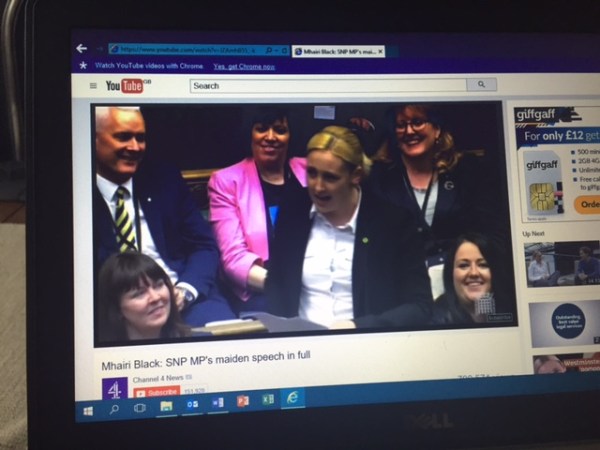
In trying to get gender and political balance, I’ve had to look particularly hard for footage of women. My search eventually led me to watch some clips of Mhairi Black and I couldn’t help thinking what a great leader she is. So what does she have that makes her stand out? What is it that gives her authority and makes people want to support her?

Well, the first thing is that she commands attention. When she speaks, people listen. She’s given some great performances lately and that makes us want to hear more.

The next thing is that she comes across as standing up for people and raising issues that matter on the ground. The speeches I watched were about pensions and Trident in which she highlights the negative impact of policy decisions on constituents. She really seems to care about the issues and doing the right thing for people.

What she does very cleverly is draw comparisons with things that everyone can relate to. For example, in her speech on pensions, she talked about mobile phone contracts which made the pensions issue that is so real for the WASPI women, something which felt real to everyone listening.

And she’s inclusive. She tries to bring people together by setting out her vision and inviting others to join her by focusing on the issues and transcending political boundaries.

All of this from the youngest Member of Parliament in the House of Commons who also happens to be female and a proud LGBT rights activist. Challenging every stereotype there is around politicians, you can’t help wanting to be just like her making her a fantastic role model for others.

All of these things together, I would argue, make her an excellent example of the authentic leader we hear so much about today. She has a real sense of honesty and integrity that instils confidence.

I think it was Tony Benn who said ‘if you say what you believe and believe what you say’ you can’t go far wrong and this certainly seems to be true in this case and a truth I think all leaders would do well to keep close to their heart.
3minuteleadership.org

Leadership is…

Leadership is… having so much fun that others want to join you.

A few years ago, I was fortunate enough to have the opportunity to work with an organisation in Africa. The charity needed support to develop a strategic plan that would help them apply for funding to deliver their work on women’s rights.

Bq06qMRIgAI6-ha

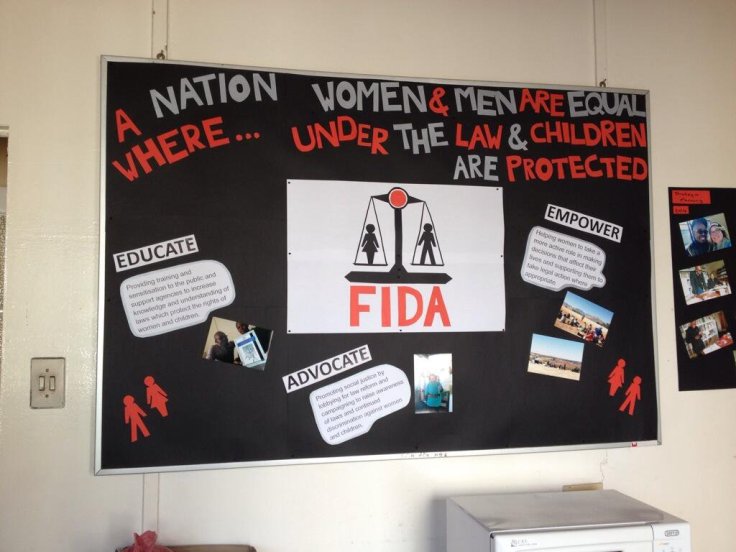
During my time with them, I was asked by the Director ‘what is our main objective?’ which made me think it would be useful for them to have their vision and mission at the heart of the organisation to make sure their objective was clear to all who worked there and all who visited.

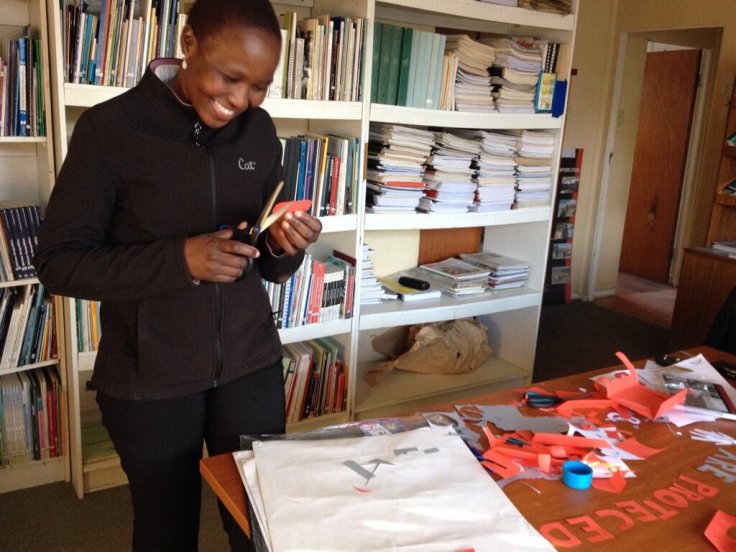
The main entrance to the office led to their kitchen and the first thing people saw when they visited was a noticeboard which up to then had been empty. This seemed to me to be the perfect place for a vision board so, being a creative type, I took myself off to buy some craft materials and set to work developing a visual display that would communicate the organisation’s key aims.

At first, they thought I had gone a bit mad and it started off being my project and colleagues looked on as I started work. I was in my element bringing something to life in a way that was meaningful. Slowly, people started to want to be part of the project and began helping to cut out letters and stick them to the board.

By the end of the process, they were creating their own board and I was able to take a step back and enjoy the piece they were bringing together.

This was when I realised that having fun is an essential part of leadership. If it isn’t an enjoyable experience, why would anyone want to come with you? Since then, I have made sure my team enjoys what they do and I positively encourage them to have a good time as often as possible.

Of course, sometimes things get serious and everyone understands that but in my teams I ensure there is a healthy balance and the hard serious stuff is rewarded by building in something they enjoy. This might be having the team meeting off site where they can have coffee together or enjoy brunch. Or it might be going for drinks after a big event that they have been working on for a while. Or even it might simply be allowing them to not take things so seriously.

BrjNY4GCEAEuOVa

Too often I see managers who bear down on their people because there is something important ahead and they want it to be right. This puts pressure on individuals and can make work unpleasant. The best thing you can do as a leader is trust your team and encourage them to enjoy what they do. After all, people spend a lot of time in the workplace so why not make it somewhere they want to be?

For more photos of my trip visit: A Woman’s Place in Lesotho, Flickr

Related:

A Woman’s Place in Lesotho: www.cteg.org.uk/a-womans-place-in-lesotho/

Lesotho lawyers speak out: www.cteg.org.uk/lesotho-lawyers-speak/


3minuteleadership.org 


Running your own race

Recently, I was on the recruitment panel for a senior position in an organisation I’m involved with. A week or so later, I found myself watching the Olympic games on TV and thinking about the similarities between gymnastics and interviews.

Gymnastics and interviews? How do they relate to each other? I hear you ask.

Well, after spending a couple of evenings watching the competition, I realised that it doesn’t matter how much a gymnast prepares… how much they train… how much they practice… they cannot guarantee a perfect performance. Any manoeuvre on the floor, the vault, the beam, parallel bars, anything has to be perfectly timed. The gymnast has to consider speed, weight, balance and I’m sure lots of other things and as humans, they can’t be so precise that it guarantees success.

gymnastics-8570985

As I watched, I saw plenty of them misjudge speed, distance, timing and so on. Some slipped, fell, stepped off the matt, over-balanced – a whole manner of things that prevented a perfect performance. Despite being world champion, Japanese competitor Kohei Uchimura fell from the horizontal bar. Louis Smith took home a silver medal from the London Olympics and yet this year he fell from the pommel horse which handed the bronze medal to the Chinese.

Even if an athlete gives their very best performance, their success depends on the competition.

In the men’s gymnastics competition, in between events, they were covering their heads, really trying to not think about what was happening around them but focus on what they had to do. This reminded me of a talk given by Sally Gunnel at a leadership event a few years ago (watch the full talk here).

Sally’s key message that day was around the importance of running your own race. She learnt this when she lost the gold medal in the 1991 World Championships when she made the mistake of looking sideways. This slip of focus left her in second place.

After that she concentrated on giving her best performance and not comparing herself to others. By focusing on herself, she achieved the ultimate goal, picking up a Gold medal in the 1992 Olympics for 400m hurdles.

It’s the same for interviews. If you want to progress you need to keep the end goal at the forefront of your mind. Concentrate on developing and honing skills and experience. Do your best in every competition and with hard work, commitment and determination, eventually, you will take the Gold.
3minuteleadership.org

Mastering motivation

A few weeks ago, I was at a conference and found myself engaged in a debate around what motivates people at work.

The colleague I was talking to was from a large public sector organisation and seemed to be a Theory X thinker, assuming that people would rather be anywhere than in the office and only go to work for money.

My perspective is that whilst people ultimately work because they have bills to pay (who wouldn’t prefer to be on the beach or in the garden), once that basic need is met, money ceases to be the main motivator. In this sense, Theory Y is where I sit as I assume that people want to work and manage my people with this in mind.

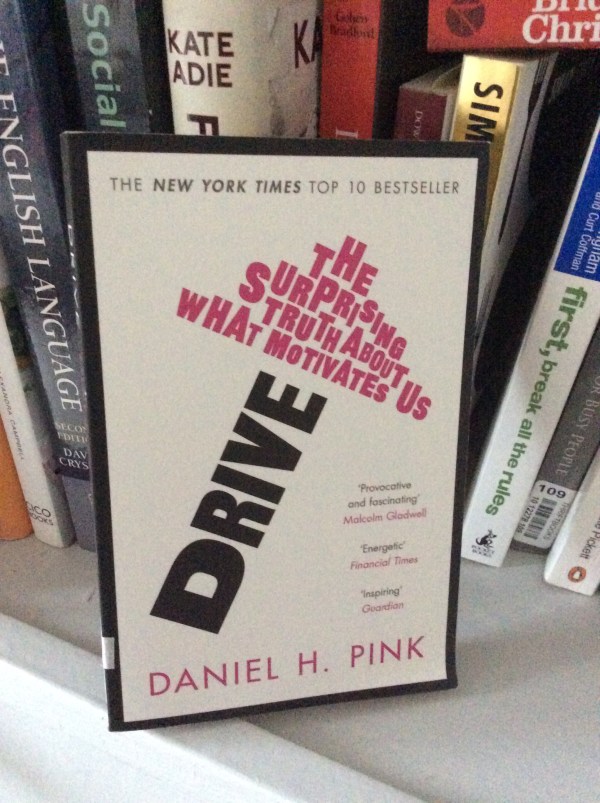
Most of my thinking has developed from a concept set out in Daniel Pink’s book called ‘Drive’. This book is so recent that it was not covered in a recent management course I attended. We were told in the session that ‘there hasn’t really been any theory developed on motivation since Maslow’.

But some of us know different.

Pink starts off with an argument that book that generations coming through today are not motivated by money. He believes that the model of performance related pay where people are set targets which are rewarded with bonuses is out of date and actually those joining the workplace over the last couple of decades are driven more by values than money. With this in mind, according to Pink, the first thing employers have to get right is to ‘pay enough to take money off the table’.

Once the basic financial need has been met, we can move away from Maslow’s basic needs of food and shelter and move towards the top of the hierarchy to achieve esteem and self-actualisation.

So to bring it back to Pink’s ideas, achieving motivation requires leaders to allow our employees to achieve the following three things:

Autonomy – Mastery – Purpose

Basically, to motivate people we need to trust them to do things their own way, setting the direction and letting them get on with it. This is AUTONOMY.

We need to give them the space and support them where necessary, allowing them to get really good at what they do. This means that they are able to learn and improve until they achieve MASTERY.

And we need to be clear about why they are doing what we have asked them to do so that they know what they are doing is for a good reason. This means they understand their PURPOSE.

Applying this to the way my team works completely changed my focus and delivered some fantastic results. Of course it didn’t mean I left them on their own completely, it just changed the way we worked together. Instead of telling people what to do and how to do it, this approach requires leaders to set the direction and support individuals to achieve. It requires managers to ask more questions and find out where you can add expertise to improve the outcome. What you will find is that the team checks in with you more because they want to get things right. It’s definitely worth adopting because the rewards of empowering people are immense.

Go on try it! I dare you…

If you want to hear it from the man himself, check out this TED talk: https://www.ted.com/talks/dan_pink_on_motivation?language=en

Or you can buy the book here:

//ws-eu.amazon-adsystem.com/widgets/q?ServiceVersion=20070822&OneJS=1&Operation=GetAdHtml&MarketPlace=GB&source=ac&ref=qf_sp_asin_til&ad_type=product_link&tracking_id=3minulead-21&marketplace=amazon&region=GB&placement=184767769X&asins=184767769X&linkId=&show_border=true&link_opens_in_new_window=true
3minuteleadership.org

Blog at WordPress.com.

Up ↑