
From Fear to Freedom: Unlocking Your True Potential

What if fear of failure is the only thing standing between you and the life you actually want?

How many of us are afraid to put ourselves out there because we don’t want to fail? It’s a real dilemma – we don’t want to try something and look stupid so we can often just play it safe and stay in our lane. But progress and change require something different. It’s true that ‘outside of our comfort zone is where the magic happens’. So how can we build the courage and confidence to try?

In Amazon CEO, Andy Jassey’s top tips for success, he lists ‘don’t be afraid to fail’ as essential for invention. Inventing or re-inventing yourself is as important as anything else. Life has many chapters and we may need to invent ourselves many times. The key to pushing through a fear of failure is resilience and for me, a major part of resilience is learning.

Over the last couple of years, I have been going through my own reinvention with seismic shifts in my personal life leading to an adjustment in priorities. When this transition really hit a crisis point, I felt that my personal brand had fallen flat and I needed to really dig in to redefine my vision and goals.

It pushed me to develop my own consultancy offer and share my ideas with the world which is certainly outside of my comfort zone. There has been lots of trying new things and learning as I go. I’m very much on board with the idea that it is ‘better to ship passion than wait for perfection’ which is hard but I know that over time the approach will develop and whatever I do now, will transform gradually to become the final product.

Brené Brown puts Roosevelte’s ‘Man in the Arena’ quote at the heart of much of her work on vulnerability and I keep this close as I try new things. It basically says that the one who tries will either know the triumph of high achievement or ‘at the worst, if he fails, at least fails while daring greatly’ – the idea of this makes it much easier for me to push through the barriers.

Why are we afraid to fail? For many, failure connects to their self-worth and self-esteem. It’s the nervous system warning you of a threat and we want to avoid the shame and embarrassment of not achieving our goals.

Here are 3 things we can do to overcome the fear and remove barriers to success:

  1. Build a deep sense of self-worth – really work on you and know who you are. Focus on finding stability within yourself and understanding your worth on your own terms, not based on the validation of strangers.
  2. Identify what you are afraid of – consider what it is you want to do and identify what you are afraid of. Consider how likely it is that these things will happen, how others might perceive the ‘failure’ (it is often not the way you think!) and what you can put in place to reduce the risk of things not working out.
  1. Focus on the learning – think through in advance what you can learn if it doesn’t go exactly as you planned. Manage your expectations and consider next steps so that you can build or pivot if you don’t achieve your ideal outcome.

I’ve seen many people miss out on opportunities because they feel the fear and let it dominate their actions so whatever it is you dream of, consider how you can just get started and ‘do the thing!’.

Have you let fear hold you back? Or have you been able to learn from failure? I’d love to hear your story! Drop it in the comments and let’s learn from each other.

Image: Pete Linforth from Pixabay

Behind Closed Doors: The Invisible Costs of Care for Women

Research from CIPD shows that nearly half of the 3 million working carers in England and Wales struggle to balance work and care, with a quarter considering leaving their jobs. As more women are delaying motherhood, “sandwich carers” juggling childcare, elder care, and work are growing in number with many experiencing mental ill-health. Figures show that 51% of sandwich carers are aged 45–64 – also the menopause red zone. 

A Personal Story
When my dad passed away in 2022, I became my mum’s carer while raising my 4-year-old son. Living 160 miles apart, I frequently had to choose who to be with – and I couldn’t choose my child.

Things came to a head before Christmas when my mum had a fall. She lay in the driveway until discovered by a passing window cleaner and was taken to A&E by a neighbour.  She was discharged after eight hours, with no consideration of whether she could manage at home—she couldn’t.

Despite an emergency care package, the burden of overnight care fell on my niece, who was called 5–6 times a night. When I arrived, the situation was unsustainable. Night-time care for my mum was quoted at £1,700 a week—contrast this with the £81.90 carers’ allowance for family carers.

This financial inequity is a bitter pill to swallow. Family carers support out of love, but that love comes at a high price: sleepless nights, lost income, and emotional burnout.

The Cost of Caring
Balancing work and care often forces women to reduce their hours or leave work altogether. A typical day might look like this:

  • Childcare: 4–5 hours
  • Work: 7.5 hours
  • Sleep: 7 hours
  • Commuting: 2 hours

It leaves little room for elder care, especially as most support services operate during office hours. Women already shoulder the bulk of unpaid domestic work, so it’s no surprise they’re 7x more likely than men to leave work entirely due to caregiving responsibilities.

What can employers do?
Employers can ease this burden by fostering a culture of understanding and flexibility. Here are key steps they can take:

  • Awareness: Gather data on carers and use it to advocate for policy changes, learning from your teams and amplifying their voices.
  • Training: Train managers to understand carers’ unique challenges and set up systems that allow carers to notify them of caring demands.
  • Leave: Offer paid carers’ leave to prevent financial strain and demonstrate that the workplace values both its employees and their caregiving responsibilities.

The UK care system relies heavily on the unpaid efforts of family members, predominantly women. We need systemic reforms that value carers’ contributions, both at home and in the workplace.


Supporting carers is key to fostering a thriving workforce. Businesses can boost retention, morale, and productivity by developing strategies that recognise the impact of caring responsibilities and address carers’ needs.

1-1 coaching can also help women to find balance and effectively advocate for themselves, striking a balance that allows them to meet their responsibilities whilst still smashing it at work. 

If you’re ready to create a culture of care and empowerment, get in touch to find out how we can support.

Image by Sabine van Erp from Pixabay

From the Past to the Present: Leadership Lessons from Charity Adams and the 6888th Batallion

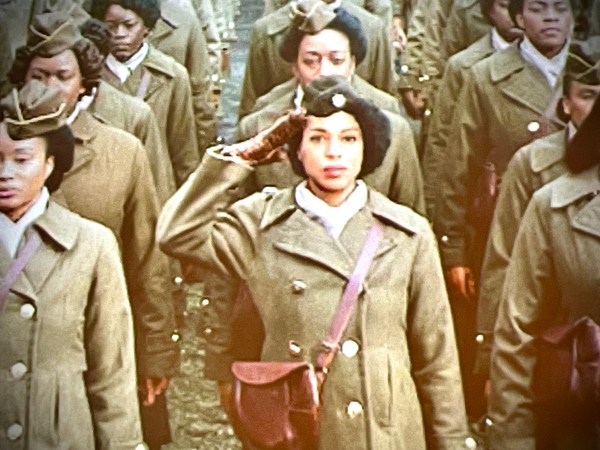
I’m inspired by women in non-traditional roles and WW2 is an interest I inherited from my Dad so I was excited for the new Netflix offer ‘The Six Triple Eight’.  The film tells the story of the first and only all-black unit of the women’s army corps which was led by Charity Adams who was the first African-American woman to become an Officer. With the level of racism and sexism in America in 1945, it seems an impossible feat.

Facing challenges at every step and deliberately set up with an impossible task, Charity had a determination that allowed her to become the highest ranking African-American woman by the end of the war. 

Her trailblazing journey highlights themes of inclusion, resilience, and effective leadership under pressure that are deeply relevant today. Here’s why her legacy continues to inspire and guide modern conversations about diversity and leadership:

1. Breaking Barriers in Leadership

Then: Charity Adams broke racial and gender barriers in a time when opportunities for Black women in leadership roles were virtually nonexistent. She led the “Six Triple Eight” to overcome systemic discrimination, logistical challenges, and the monumental task of sorting millions of pieces of undelivered mail to boost the morale of soldiers during the war.

Now: Her story underscores the importance of representation in leadership. Diverse leaders bring unique perspectives to problem-solving and decision-making, which are essential in today’s globalized and inclusive work environments.

2. Demonstrating Resilience and Excellence

Then: Despite facing racism, sexism, and immense pressure, Adams demanded excellence from herself and her team. She emphasized the value of discipline, collaboration, and purpose in achieving their mission.

Now: In modern workplaces, leaders must navigate complex challenges while fostering resilience in their teams. Adams’ example reminds us that adversity can be overcome through strategic thinking, strong leadership, and a commitment to the mission.

3. Advocating for Equity and Inclusion

Then: Adams proved that Black women could lead effectively in roles traditionally reserved for white men, challenging stereotypes and paving the way for future generations.

Now: Organizations still struggle with inequities in leadership opportunities for women and minority groups. Her example encourages leaders to actively address bias, create inclusive environments, and champion equitable opportunities.

4. The Power of Purpose-Driven Leadership

Then: Adams was not motivated by power or personal gain but by a sense of duty to her country and her team. Her purpose-driven leadership inspired her unit to achieve a seemingly impossible mission.

Now: Purpose-driven leadership resonates deeply in today’s world, where employees and stakeholders value leaders who prioritise social impact, ethical practices, and meaningful change.

5. Legacy as a Catalyst for Change

Then: Charity Adams’ story was not widely celebrated for decades, reflecting how the contributions of marginalized groups can be overlooked. Recent recognition highlights the need to acknowledge diverse histories.

Now: Her legacy serves as a call to action for modern leaders to recognize and amplify under-represented voices, ensuring that everyone has a seat at the table and their contributions are valued.

In today’s era, where diversity and inclusion are business imperatives, Charity Adams’ life offers timeless lessons on how to lead with integrity, resilience, and purpose. Her example encourages us to challenge systemic inequities, inspire others through our actions, and lead boldly in pursuit of a better, more inclusive future.

Charity Adams’ story reminds us that leadership is not about titles or power but about purpose, resilience, and inclusion. Her legacy challenges us to build workplaces and communities where everyone has the opportunity to lead and thrive.

If you’re looking to foster this kind of leadership in your own organisation or develop a culture where inclusion and resilience are at the forefront, I’d love to help. Through leadership development, culture support, and tailored coaching, I work with teams and individuals to inspire meaningful change and unlock their potential. Let’s connect and explore how we can create a better future together.

From Bias to Burnout: How Menopause Impacts Women’s Work Experiences

I’ve talked a lot over the years about barriers for women in the workplace such as gender bias, care, stereotypes etc. all of which can prevent women from reaching their potential. For those who do manage to overcome these barriers, the menopause can be one that finally defeats them.

In terms of the figures, recent research from CIPD demonstrates that ⅔ of women (aged 40-60 in employment) have found that menopause symptoms have had a negative impact on them at work.

A 2023 survey found that 23% of women aged 40–60 considered quitting their job due to menopause, and 14% were actively planning to leave their job.

The reduction in oestrogen levels can have a major impact on women’s lives and this process typically begins when a woman reaches late 30’s/early 40’s. From reading menopause threads on mumsnet, I have come to the inexpert opinion that if you are over 40 and have symptoms that you think are hormone related then they probably are. 

From my own experience in recent years, symptoms are wide-ranging and can be easily mistaken for other things. Itchy upper arms, for example, I  was treating as dry skin until I saw a Twitter post by Newson Health talking about this as a symptom of menopause. As soon as I started on HRT, the itching went away completely. Other typical symptoms of peri-menopause include hot flushes, anxiety, insomnia, fatigue, headaches, and muscle and joint pains – and I have had the lot over the past 18 months. 

Given the level of knowledge women have about the menopause today, it is amazing that so many of us are still being fobbed off by health professionals and prevented from getting the treatment we desperately need.

Hard-working and well-meaning as they are, I’ve heard some ridiculous things from healthcare workers. For example, when I first spoke to a GP about anxiety and asked if it could be peri-menopause, I was told that it was more likely to be depression (it definitely wasn’t).

I’ve had a nurse tell me that I have unusual symptoms and that most women come in with hot flushes and night sweats (probably because it’s the only symptom that gets talked about regularly despite a wide range being recognised).

Another GP asked me if my mum had experienced early menopause so I had to educate her on the concept of peri-menopause which was not something that was widely known about in my mother’s day. I’m aware of other women who have been told they can’t have HRT because they are ‘too young’ – this is despite the fact they are struggling to cope with their symptoms.

Finally (though I could go on) I was told by a male GP that he doesn’t deal with HRT ‘because he’s a man’ (and yet women over 40 are more likely to present with symptoms of anxiety due to hormones and this was the mental health specialist). A long-standing women’s rights activist, I am beside myself to think that he considered it acceptable to say this in 2024.

Thankfully, I eventually realised my symptoms weren’t normal and went elsewhere to get help.

Clearly, I am not qualified to make medical recommendations and if you are struggling, you should do your own research and access appropriate support. However, it might be useful to know these top 3 things that have made a difference for me:

  1. Magnesium – I have been experiencing severe muscle pain for nearly a year to the extent that I have felt like I can’t go on feeling so uncomfortable in my own body. I’ve put it down to a range of things from carrying a bike to doing yoga. Eventually, I realised that everyday activities couldn’t be the cause of such severe discomfort. Desperate for a good night sleep, I was given magnesium supplements to try and have discovered this is a magic mineral! Not only did they tackle my insomnia but they also got rid of my joint pain overnight. I have to take it regularly but it works and the effect is immediate. It’s also a good excuse for a salt bath or foot soak! If you want to know more, read this article by Better You.
  2. Testosterone – whilst I knew that oestrogen reduces, I didn’t know that testosterone levels reduce in peri-menopause as well. After requesting a blood test, I was told that my results were ‘normal’. Having a look myself, it seemed to me that my levels were at the low end of normal. When I spoke to a private GP, she confirmed that all my hormone levels were low and prescribed testosterone as part of my treatment plan. After a week boosting my testosterone levels, I felt like a new woman, able to cope with all of life’s challenges. Read more about the benefits of testosterone in menopause.
  1. Menopause specialist – whilst reluctant to fork out the money to go private, I finally decided to bite the bullet and I am so glad I did. Finally, I was speaking to a GP who recognised my symptoms and could put me on a treatment plan that would make a difference. 

Getting older is a challenge for all of us but with hormonal and chemical imbalances, mid-life is especially challenging for women who can suddenly find themselves feeling anxious, confused and unsupported. 

Finally, I have been to several awareness sessions which have ensured I have a good understanding of the symptoms and was able to recognise them. If you are looking for something for your workplace, I recommend The Menopause Team who can provide a very informative and worthwhile session.

Has your life been affected by menopause symptoms? Do you have a story to share? Let us know in the comments below.

Why you should take on a Trustee role and how you can make it happen

This week, 12 – 16th November 2018, is Trustees Week where we celebrate the efforts of hundreds of thousands of volunteers who give up their time to ensure robust leadership and governance for charities across the UK.  This is also an opportunity to encourage and inspire others to get involved at this level.

What is a Trustee?

Trustees are responsible for a charity and work together to ensure financial sustainability, legal compliance and provide strategic direction. These people are often volunteers and make up a ‘Board of Trustees’ or ‘management committee’ which becomes the body for decision making in an organisation. Trustees should bring their own individual knowledge and opinions but support any decisions made as a collective.

Charities are always looking for skilled people to join their Trustee board so there are lots of opportunities to volunteer at this level.  Figures shared as part of trustees week suggest that there are roughly 196,000 charities across the UK with over a million Trustees in total.

Why do people become Trustees?

Probably the main reason for becoming a Trustee is the desire to make a difference and support a cause.  It is personally rewarding to contribute in this way and can have a significant positive impact on the wellbeing of those who volunteer and of course the beneficiaries of the organisation delivering the work. Not only that but as Reach Volunteering highlight, becoming a Trustee can be good for your career as well as your health’, supporting individuals to gain strategic experience, strengthen professional networks, learn new skills and more.

Speaking to a number of experienced trustees, it is clear that the role is challenging but rewarding at the same time…

“I was passionate about the charity sector benefiting from robust leadership, governance and strategic planning. Few voluntary sector organisations have access to trusted and impartial critical friends or expertise in particular professions so their board is a good opportunity to source those expertise. For me, it was also an opportunity to gain insight into how another voluntary organisation operates in a very different area of policy & practice so I learned a huge amount too. I strengthened my professional network and I got to volunteer my time skills and energy in the process. It made me a more rounded strategic operator and it wasn’t without its challenges so I feel it was time well spent” Nina Prosser, Trustee, Touch Trust (2015 – 2017)

“I became a trustee to make a difference for a charity I cared about.  As the honorary treasurer, I was able to use my financial knowledge to help the charity resolve some of its long term financial risks. On a personal level, I learnt a lot outside of my specialism and this helped me develop on a personal and professional basis”Alex Mannings, Honorary Treasurer, Ramblers GB (2015 – 2018)

In Wales, Empower offers a matching service, working with charities to identify what skills they need and then approaching high calibre individuals to fill these positions. Director, Bev Garside, said:

“Trustee recruitment is one of the most enjoyable parts of our role here at Empower because it provides an opportunity for real win-win partnerships.  For potential trustees, it provides an opportunity to utilise existing skills and develop new ones through a strategic non-executive directorship role within the charity sector.  For charities, there is the opportunity to benefit from highly skilled individuals bringing their specialisms and their passion to the board”.

“Trusteeship is an ideal proving ground for those wishing to move into a paid leadership position and companies benefit encouraging senior managers to seek appointments to charity boards”.

If you are interested in becoming a Trustee with an organisation in Wales, contact: bev@empowersvs.co.uk  

3minuteleadership.org.uk

[Photo: Pixabay]

Women Leaders

[Guest post by Hilarie Owen]


Most organisations are aware of gender inequality and many are trying to address the issue with training programmes, coaching and trying to build a pipeline but these actions are not delivering the results quick enough. Filling the pipeline hasn’t produced the results and neither have policies. The barriers that hinder progress for women are far more complex and elusive. 

Following my webinar on women, power and leadership that was held on International Women’s Day 2018 with three great speakers I decided to explore women leaders in more depth. I interviewed women leaders across society from business, the arts, science, technology and government. I was enthralled by their autobiographical narratives. Their stories were engaging and it became clear that their leadership emerged and grew from their experiences. It quickly unfolded that there were key patterns that were central to their ability to lead that I will try and capture in my new book. One of the noticeable things was that in 30 interviews I did not find one ego. In fact these women were like you and me so we can’t say ‘Ah, but they are different’.

Each woman, regardless of their background or education, had common elements they had developed. It wasn’t as simple as qualities, as important as these are, but constructs they had combined to form their leadership – a different form of leadership to the older male version.

I’ve been immersed in what makes great leaders for the last 20 years, helping to inspire high performance in top teams around the world, including my research with the RAF’s Red Arrows. Women are doing amazing things in business, the military, politics, sports and the arts. Yet the number of occupying senior posts is falling.  Globally, while women are receiving higher education gender parity is shifting backwards for the first time since 2006, according to the 2017 Global Gender Gap Report and what stands out is that although women across the world are highly educated the workplace is still not give them parity.

In the UK, more women are joining boards as Non-Executive Directors but this has become more of a tick box exercise as the numbers of full time women directors remain static. According to a report from Grant Thornton in 2017, the number of women coming through into senior management posts is actually declining. How can this possibly be? Surely we already have the policies and procedures we need in place. The solution isn’t to ‘fix women’ but to fix the barriers in organisations. So the book not only focuses on women leaders but how to enable organisations to be far more inclusive. The book will be launched in the Spring but people can pre-order copies now by going to:

https://www.kickstarter.com/projects/614479735/welead-women-leaders-and-inclusive-organisations?ref=project_build
So far, I have written eight books on leadership that sell around the world opening up opportunities to work in different countries. Everywhere I meet inspiring women who are doing amazing work and campaigning for more opportunities for women.  My aim is quite clear. One day when someone asks women ‘what do you do? The answer will be ‘weLEAD’.


© Hilarie Owen  hilarie.owen@iofl.org

3minuteleadership.org

Why it matters that we finally have a woman playing The Doctor

It’s been a long time coming but many women across Britain have finally realised a dream which I wasn’t sure would ever come true a female lead in the British cult series – Dr Who.

A few years ago, I remember talking to a producer of Dr Who and asked the question ‘when is the Doctor going to be a woman?’. She advised me that it would never happen because the fans didn’t want it and the ratings would fall if that decision was made.

We now get to find out if that is a valid concern or indeed if the change means the series can inspire a whole new audience.

Why does it matter whether we have a female Doctor?

It isn’t just a nice thing to do for women, it really matters that we have female role models who are visible and leading the way. Being able to see women in prominent roles and breaking new ground is an inspiration for girls everywhere. It tells our daughters that anything is possible and they can actually be whatever they want to be.

Role models help to raise aspirations and show girls they can succeed. Whether it’s leadership, media, engineering or something else, we need to see that women can achieve in whatever they choose and this character provides someone for our girls to look up to.

For those girls watching Jodie Whittaker taking on the Daleks, it tells them they can have leading roles, become action heroes and achieve what seems impossible if they want to. We see far too little of girls having adventures so many of us are cheering this turn of events and hope that it marks the beginning of an era where girls can get right in the thick of it too.

Typically, women are seen as not having power so hopefully having a woman play an extraterrestrial Time Lord who zips through time and space to solve problems and battle injustice across the universe will help to change this.

Do women have equal opportunities in the media?

It’s been a big week for women with names and salaries of the BBCs highest paid stars being published in a bid to improve transparency of the public service. Reading the news articles ahead of the release, I was disappointed to see this quote: ‘It’s good to see some women on the list too’. This is the type of attitude that creates inequality in the first place and allows it to continue. It’s shocking to discover that women account for just 1/3 of the list and men exclusively hold the top 12 highest paid roles.

What impact does a lack of female role models have on wider society?

An article published by Forbes explains the need for role models perfectly:

“Seeing few people who look and act like them in industries like science and politics discourages girls from pursuing their interests if those interests are not popular. This robs the world of future talent that has massive potential to feed innovation, create change, and boost the economy”

When young women and girls see Jodie Whittaker or other leading lights taking on new challenges and succeeding in the chosen field, they think ‘if they can do it, so can I’. So thank you to the BBC for taking diversity seriously and finally appointing a female Doctor to show our girls they have options.

What can you do to help ensure we have good role models for girls to look up to?

You can be visible – if you have any kind of role that challenges gender stereotypes, do what you can to make it known to others so you can inspire girls coming though.

You can be the change – when you secure a role in an area where women are under-represented, you can help to create a space where women are welcome and judged on their own merits.

You can help others – if you make it to a position of authority or even achieve something that others admire, you can share your story and experiences to help others do the same.

If you have any thoughts about what more needs to happen to promote female role models or have an experience to share with us, please post in the comments below.


3minuteleadership.org


Photo credit: Pixabay

Preparing for a positive personal review

Earlier this week, I chaired a discussion on ‘preparing for a positive personal review’ at an event run by the Women’s Network in in my organisation. Recently, our review process has been high on the agenda with a new system launched that aims to ensure a high quality conversation during this important annual one to one.

It was particularly timely to be holding the event this week as Recruiting Times published an article on Monday which suggested that “ditching the annual review” is one of four key HR trends for 2017. It seems that a number of major private sector companies such as Deloitte, GE and Adobe are taking this step and so part of our event explained why we are bucking this trend and choosing to continue with a traditional  approach.

Our panel consisted of two senior members of staff who have been leading on the development of a new personal review process, which is currently finding its feet within the organisation. The policy now asks managers to facilitate a conversation which is centred on the individual, asking people to think about what they want to achieve in the coming year, what support they need what training and development they think would benefit them going forward.

During the event, our panel shared their own experiences of personal reviews, complete with success stories, and they demonstrated how this process has helped them to achieve the positions they are in today. They were both very clear that the annual review has been extremely valuable in their own career development and encouraged participants to take time before the meeting to consider aspirations and development needs to make sure they are in a position to have a worthwhile discussion.

They set out number of questions to consider when preparing for you annual review:

  • What’s gone well over the last 12 months?
  • How well have I met my current objectives?
  • What am I enjoying about my role?
  • What do I find challenging?
  • Is there anything I am struggling with?
  • What do I want to achieve this year?
  • What hasn’t happened and why?
  • What are my career goals and aspirations? And what skills or experience to I need to help me achieve them?

Our panellists were also stressed that the review is something that is relevant throughout the year, rather than once every 12 months. The meeting is an opportunity to set your goals for the period but needs to be reviewed on a regular basis to ensure you are making progress. The advice was to make sure you keep a copy of your goals somewhere you can find it easily and keep reminding yourself of your aims to ensure you remain on track.

Finally, when asked to provide one ‘takeaway’ or key piece of advice for participants at the event, this is what they had to say:

  • Own it – this is your personal review so it’s up to you to make sure it goes well and achieves for both yourself and the organisation.
  • Be honest – your line Manager can only help you if you are honest about what you want to get from the role and what you can contribute. Don’t just tell them what you think they want to hear but be honest so that you can have a truly constructive conversation.


How does this compare with your own experiences of annual reviews? Are you in favour of this approach or do you prefer something different? Do you have any further tips to share to make sure these discussions are worthwhile? Please share your thoughts below.


3minuteleadership.org


7 steps that will help you reach the next level in your career

According to research published by the University of Scranton, 92% of people set goals for the New Year but never actually achieve them.   

The first study of goal setting was carried out by British philosopher and industrial psychologist, Alec Mace, in 1935 and his work has informed many of the basic principles that we use today. Later on, researchers Edwin Locke and Gary Latham developed a theory of goal setting after finding that when people set specific and challenging goals, they achieved higher performance 90% of the time.

It seems clear that if you want success in your career, then goal setting is of critical importance. However, difference between the 92% of people that fail to achieve their goals and the 8% that do is a commitment to achieving them and doing everything possible until they get there. So, not only is it important to define your goals but also to take the action required to ensure you make progress towards them and continue doing so until the target has been reached.

Here are seven actions you can take to help you reach the next level in your career:

1. Be clear about where you are going – if you have a career goal, then you probably have thought through your aspirations and ambitions. However, I have come across a number of people in my work who know they want something but not sure exactly what. They might be frustrated about their situation and feel they have yet to reach their potential but have no idea what would make them feel more fulfilled. My point here is that if you do not know where you are going then how can you possibly get there? For help setting objectives which are specific and achievable, try mindtools.com – Personal Goal Setting.

2. Look at job descriptions and identify any gaps – once you are clear about where you want to go, you need to make a plan to get there. The best first step is to look at some job descriptions for the kind of roles you are interested in and identify any gaps in your knowledge, skills and experience.

3. Make a development plan – after you have identified the areas you need to work on to secure the kind of role you are interested in, then you can make a plan to gain more experience or develop skills in these areas. Practical ways to fill the gaps include courses or qualifications, voluntary work or job shadowing.

4. Become a charity Trustee – a great way to gain experience at a strategic level is taking on a Trustee role with a charitable organisation. Many charities require volunteers at this level who can contribute views on the direction of the organisation and make decisions about strategic direction. Trustee roles require knowledge across a range of areas such as finance, risk and governance so a great way to demonstrate the ability to think strategically. Recruit 3 is a good place to look for Trustee vacancies in Wales or Third Sector Jobs for UK-wide opportunities. 

5. Get some coaching or mentoring – all the best leaders have had a coach or mentor at some point during their career journey. Both are processes that can help you think about your skills, find a way to develop further and ultimately, help you to reach your potential. My recommendations include Empower’s Step Up programme which offers support for third sector professionals looking to secure a leadership role or Compass for professional coaching. 

6. Ask for feedback – this is absolutely key for me in making sure you are developing in the right way to achieve your career goals. Whether you have submitted and application and not been shortlisted, had a job interview and not been successful or looking to progress internally and facing barriers. Ask for feedback and act on what you find out.

7. Don’t give up – most of all, if you really want to take the next step, then whatever barriers or knock backs you face, do not give up because if you remain committed to following the previous steps, you will succeed in the end.

3minuteleadership.org

Blog at WordPress.com.

Up ↑