From the Past to the Present: Leadership Lessons from Charity Adams and the 6888th Batallion

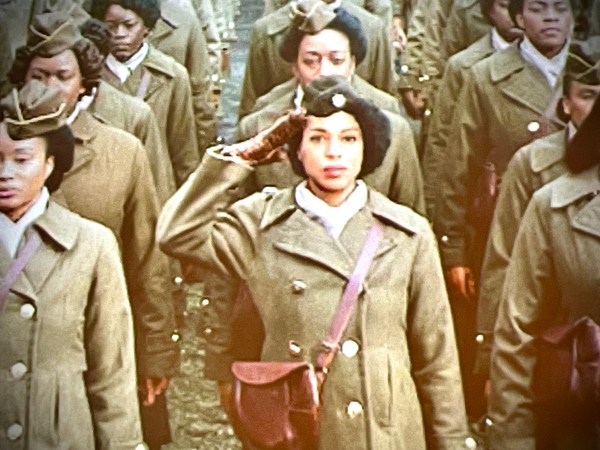
I’m inspired by women in non-traditional roles and WW2 is an interest I inherited from my Dad so I was excited for the new Netflix offer ‘The Six Triple Eight’.  The film tells the story of the first and only all-black unit of the women’s army corps which was led by Charity Adams who was the first African-American woman to become an Officer. With the level of racism and sexism in America in 1945, it seems an impossible feat.

Facing challenges at every step and deliberately set up with an impossible task, Charity had a determination that allowed her to become the highest ranking African-American woman by the end of the war. 

Her trailblazing journey highlights themes of inclusion, resilience, and effective leadership under pressure that are deeply relevant today. Here’s why her legacy continues to inspire and guide modern conversations about diversity and leadership:

1. Breaking Barriers in Leadership

Then: Charity Adams broke racial and gender barriers in a time when opportunities for Black women in leadership roles were virtually nonexistent. She led the “Six Triple Eight” to overcome systemic discrimination, logistical challenges, and the monumental task of sorting millions of pieces of undelivered mail to boost the morale of soldiers during the war.

Now: Her story underscores the importance of representation in leadership. Diverse leaders bring unique perspectives to problem-solving and decision-making, which are essential in today’s globalized and inclusive work environments.

2. Demonstrating Resilience and Excellence

Then: Despite facing racism, sexism, and immense pressure, Adams demanded excellence from herself and her team. She emphasized the value of discipline, collaboration, and purpose in achieving their mission.

Now: In modern workplaces, leaders must navigate complex challenges while fostering resilience in their teams. Adams’ example reminds us that adversity can be overcome through strategic thinking, strong leadership, and a commitment to the mission.

3. Advocating for Equity and Inclusion

Then: Adams proved that Black women could lead effectively in roles traditionally reserved for white men, challenging stereotypes and paving the way for future generations.

Now: Organizations still struggle with inequities in leadership opportunities for women and minority groups. Her example encourages leaders to actively address bias, create inclusive environments, and champion equitable opportunities.

4. The Power of Purpose-Driven Leadership

Then: Adams was not motivated by power or personal gain but by a sense of duty to her country and her team. Her purpose-driven leadership inspired her unit to achieve a seemingly impossible mission.

Now: Purpose-driven leadership resonates deeply in today’s world, where employees and stakeholders value leaders who prioritise social impact, ethical practices, and meaningful change.

5. Legacy as a Catalyst for Change

Then: Charity Adams’ story was not widely celebrated for decades, reflecting how the contributions of marginalized groups can be overlooked. Recent recognition highlights the need to acknowledge diverse histories.

Now: Her legacy serves as a call to action for modern leaders to recognize and amplify under-represented voices, ensuring that everyone has a seat at the table and their contributions are valued.

In today’s era, where diversity and inclusion are business imperatives, Charity Adams’ life offers timeless lessons on how to lead with integrity, resilience, and purpose. Her example encourages us to challenge systemic inequities, inspire others through our actions, and lead boldly in pursuit of a better, more inclusive future.

Charity Adams’ story reminds us that leadership is not about titles or power but about purpose, resilience, and inclusion. Her legacy challenges us to build workplaces and communities where everyone has the opportunity to lead and thrive.

If you’re looking to foster this kind of leadership in your own organisation or develop a culture where inclusion and resilience are at the forefront, I’d love to help. Through leadership development, culture support, and tailored coaching, I work with teams and individuals to inspire meaningful change and unlock their potential. Let’s connect and explore how we can create a better future together.


Leadership in the Wild: What Nature Teaches Us About Women in Power

The world has just witnessed the overwhelming defeat of Kamala Harris in the US election. In 2016, Hillary Clinton became the first woman in the US to win the popular vote, but this still wasn’t enough to secure the White House. In her concession speech, Clinton stated, “I know we have still not shattered that highest and hardest glass ceiling, but someday someone will.”

While the number of women in leadership roles is increasing, progress remains slow. Only 11% of FTSE 100 CEOs are women, and according to the UN, gender equality in the highest positions of power will not be achieved for another 130 years at the current rate. Furthermore, just 20% of presiding officers in parliaments worldwide are women.

In 2020, Smith et al. published a fascinating study examining female leadership in the animal kingdom to uncover insights that could help level the playing field for human leadership. The authors highlighted that attitudes about female leaders often reflect societal biases rather than actual performance. Prejudicial evaluations frequently cast women as less assertive, competitive, or independent than their male counterparts.

This bias extends to how women are perceived. For example, studies have found that people tend to prefer male voices over female ones—a phenomenon that famously led Margaret Thatcher to undergo voice coaching to sound less “shrill.” Men, too, are penalised for displaying traditionally feminine traits such as care and empathy, creating a rigid framework for leadership expectations.

What was the study?

The study focused on species with clearly defined leadership systems, identifying 8 out of 76 species with strong female leadership. This rarity—just 10% of the observed species—mirrors societal challenges in human leadership structures.

The findings revealed that primates, including monkeys, apes, and lemurs, predominantly exhibit masculine leadership, reflecting human preferences for male authority figures. Physical size was also identified as a barrier to female leadership, with smaller figures often failing to command the same level of authority.

Interestingly, female leadership tended to emerge in contexts requiring collective decision-making. For example, adult females with dependents often lead in species that rely on cooperative movement. In the human realm, mothers play a similar leadership role within families, but this critical skill set is rarely recognised or valued in professional settings.

Strong female leaders were more likely to succeed when they formed coalitions with others. Women’s leadership styles often centre on collaboration and uniting people around shared goals while navigating differences. This cooperative approach can be particularly effective in times of conflict.

Physical presence also plays a significant role in perceptions of leadership. Amy Cuddy’s research on body language highlights the importance of taking up space. In the human context, women are encouraged to “make themselves bigger” to project authority. The contrast between Hillary Clinton and Donald Trump during their election debates exemplifies this: Trump’s looming presence often overshadowed Clinton, both physically and metaphorically.

Finally, the study suggested that women are, on average, less motivated to engage in winner-take-all competitions for high-status positions. Those who do often feel pressure to adopt masculine traits to succeed, which can perpetuate a culture that discourages broader female participation.

What does this tell us about workplace culture?

The study demonstrates clear differences in how men and women lead, with feminine leadership often facing systemic challenges in human societies. At the same time, women’s collaborative and inclusive styles, whilst undervalued, have the potential to unite teams and deliver exceptional outcomes.

Organisations that fail to recognise and embrace these differences risk creating workplaces where conflict and stress persist, ultimately affecting business performance. By fostering an inclusive culture and creating space for diverse leadership approaches, organisations can unlock the full potential of their workforce and achieve greater harmony and success.

From this study, we can see that:

1) There are clear differences in the leadership of men and women with challenges for a typically feminine approach within human society. At the same time, there is evidence of key strengths in women’s leadership which, whilst appearing to be a softer approach, has the power to unite and support.

2) A lack of awareness of differences and the inability to create space for feminine approaches can lead to conflict in the workplace and significant challenges (and stress) for women leaders which ultimately impacts business performance.

3) Organisations that are serious about increasing female representation within their organisations, need to be aware of differences to support colleagues and ensure harmony so that colleagues can focus all of their efforts on achieving success. 

If you’d like support in increasing gender awareness and creating an inclusive culture, contact us for tailored advice and solutions.

Image: Tumisu via Pixabay

Power, Progress, and Patriarchy: Lessons on Culture from the US Election

When I went to bed last night, it was with a feeling of hope that I might wake up with a mixed-race woman as the leader of the free world. The idea was exciting because it sends such a powerful message to all women about leadership and culture. Alas, it was not to be. 

It reminds me of a key lesson from my course with Aberdeen University exploring organisational culture and conflict. The thing I noticed from the very first lecture was that culture is essential for inclusion. I’d say that a common mistake for organisations is to make a bold commitment to EDI, setting goals and indicators without doing the culture work required for success.

The US election result highlights the tensions in society around equality and change. What we have seen in America is a choice between masculine and feminine cultures and what we have learnt is that patriarchy is alive and well.

Watching Harris on the campaign trail, I saw an intelligent, warm, empathetic leader who could speak to all and bring unity. She came across as honest and credible, with a professionalism fitting for a world leader.

Trump on the other hand is clearly a highly controversial figure who bases his approach on the masculine values of power and status. 

Hofstede’s cultural theory suggests that in a masculine society, gender roles are distinct. The belief in this culture is that men should be assertive, tough and focused on material success. In such a society, men ’hold more positions of power, get paid more and are expected to act in a masculine manner‘.

By contrast, feminine cultures have no such divides with men and women equally concerned with quality of life. Feminine cultures tend to have loose gender roles, equal pay, female representation in most positions of power, and quality of life and relationships with people are valued over status and wealth.

Whilst individualism vs collectivism represents a separate cultural dimension, it does seem to me that this election result represents individuals concerned with self-interest which is in conflict with the more caring, nurturing feminine approach which might be more collectivist.

Culture develops from history so whatever the original model of a nation or organisation, this will inform views and beliefs. Looking more into this, the values attributed to America are justice, freedom, equality, democracy and compassion. Let’s be honest though, perception has a role to play here – some have been free and equal for longer than others!

If you listen to the powerful speech from John Legend and Common at the 2015 Oscar award ceremony, you will hear them speak passionately about the continued struggle for justice in America and around the world (listen from 2.28)

So for many today, the election result will seem like an historic day for equality and social justice in a very damaging way. For all those campaigners and activists feeling tired and drained today, it’s a night for pizza and pyjamas. Tomorrow, the work continues. Here is a gift to inspire us all and bring courage and strength: ‘Still I Rise’ by Maya Angelou (1987, Live performance)

Does this resonate with you or do you have a different perspective? Whatever your views, feel free to share in the comments below.

Does the Humble Inquiry have a place in a culture of collaboration?

This is a guest post by @Gemma_Lelliott


I joined the
@Doers_Improvers in Autumn 2019, after connecting with some amazing, passionate and engaged people at GovCamp Cymru. The group are interested in ‘wellbeing, sustainability, doing things differently & improving stuff … learning & sharing together’.

When the group chose Humble Enquiry as their December read I had no opinion on the book – I haven’t read any of Schein’s other books and I am always interested in learning and improving my communication skills, so I was happy to get stuck into it.

I was surprised to find I had quite a visceral reaction to the book, almost physical. I found the language and tone of the book a challenge – words like subordinate, respect, and hierarchy litter it throughout. I am lucky to have experienced very few examples of an autocratic, dictatorial management style of what Schein refers to as ‘the culture of tell’. Being managed by people who use this approach has universally left me feeling like I need to find a new job!

I found it quite hard to make myself read beyond the first few chapters. I felt that Schein was encouraging readers to use Humble Enquiry as a way of manipulating relationships, to feign an interest in the other person’s point of view in order to complete a transaction – if I humble myself to you then you will feel more positively disposed towards me, you will feel more inclined to help me/do what I want/tell me what I want to know.

Speaking to those working in more process-driven environments I find that my reaction to the language and the approach is not universal – other people don’t have the same visceral reaction to the word ‘subordinate’ for example, seeing it purely as a descriptor rather than as a pejorative term. While I find the implied power dynamic problematic, for others it simply describes a chain of command which makes clear where the responsibility lies and who allocates tasks.

Living and working in Wales, there is much more of a culture of collaboration, of community, and of shared purpose than the author describes in America. I am also very fortunate to have largely worked in environments and for managers who have seen and expressed the value of collaborative approaches to tackling problems, and have worked with me in a way which recognises my knowledge, experience and value. Perhaps part of their strength as managers was down to their effective use of Humble Enquiry?

On reflection, once I had discussed the book with the group and others I was able to pull out some useful things to think about – if nothing else, I have taken some time to reflect on my preferences around language and how that might differ for other people. I also took some time to think about how I could use some of my natural curiosity in a more purposeful way, to help others feel more comfortable and to ensure I understand their perspective – potentially even improving relationships along the way.

Finally, would I recommend the book? Maybe, if you work in a very process-focused role or traditional hierarchy model. I’m not sure I would go out of my way to read Schein’s work again personally. I might, however, revisit an old favourite, Stephen Covey’s 7 Habits – I feel like ‘seek first to understand, before seeking to be understood’ might have tackled this question in a way that sits more comfortably for me and could help me in my quest to communicate more effectively!


 3minuteleadership.org


Why a bit of ‘warm & fuzzy’ is important for motivating teams

How to motivate people has been a topic of conversation which has come up several times for me over the last couple of weeks.

Previously, I have written about the principles of autonomy, mastery, purpose which Dan Pink promotes in his book ‘Drive’. The theory set out in the book is one I believe in strongly but talking about it with others has made me realise that there is a further aspect that needs to be considered.

I’ve also written before about the value and importance of the ‘cuddle’ hormone oxytocin and I think there is something important here that helps to motivate people to come to work and give their best.

It’s a complex environment we are working in today and technology has sped up the pace of change. News is instant and we are expected to be able to respond and change direction very quickly. Certainly, working with lots of small charities, I see leaders and staff delivering in tough conditions, trying to push on forward despite high levels of uncertainty.

It takes a lot of resilience to keep going under these circumstances and I think that there is some ‘warm fuzzy stuff’ that leaders can easily implement which helps to keep people motivated.

Recognition – firstly, when people work hard, they want to be recognised for their efforts. This doesn’t have to take the form of big awards but just something to show that they have been noticed, whether that is an individual or the whole team, sometimes both probably, just let them know they have been seen.
Appreciation – say thank you! In whatever form you are most comfortable with and preferably often. A common view seems to be that work is transactional i.e. people come to work, do the job and get paid which should be thanks enough. It isn’t enough though if you want a motivated, high performing team. For that, you need to give a bit more which means saying and doing things that make people feel appreciated.

Celebration – celebrate often, let staff enjoy being at work and feel good about what they have achieved. Far too often, we finish one thing and move straight on to another with no looking back. If your team works hard and delivers success, encourage them to take time out to reflect and celebrate their achievements however small.

Whilst I believe these things are important all year round, I also think that Christmas is a point in the calendar where we should take a moment to reflect on what’s gone well, thank people for their contribution and celebrate the achievements of the year gone by.  So this year, why don’t you think about how you use these ideas to ensure you have an empowered and motivated team for 2020.


Like this article? Have your own experience to share? Let me know what you think in the comments below.


3minuteleadership.org


(Image by Free-Photos from Pixabay)

How to create an environment where your staff to lie to you (or how to make sure you don’t)

I’m going to let you into a secret… most employees want to work hard and do well.  I don’t think there are many in the workplace who would lie to you for malicious reasons.  However, the best employees might lie to you if they think this is the best course of action.

How can that be? I hear you ask.

Imagine this…

You have done an excellent job of hiring talented and highly-skilled people.  Across your organisation, there are people who bring a wide range of expertise and are committed to using this for the good of the business.  And yet you find out that they are keeping things from you or feeling the need to ‘spin’ the truth.  Your first reaction might be to think that they are stupid and incompetent.  Or you might think that they are being insolent; deliberately lying to because they think they know better than you do.  But how dare they, right?  I mean, you’re the boss for a reason and they should do what you say, yes?

The thing is, you might want to consider if there is something you have done to create an environment where, for good reasons, they think it’s better to lie to you than generate problems by telling you the truth.  The alternative to this could well be silence which is another clear indication that all is not well in the ranks.

Here are some instances where your actions might be encouraging your staff to hide the truth:

1)      When you make the job more difficult than it needs to be – they are getting on with something they know is valuable for the business and they have planned their time proportionately.  Then, you find out about it and decide it’s not the way you want it done even though your way will take a lot more time and resource that they and others should be spending on other things.  In an attempt to avoid that, they try to get the work done ‘under the radar’ because it’s easier than raising their head to get it blown off.
2)      When you take work off them because you think they have ideas above their station or think someone else could do it better – You find out a member of staff is working on something you think should be done by someone else so you tell them off an take it off them without asking any questions.  This is upsetting for them because they have worked hard on something they were interested in or felt they were good at.  If they felt that you would be encouraging and supportive, they probably would have been glad to involve you in the first place.
3)      When you dismiss something they are confident is a good idea – let’s say you have someone who has experience of delivering  certain type of activity and is confident that it’s a good idea and they can do it well.  It’s in line with organisational priorities but you want it doing a certain way, they think you are missing a trick but you won’t listen to them.  It’s understandable that they might try telling you just enough to get on with it the way they think is best.
4)      When you pull their work apart – they have identified a clear opportunity within the organisation’s objectives without any risk.  They would love to speak to you about it to ensure it’s how you want it to be and get your advice but they’ve shown you something before and you’ve ripped into it, giving criticism that is disproportionate and far from constructive.  Ultimately, you’ve knocked their confidence and destroyed their trust. They are not keen to come back for more so they keep it to themselves because they think it will allow them to get the job done more easily.
So hopefully, you’ve realised that if good people are keeping things from you, it’s worth reflecting on whether you have created an environment where they think that’s the best course of action.  In terms of what you can do about it, I’d advise that you start listening carefully and understanding how you can help rather than hinder.

My approach is always to think about how I can support my staff to do their best work.  I try to ensure clear direction from the beginning and offer pointers where I think they might help.  Questions are also a useful tool for helping them to think things through and hopefully bring them around to your way of doing things.  Ultimately, if you are critical, judgemental or heavy-handed, they won’t tell you what’s going on and I’d say understandably so.


3minuteleadership.org


Blog at WordPress.com.

Up ↑