From the Past to the Present: Leadership Lessons from Charity Adams and the 6888th Batallion

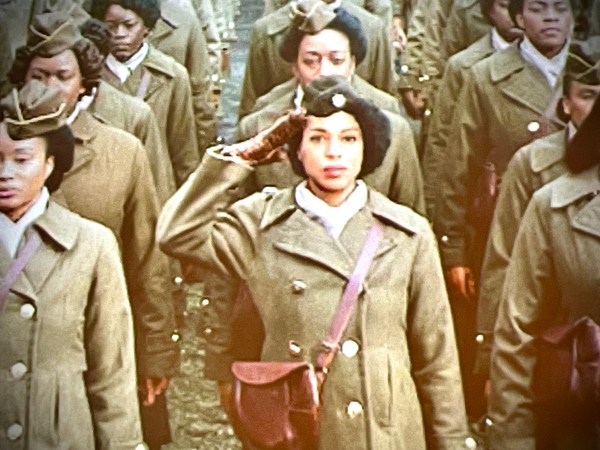
I’m inspired by women in non-traditional roles and WW2 is an interest I inherited from my Dad so I was excited for the new Netflix offer ‘The Six Triple Eight’.  The film tells the story of the first and only all-black unit of the women’s army corps which was led by Charity Adams who was the first African-American woman to become an Officer. With the level of racism and sexism in America in 1945, it seems an impossible feat.

Facing challenges at every step and deliberately set up with an impossible task, Charity had a determination that allowed her to become the highest ranking African-American woman by the end of the war. 

Her trailblazing journey highlights themes of inclusion, resilience, and effective leadership under pressure that are deeply relevant today. Here’s why her legacy continues to inspire and guide modern conversations about diversity and leadership:

1. Breaking Barriers in Leadership

Then: Charity Adams broke racial and gender barriers in a time when opportunities for Black women in leadership roles were virtually nonexistent. She led the “Six Triple Eight” to overcome systemic discrimination, logistical challenges, and the monumental task of sorting millions of pieces of undelivered mail to boost the morale of soldiers during the war.

Now: Her story underscores the importance of representation in leadership. Diverse leaders bring unique perspectives to problem-solving and decision-making, which are essential in today’s globalized and inclusive work environments.

2. Demonstrating Resilience and Excellence

Then: Despite facing racism, sexism, and immense pressure, Adams demanded excellence from herself and her team. She emphasized the value of discipline, collaboration, and purpose in achieving their mission.

Now: In modern workplaces, leaders must navigate complex challenges while fostering resilience in their teams. Adams’ example reminds us that adversity can be overcome through strategic thinking, strong leadership, and a commitment to the mission.

3. Advocating for Equity and Inclusion

Then: Adams proved that Black women could lead effectively in roles traditionally reserved for white men, challenging stereotypes and paving the way for future generations.

Now: Organizations still struggle with inequities in leadership opportunities for women and minority groups. Her example encourages leaders to actively address bias, create inclusive environments, and champion equitable opportunities.

4. The Power of Purpose-Driven Leadership

Then: Adams was not motivated by power or personal gain but by a sense of duty to her country and her team. Her purpose-driven leadership inspired her unit to achieve a seemingly impossible mission.

Now: Purpose-driven leadership resonates deeply in today’s world, where employees and stakeholders value leaders who prioritise social impact, ethical practices, and meaningful change.

5. Legacy as a Catalyst for Change

Then: Charity Adams’ story was not widely celebrated for decades, reflecting how the contributions of marginalized groups can be overlooked. Recent recognition highlights the need to acknowledge diverse histories.

Now: Her legacy serves as a call to action for modern leaders to recognize and amplify under-represented voices, ensuring that everyone has a seat at the table and their contributions are valued.

In today’s era, where diversity and inclusion are business imperatives, Charity Adams’ life offers timeless lessons on how to lead with integrity, resilience, and purpose. Her example encourages us to challenge systemic inequities, inspire others through our actions, and lead boldly in pursuit of a better, more inclusive future.

Charity Adams’ story reminds us that leadership is not about titles or power but about purpose, resilience, and inclusion. Her legacy challenges us to build workplaces and communities where everyone has the opportunity to lead and thrive.

If you’re looking to foster this kind of leadership in your own organisation or develop a culture where inclusion and resilience are at the forefront, I’d love to help. Through leadership development, culture support, and tailored coaching, I work with teams and individuals to inspire meaningful change and unlock their potential. Let’s connect and explore how we can create a better future together.


The Wicked Truth: How Elphaba’s Choices Redefine Leadership

I am one of many musical theatre fans that has waited in anticipation for the release of Wicked for the big screen and I was blown away by the costumes, choreography and casting which made it a mesmerising masterpiece which brought to life a much loved story.

What makes this work more interesting is the important themes it encourages us to explore. Dilemmas around diversity, power and inclusion are central to the story as we see someone who is visibly different struggle to be accepted. What stands out to me the most though is Elphaba’s clarity and commitment to what she believes is right and wrong. She finds herself in her dream position of meeting the Wizard and finding that her unique skills are exactly what he is looking for. She is offered a new life with the Wizard which is what she has always dreamed of. However, she discovers that his actions go against everything she believes in so she chooses to make a stand regardless of the personal cost. 

It poses the following question: ‘What can Elphaba’s story teach us about leadership and ethical boundaries?’ 

When Elphaba and Glinda arrive to meet the Wizard, they receive an intimidating greeting from a large, golden head with angry, flashing eyes and a deep, booming voice. Terrified, the pair begin to introduce themselves and are interrupted by a human voice which is met by a body of a small man who emerges from behind the mask.

When the Wizard is revealed to have built his power on unethical practices which ensure he maintains control, Elphaba faces a moment of profound ethical conflict when she discovers that the Wizard’s actions contradict everything she believes in. At this crossroads, she must decide: continue to support the system that has given her power and influence, or reject it to stay true to her moral principles. 

This dilemma mirrors the tough choices leaders often face—balancing personal ambition and the pressure to conform with staying true to ethical standards, even when it means sacrificing something valuable. Like Elphaba, leaders may be forced to choose between advancing within a flawed system or taking a position that might alienate them from power or popularity.

Staying true to herself comes at a high cost as she is demonised and cast as an enemy to be feared. In the final number of Part 1, Elphaba tells Glinda she cannot accept these limits because it is too high a cost for her. Glinda says Elphaba is delusional and should accept the status quo but it is too late for Elphaba and she knows she cannot support something she is so strongly against. 

Elphaba’s decision to walk away regardless of the cost to her shows true leadership by prioritising principles over personal gain. It means she is cast out with the Wizard using his power to make others fear her and cast her as ‘Wicked’ despite her moral high ground. Being a lone voice against unethical systems often leads to criticism which can be difficult to face but leadership is about being able to stand up for what is right even if it is not popular. 

So, what lessons can we, as leaders, learn from Elphaba’s experience?

  • Maintain integrity – Leadership is not about being popular. It’s about doing the right thing and standing by your values even when that is difficult and uncomfortable.
  • Demonstrating courage – doing the right thing often requires bravery and resilience so leaders need to stay true to themselves and be clear about what they believe in.
  • Creating a new narrative – leadership isn’t about being liked, it is about making ethical decisions that inspire others and bring about change. 

As we are coming to the end of 2024, it is the perfect time for reflection and I invite you to consider what you would do if you were in Elphaba’s position. What choices in your leadership could change the narrative, just as Elphaba’s choices reshaped hers?

Ultimately, we all need to lead with courage, even if it means re-writing the story that others tell about us.

If you’re interested in exploring your own ethical boundaries or want support in developing these leadership skills with your team, get in touch to find out how we can help.

Image: ID 337113737 | Wicked © Chingyunsong | Dreamstime.com

Power, Progress, and Patriarchy: Lessons on Culture from the US Election

When I went to bed last night, it was with a feeling of hope that I might wake up with a mixed-race woman as the leader of the free world. The idea was exciting because it sends such a powerful message to all women about leadership and culture. Alas, it was not to be. 

It reminds me of a key lesson from my course with Aberdeen University exploring organisational culture and conflict. The thing I noticed from the very first lecture was that culture is essential for inclusion. I’d say that a common mistake for organisations is to make a bold commitment to EDI, setting goals and indicators without doing the culture work required for success.

The US election result highlights the tensions in society around equality and change. What we have seen in America is a choice between masculine and feminine cultures and what we have learnt is that patriarchy is alive and well.

Watching Harris on the campaign trail, I saw an intelligent, warm, empathetic leader who could speak to all and bring unity. She came across as honest and credible, with a professionalism fitting for a world leader.

Trump on the other hand is clearly a highly controversial figure who bases his approach on the masculine values of power and status. 

Hofstede’s cultural theory suggests that in a masculine society, gender roles are distinct. The belief in this culture is that men should be assertive, tough and focused on material success. In such a society, men ’hold more positions of power, get paid more and are expected to act in a masculine manner‘.

By contrast, feminine cultures have no such divides with men and women equally concerned with quality of life. Feminine cultures tend to have loose gender roles, equal pay, female representation in most positions of power, and quality of life and relationships with people are valued over status and wealth.

Whilst individualism vs collectivism represents a separate cultural dimension, it does seem to me that this election result represents individuals concerned with self-interest which is in conflict with the more caring, nurturing feminine approach which might be more collectivist.

Culture develops from history so whatever the original model of a nation or organisation, this will inform views and beliefs. Looking more into this, the values attributed to America are justice, freedom, equality, democracy and compassion. Let’s be honest though, perception has a role to play here – some have been free and equal for longer than others!

If you listen to the powerful speech from John Legend and Common at the 2015 Oscar award ceremony, you will hear them speak passionately about the continued struggle for justice in America and around the world (listen from 2.28)

So for many today, the election result will seem like an historic day for equality and social justice in a very damaging way. For all those campaigners and activists feeling tired and drained today, it’s a night for pizza and pyjamas. Tomorrow, the work continues. Here is a gift to inspire us all and bring courage and strength: ‘Still I Rise’ by Maya Angelou (1987, Live performance)

Does this resonate with you or do you have a different perspective? Whatever your views, feel free to share in the comments below.

5 ways to tackle the gender pay gap

If you didn’t know already, today is #EqualPayDay in Britain which means that effectively, women work the rest of the year for free given the stark difference in pay that women receive for their work.

According to figures published by the Fawcett Society, the pay gap for women working full-time is 13.7% which means women earn just £86.30 in every £100 received by men. The biggest gaps can be found in Construction (22.9%), Finance (22.3%) and Education (19.7%). And there is also a considerable difference in senior roles with women accounting for just 7% of CEOs in the top 100 companies.

Sadly, 1 in 3 people don’t realise that discriminatory pay is illegal and therefore provide no challenge to the status quo.

What causes the gender pay gap?

There are a number of factors that contribute to the pay gap between men and women with the main issue being a continuing perception of male and female roles. Research from the Welsh gender equality charity, Chwarae Teg (FairPlay), discovered that children develop their views of gender roles as early as 3 years old and these views ensure that the cycle of inequality continues despite legislation to level the playing field being introduced nearly 50 years ago. Basically, the continued view that women will look after the family ensures they earn less than men. Women might plan their whole career around this, choosing lower paid jobs such as hairdressing, childcare or admin because they think it will be more flexible when the time comes to start a family. Other women look to change later on when they know that babies are on the horizon.

What can we do to tackle the gender pay gap? Here are 5 things that would make a difference:

1) Pay transparency – large employers are now being asked to publish their pay figures so discrepancies can be identified and eliminated. The BBC for example have published their figures to reveal some shocking truths about gender pay within the corporation.

2) Family friendly policies – employers should ensure flexibility for those with caring responsibilities and support them to make a full contribution at home and at work. Many employers think they are family friendly but are just blissfully unaware of the issues for their staff. For example, many organisations have different packages for mothers and fathers when it comes to maternity or paternity rights. This can make it very difficult to take up opportunities through policies such as shared parental leave because employers often have an enhanced package for mothers but not fathers so many families feel this is not an option.

3) Challenge stereotypes – organisations should make sure they are not reinforcing stereotypes but making industries such as Construction attractive to women as well as men. Women who are in male dominated industries should do all they can to support other women in their industry and support others to join them.

4) Women’s networks – women need to support each other so either create a network of your own with people who will support and inspire you or join one that is already out there. Many industries and employers have women’s networks so look them up and get involved.

5) Ask for a pay rise – if you think you are worth more than you are being laid, let your employer know about it. Figures show that women are less likely than men to ask for a pay rise and are worse off as a result. Sure, the answer might be no but you could be pleasantly surprised!

Do you have experience of gender pay issues or examples of good practice for levelling the playing field? Let us know in the comments below.

3minuteleadership.org

Why diversity is more than demographics

When I first became a Manager, I had one member of staff in my team.  She was my antithesis.  Completely the opposite of me.  I didn’t understand her way of working or why it was so difficult and I found it very frustrating.  She would focus on the minute details, take her time over things and make sure everything was exactly right.  In contrast, I support the Facebook mantra of ‘done is better than perfect’.  That doesn’t mean a lack of standards but I’m not looking for the best piece of work ever but sometimes if you spend too long making it perfect, you end up missing the moment.

Not long after we had begun working together, I went on a training course about emotional intelligence and it was there that I had a light bulb moment.  We did an activity about working styles and in doing this, I realised that my colleague was a ‘be perfect’ whereas I’m a ‘hurry up’.  As soon as I realised that, my approach changed and we had a much more successful working relationship from there on in.  By the time she left the organisation, I had learnt that the opposite skills that she brought to the team were exactly what I needed and once I was back to working with someone similar to myself, I felt a loss of skills that had been extremely valuable.

Today, I deliberately look for difference when hiring people.  It might be tempting to recruit in my own image and it can be easier to work with others who think the same way that you do and take the same approach but I now understand the true value of diversity and aim to construct a team where each individual brings something different and can shine in their own right.  My current team is a fantastic example of this – individually unique and perfect together.  They each bring something to the party which makes for endless good times!

Often when we talk about diversity we think about demographics – sex, race, age, ability – and this is extremely important but I do think it’s more than that.  In my view, we need to think about difference more broadly and recognise the value of bringing people, views and skills together.  The reason diversity is said to be good for business is that it brings a variety of viewpoints and a wider range of experience which improves decision making and problem solving .  An article published in The Guardian claims that ‘unconscious bias and a tendency to hire in their own image can lead managers to bring in the wrong candidate for their team ’ and suggests that ‘a lack of diversity is one of the biggest issues threatening the advertising industry today, challenging the credibility of the industry and preventing businesses from being run as effectively as they could be’.   The advice in this article is to ‘consider each hire based on the value they can add to the team, rather than simply in a specific role. It is not always about hiring the best person for the role, rather the best person for the team as a whole’.

Keep an eye on the skills in the team and consider what’s missing.  Then when you recruit in the future you can look for someone who will add value to the team rather than bringing what you already have.

Have you got your own stories about the benefits of having a diverse team?  Can you relate to the experiences above or do you have your own which challenge this view?  Let us know in the comments below.


If you want to understand the roles in your team or find out if you have unconscious bias, try these tools:


www.3minuteleadership.org 


Photo: Pixabay.com


Blog at WordPress.com.

Up ↑