Thoughts from top women in Wales on increasing representation in leadership & decision-making

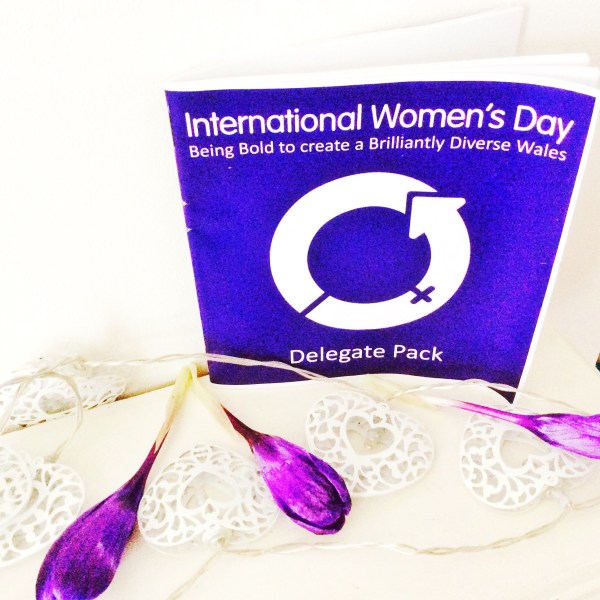
This week, I joined colleagues from across the Civil Service and Local Government in Wales to mark International Women’s Day at the Senedd (Welsh Parliament). An impressive line-up of leading ladies shared their own career journey and experiences to inspire others to follow in their footsteps.

Just a few days earlier, the Assembly Research Service published figures on gender equality. These figures show that slightly fewer women than men are economically active (72.4% compared with 83%) and a higher proportion work part-time (41.3% compared with 12.7%). Of those sectors prioritised for investment by the Welsh Government within their economic strategy, women account for just 32.7% of the workforce.

When we look at our public service leaders, we can see that despite accounting for 72% of Local Government staff,only 18% of Local Authority Chief Executives are female. Of our elected representatives, less than one-third of councillors are female and whilst women account for nearly half of our Assembly Members (41.7%), this has slipped from an admirable 52% during 2005 – 2007.

The Deputy Presiding Officer, Ann Jones AM, welcomed delegates and reminded us that the Welsh Assembly has a history of leading the way on gender equality. Despite this, she noted that everything that we have achieved as women has been achieved because we have been willing to stand together and fight for women’s causes.

The figures above show that there is still a great deal of work to do if we are to achieve gender equality in Wales.

A number of prominent women addressed the audience from the HR Director of DVLA to the Chief Executive of the National Assembly for Wales. Here are some of the things suggested throughout the event that would help to increase the number of women at the top:

1. Appoint a gender champion – change comes from the top and someone needs to take the lead to ensure gender is on the agenda in your organisation. Consider finding someone senior to take on the role of gender champion to push for fair representation of women.

2. Develop a positive intervention – sometimes the pace of change is too slow and we need positive interventions to accelerate progress. In particular, organisations in receipt of public money should be leading the way.

3. Create an inclusive environment – typically, women have a different style and the workplace should encourage everyone to contribute to the best of their ability and in their own way.

4. Pay attention to language – language shapes the world around you. If you are using ‘Chairman’, ‘guys’ (to mean everyone), or ‘he’ (to refer to a person male or female), then just stop. Right now.

5. Job advertisements and interview questions – evidently, boys associate more with verbs and girls with adjectives. Jargon and any language of power possibly put women off so consider getting a specialist to ‘gender lens’ your recruitment processes to make sure you aren’t unintentionally excluding women in this way.

6. Role models – you can’t be what you can’t see. Women need access to inspirational role models who are visible to encourage women to follow in their footsteps. And I don’t mean those women who conform to masculine norms and/or pull the ladder up behind them but those who have managed to succeed whilst staying true to their own identity and maintaining their integrity.

 7. Challenge – if we don’t challenge when we see actions or hear views that disadvantage women or reinforce stereotypes then change will be slow to happen. If you think something is wrong or unhelpful then say so. This will help to raise awareness and hopefully lead to better decisions.
Think I’ve missed something? Share your thoughts in the comments below.

Want to read more articles like this? Subscribe to the blog.


3minuteleadership.org


What makes a true leader? Fancy job title, fat salary or the courage to stand up for what you believe in?

Watching President Trump’s inauguration and the events that have followed has made me think about the history of the civil rights movement in America. It’s clear to see that civil rights and human rights in the US are at threat under the new president. His first day was marked by women’s marches in major cities throughout the world and he is already taking forward decisions that many people feared.

The first action has been to sign an executive order begin the process to repeal Obamacare. He has reinstated the Mexico City Policy known as the Global Gag rule which withholds US foreign aid money to NGOs that provide abortions and abortion counselling. He has signed two executive orders which will build that wall he’s talked so much about, boost border patrol forces and increase the number of immigration enforcement officers who carry out deportations. And today he has been advocating torture which has made me especially glad to be an Amnesty International donor!

All of this has driven me to rewatch films like Selma and The Help to remind me of how far America has come and how much it has to lose. In turn, these films have reminded me of a key leadership quality – the courage of conviction and willingness to risk everything to defend what you believe in. This is what marks out the great leaders of the world.

Nelson Mandela gave a 3 hour speech at the Rivonia Trial in 1964 where he and others were accused of sabotage. He concluded his speech by setting out his vision for equality and harmony. So strong was his belief that he finished his speech saying that he would give his life to achieve the ideal he dreamed of:

“During my lifetime I have dedicated my life to this struggle of the African people. I have fought against white domination, and I have fought against black domination. I have cherished the ideal of a democratic and free society in which all persons will live together in harmony and with equal opportunities. It is an ideal for which I hope to live for and to see realised. But, My Lord, if it needs be, it is an ideal for which I am prepared to die. Nelson Mandela, 1964

In the film Selma, directed by Ava Duvernay, we see the great Martin Luther King lead a march from Selma to Montgomery which had been prevented previously by state troupers by force of violence. During his campaign for civil rights, King was arrested many times, had his house bombed and was finally assassinated in 1968. He believed so much that what he was calling for was the right thing that he continued even though he risked his own personal safety and freedom.

Disney’s The Help portrays the same conviction when a budding journalist asks the African-American maids to tell their stories. In the film, the women she interviewed knew that they were likely to lose their jobs if they were identified, they could have their house burned down or even be killed for telling their story. They did it anyway and showed great courage in doing so.

And that’s it for me – a fundamental leadership quality – the courage to stand up for what you believe in regardless of the consequences. If we didn’t have people like that, we would never achieve any change. These leaders often are not the leaders with the fancy job title and fat salary. These are community leaders and individuals who are willing to put themselves on the line to speak out against injustice. Those people are the real leaders in our society.

3minuteleadership.org

But women have babies don’t they?

Last week, the Labour party announced a mentoring scheme for women in the name of Jo Cox MP which aims to support over 600 women leaders who will be able to make a strong contribution to public life.

The announcement made me think about the wide range of programmes in place and to wonder why we have seen a raft of women’s development schemes and still have a significant under-representation of women in leadership roles, even in sectors where women dominate.

Now, I am in favour of this and similar programmes as I know from personal experience that they are extremely valuable in developing self-confidence which women often seem to lack and is vital for putting yourself forward for opportunities and making your voice heard.

For women to be able to discuss the challenges is absolutely necessary in tackling this issue as they realise they are not alone and are able to learn from the experiences of others. Prominent women have begun sharing their own lessons and this can be invaluable. For example, ever since I read Sheryl Sandberg’s ‘Lean In’, I make sure I sit at the table, not at the periphery, and believe that my view is as valid as any other.

When you notice something that makes a difference, it’s important to pass on the message and encourage other women to do the same. For too long, women who have made it to the top have pulled the ladder up behind them and those of us climbing the ladder today have a duty to look back and help others to follow.

My belief is that whilst investment into development initiatives is to be welcomed, there are further commitments organisations can make if the really want to make an impact.

An article on women in British politics declares that ‘women aren’t the problem, the parties are’ and I have to agree that there is an entrenched gender bias which holds women back. It’s true in other organisations too.

Over the last seven years, I have been supporting organisations with gender equality initiatives, talking to a wide range of different groups about the barriers for women. You would be amazed by some of the comments I have heard along the way. A common assumption has been ‘but women have babies don’t they?’ and the most recent justification for women not getting involved in committees was ‘they don’t like driving at night’ (I was pretty stunned too).

It’s positive that I am starting to hear of individuals who commit to ensuring gender balance on recruitment panels or refusing to speak at events if there are no women on the programme. Women and indeed male supporters of our plight need to start refusing to participate unless there is gender balance in order to highlight the issue and show that it is important.

We also need to create an environment that women want to be part of. It was a few years ago that I was watching a debate in the House of Commons which was actually about the under-representation of women in parliament. The debate was playing in the office and a colleague said to me ‘what are you watching? The football?’ because she could hear jeering and cheering in the usual Westminster/football stadium style.

It isn’t enough to state an aspiration to support women and provide another leadership programme. We need to develop cultures which allow women to participate and succeed on their own terms.

We need to see a true commitment to breaking down the barriers for women and ensure change happens at a rate that will make a difference.


3minuteleadership.org

Authenticity and believing what you say

Over the last few days, I’ve been developing a speech writing workshop which has involved trawling through videos on you tube to find a range of public speakers that my group can study.

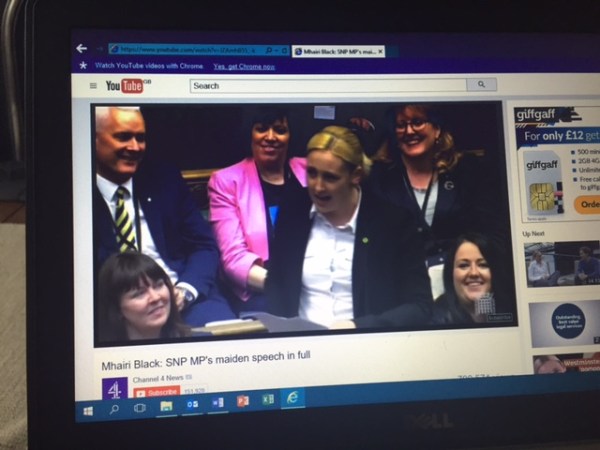
In trying to get gender and political balance, I’ve had to look particularly hard for footage of women. My search eventually led me to watch some clips of Mhairi Black and I couldn’t help thinking what a great leader she is. So what does she have that makes her stand out? What is it that gives her authority and makes people want to support her?

Well, the first thing is that she commands attention. When she speaks, people listen. She’s given some great performances lately and that makes us want to hear more.

The next thing is that she comes across as standing up for people and raising issues that matter on the ground. The speeches I watched were about pensions and Trident in which she highlights the negative impact of policy decisions on constituents. She really seems to care about the issues and doing the right thing for people.

What she does very cleverly is draw comparisons with things that everyone can relate to. For example, in her speech on pensions, she talked about mobile phone contracts which made the pensions issue that is so real for the WASPI women, something which felt real to everyone listening.

And she’s inclusive. She tries to bring people together by setting out her vision and inviting others to join her by focusing on the issues and transcending political boundaries.

All of this from the youngest Member of Parliament in the House of Commons who also happens to be female and a proud LGBT rights activist. Challenging every stereotype there is around politicians, you can’t help wanting to be just like her making her a fantastic role model for others.

All of these things together, I would argue, make her an excellent example of the authentic leader we hear so much about today. She has a real sense of honesty and integrity that instils confidence.

I think it was Tony Benn who said ‘if you say what you believe and believe what you say’ you can’t go far wrong and this certainly seems to be true in this case and a truth I think all leaders would do well to keep close to their heart.
3minuteleadership.org

Blog at WordPress.com.

Up ↑