
Behind Closed Doors: The Invisible Costs of Care for Women

Research from CIPD shows that nearly half of the 3 million working carers in England and Wales struggle to balance work and care, with a quarter considering leaving their jobs. As more women are delaying motherhood, “sandwich carers” juggling childcare, elder care, and work are growing in number with many experiencing mental ill-health. Figures show that 51% of sandwich carers are aged 45–64 – also the menopause red zone. 

A Personal Story
When my dad passed away in 2022, I became my mum’s carer while raising my 4-year-old son. Living 160 miles apart, I frequently had to choose who to be with – and I couldn’t choose my child.

Things came to a head before Christmas when my mum had a fall. She lay in the driveway until discovered by a passing window cleaner and was taken to A&E by a neighbour.  She was discharged after eight hours, with no consideration of whether she could manage at home—she couldn’t.

Despite an emergency care package, the burden of overnight care fell on my niece, who was called 5–6 times a night. When I arrived, the situation was unsustainable. Night-time care for my mum was quoted at £1,700 a week—contrast this with the £81.90 carers’ allowance for family carers.

This financial inequity is a bitter pill to swallow. Family carers support out of love, but that love comes at a high price: sleepless nights, lost income, and emotional burnout.

The Cost of Caring
Balancing work and care often forces women to reduce their hours or leave work altogether. A typical day might look like this:

  • Childcare: 4–5 hours
  • Work: 7.5 hours
  • Sleep: 7 hours
  • Commuting: 2 hours

It leaves little room for elder care, especially as most support services operate during office hours. Women already shoulder the bulk of unpaid domestic work, so it’s no surprise they’re 7x more likely than men to leave work entirely due to caregiving responsibilities.

What can employers do?
Employers can ease this burden by fostering a culture of understanding and flexibility. Here are key steps they can take:

  • Awareness: Gather data on carers and use it to advocate for policy changes, learning from your teams and amplifying their voices.
  • Training: Train managers to understand carers’ unique challenges and set up systems that allow carers to notify them of caring demands.
  • Leave: Offer paid carers’ leave to prevent financial strain and demonstrate that the workplace values both its employees and their caregiving responsibilities.

The UK care system relies heavily on the unpaid efforts of family members, predominantly women. We need systemic reforms that value carers’ contributions, both at home and in the workplace.


Supporting carers is key to fostering a thriving workforce. Businesses can boost retention, morale, and productivity by developing strategies that recognise the impact of caring responsibilities and address carers’ needs.

1-1 coaching can also help women to find balance and effectively advocate for themselves, striking a balance that allows them to meet their responsibilities whilst still smashing it at work. 

If you’re ready to create a culture of care and empowerment, get in touch to find out how we can support.

Image by Sabine van Erp from Pixabay

From Bias to Burnout: How Menopause Impacts Women’s Work Experiences

I’ve talked a lot over the years about barriers for women in the workplace such as gender bias, care, stereotypes etc. all of which can prevent women from reaching their potential. For those who do manage to overcome these barriers, the menopause can be one that finally defeats them.

In terms of the figures, recent research from CIPD demonstrates that ⅔ of women (aged 40-60 in employment) have found that menopause symptoms have had a negative impact on them at work.

A 2023 survey found that 23% of women aged 40–60 considered quitting their job due to menopause, and 14% were actively planning to leave their job.

The reduction in oestrogen levels can have a major impact on women’s lives and this process typically begins when a woman reaches late 30’s/early 40’s. From reading menopause threads on mumsnet, I have come to the inexpert opinion that if you are over 40 and have symptoms that you think are hormone related then they probably are. 

From my own experience in recent years, symptoms are wide-ranging and can be easily mistaken for other things. Itchy upper arms, for example, I  was treating as dry skin until I saw a Twitter post by Newson Health talking about this as a symptom of menopause. As soon as I started on HRT, the itching went away completely. Other typical symptoms of peri-menopause include hot flushes, anxiety, insomnia, fatigue, headaches, and muscle and joint pains – and I have had the lot over the past 18 months. 

Given the level of knowledge women have about the menopause today, it is amazing that so many of us are still being fobbed off by health professionals and prevented from getting the treatment we desperately need.

Hard-working and well-meaning as they are, I’ve heard some ridiculous things from healthcare workers. For example, when I first spoke to a GP about anxiety and asked if it could be peri-menopause, I was told that it was more likely to be depression (it definitely wasn’t).

I’ve had a nurse tell me that I have unusual symptoms and that most women come in with hot flushes and night sweats (probably because it’s the only symptom that gets talked about regularly despite a wide range being recognised).

Another GP asked me if my mum had experienced early menopause so I had to educate her on the concept of peri-menopause which was not something that was widely known about in my mother’s day. I’m aware of other women who have been told they can’t have HRT because they are ‘too young’ – this is despite the fact they are struggling to cope with their symptoms.

Finally (though I could go on) I was told by a male GP that he doesn’t deal with HRT ‘because he’s a man’ (and yet women over 40 are more likely to present with symptoms of anxiety due to hormones and this was the mental health specialist). A long-standing women’s rights activist, I am beside myself to think that he considered it acceptable to say this in 2024.

Thankfully, I eventually realised my symptoms weren’t normal and went elsewhere to get help.

Clearly, I am not qualified to make medical recommendations and if you are struggling, you should do your own research and access appropriate support. However, it might be useful to know these top 3 things that have made a difference for me:

  1. Magnesium – I have been experiencing severe muscle pain for nearly a year to the extent that I have felt like I can’t go on feeling so uncomfortable in my own body. I’ve put it down to a range of things from carrying a bike to doing yoga. Eventually, I realised that everyday activities couldn’t be the cause of such severe discomfort. Desperate for a good night sleep, I was given magnesium supplements to try and have discovered this is a magic mineral! Not only did they tackle my insomnia but they also got rid of my joint pain overnight. I have to take it regularly but it works and the effect is immediate. It’s also a good excuse for a salt bath or foot soak! If you want to know more, read this article by Better You.
  2. Testosterone – whilst I knew that oestrogen reduces, I didn’t know that testosterone levels reduce in peri-menopause as well. After requesting a blood test, I was told that my results were ‘normal’. Having a look myself, it seemed to me that my levels were at the low end of normal. When I spoke to a private GP, she confirmed that all my hormone levels were low and prescribed testosterone as part of my treatment plan. After a week boosting my testosterone levels, I felt like a new woman, able to cope with all of life’s challenges. Read more about the benefits of testosterone in menopause.
  1. Menopause specialist – whilst reluctant to fork out the money to go private, I finally decided to bite the bullet and I am so glad I did. Finally, I was speaking to a GP who recognised my symptoms and could put me on a treatment plan that would make a difference. 

Getting older is a challenge for all of us but with hormonal and chemical imbalances, mid-life is especially challenging for women who can suddenly find themselves feeling anxious, confused and unsupported. 

Finally, I have been to several awareness sessions which have ensured I have a good understanding of the symptoms and was able to recognise them. If you are looking for something for your workplace, I recommend The Menopause Team who can provide a very informative and worthwhile session.

Has your life been affected by menopause symptoms? Do you have a story to share? Let us know in the comments below.

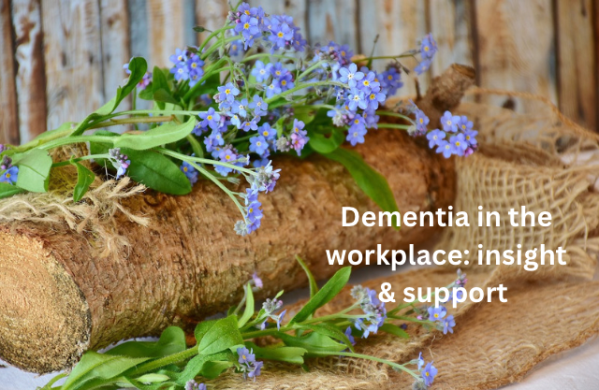
Dementia in the workplace: Insight & Support

Dementia has become a central part of my life after my mum received a diagnosis last year. One of the benefits of this experience for me has been an increased awareness of the impact of dementia in the workplace and considerations as an employer.

First of all, we know that the number of people with dementia is increasing and the likelihood of having a diagnosis increases with age. Here are some useful statistics:

Plans to increase the pension age to 68 means there will be more older people in the workforce. And, if you are a charity, you might be working with an ageing group of volunteers also.

The final group to remember is the working carers who are relied upon to fill the gap in health and social care services for people with dementia.

What to remember as an employer:

Dementia is a disability – people with dementia must be treated like any other employee with a disability. That means understanding what dementia is and supporting the individual to carry on working (if that is their wish) by making reasonable adjustments. 

It’s just a new way of looking at things – when a person has dementia, their brain works differently. They are less likely to cope with complexity so clear communication and direction is essential. They are also more likely to be tired so flexibility may be required.

It does not mean the individual has lost capacityThe Mental Capacity Act states that capacity should be assumed in the absence of an assessment. It is more than possible that someone with dementia still has capacity to make their own decisions.

It is a living bereavementfamily members are likely to experience grief and loss even though the person is still alive. A diagnosis represents the beginning of what’s known as ‘the long goodbye’. It is a major adjustment and family members may need time to adjust.

Balancing work and care – There are 5 million working carers in the UK. Alzheimers Society estimate that there are 700,000 unpaid carers of people living with dementia. This group has to find a way to balance work and care. Ensuring they are supported in the workplace to deal with this change can make all the difference for employee retention.

From the figures provided, it is fair to expect that dementia will become more prevalent in the workplace so it is important to be aware and consider how to identify problems and create a safe and supportive environment.

If you are affected by dementia and need support, here is where to get help:

Carers UK

Alzheimer’s Society  

Dementia UK

Cruse Bereavement Support (offering specialist support for those experiencing grief and loss as a result of dementia)

If you have a military connection, call the Royal British Legion

Have you been affected by dementia in the workplace? Is there useful learning you can share? Post in the comments below. 

Blog at WordPress.com.

Up ↑