Women Leaders

[Guest post by Hilarie Owen]


Most organisations are aware of gender inequality and many are trying to address the issue with training programmes, coaching and trying to build a pipeline but these actions are not delivering the results quick enough. Filling the pipeline hasn’t produced the results and neither have policies. The barriers that hinder progress for women are far more complex and elusive. 

Following my webinar on women, power and leadership that was held on International Women’s Day 2018 with three great speakers I decided to explore women leaders in more depth. I interviewed women leaders across society from business, the arts, science, technology and government. I was enthralled by their autobiographical narratives. Their stories were engaging and it became clear that their leadership emerged and grew from their experiences. It quickly unfolded that there were key patterns that were central to their ability to lead that I will try and capture in my new book. One of the noticeable things was that in 30 interviews I did not find one ego. In fact these women were like you and me so we can’t say ‘Ah, but they are different’.

Each woman, regardless of their background or education, had common elements they had developed. It wasn’t as simple as qualities, as important as these are, but constructs they had combined to form their leadership – a different form of leadership to the older male version.

I’ve been immersed in what makes great leaders for the last 20 years, helping to inspire high performance in top teams around the world, including my research with the RAF’s Red Arrows. Women are doing amazing things in business, the military, politics, sports and the arts. Yet the number of occupying senior posts is falling.  Globally, while women are receiving higher education gender parity is shifting backwards for the first time since 2006, according to the 2017 Global Gender Gap Report and what stands out is that although women across the world are highly educated the workplace is still not give them parity.

In the UK, more women are joining boards as Non-Executive Directors but this has become more of a tick box exercise as the numbers of full time women directors remain static. According to a report from Grant Thornton in 2017, the number of women coming through into senior management posts is actually declining. How can this possibly be? Surely we already have the policies and procedures we need in place. The solution isn’t to ‘fix women’ but to fix the barriers in organisations. So the book not only focuses on women leaders but how to enable organisations to be far more inclusive. The book will be launched in the Spring but people can pre-order copies now by going to:

https://www.kickstarter.com/projects/614479735/welead-women-leaders-and-inclusive-organisations?ref=project_build
So far, I have written eight books on leadership that sell around the world opening up opportunities to work in different countries. Everywhere I meet inspiring women who are doing amazing work and campaigning for more opportunities for women.  My aim is quite clear. One day when someone asks women ‘what do you do? The answer will be ‘weLEAD’.


© Hilarie Owen  hilarie.owen@iofl.org

3minuteleadership.org

Why I think becoming a mum will enhance my leadership skills

Obviously having a baby is a huge event which changes your life forever but aside from the insane personal benefits, I’m convinced that there are professional advantages as well.  Of course there will be challenges to overcome around balancing work and family life which should not be under estimated but even this, once accepted, can help to develop a number of management and leadership skills.

A few years ago, I was doing some coaching with someone looking to take the first step into management and I encouraged her to consider how she would usually get her children to do things they don’t want to do.  At first, she couldn’t see what I was getting at but when she started talking me through, she could see how the techniques she used with her children could be adapted and used in the workplace.  Things like explaining the problem, what needs to change and how they are going to do that; making the children realise that this needs to happen quickly; checking their understanding of the situation; empowering them to take an active role in the process; and praising them when things go well all fit within Kotter’s 8 step process of successful change.

There are lots of other aspects of leadership that I believe will be strengthened too.  Here are just 5 things I think will be different when I get back:

1)      I’ll be a better role model – I know I’m already a role model within the organisation and in the industry, however, at the minute it’s a responsibility that I take seriously but maybe don’t demonstrate at all times in the way that I should.  From the second my baby is born, I can never be off duty, instead, I will be constantly be aware of how my behaviour impacts on those around me and the responsibility I have to live within my values at all times.

2)      My organisational skills will be second to none – my colleagues perceive me to already be very organised but whilst at the minute, I can add appointments into my calendar and make sure I’ve got the right paperwork, I manage to hide my inner chaos beneath a professional façade.  Once there’s a baby in the mix, I won’t be able to leave anything to chance.  Already, I’m making sure we’ve stocked up on essentials at home and all manner of bags are packed, ready for a multitude of eventualities.  In a blog published by Motherly on what new mothers want everyone in the office to know, they put it like this: ‘I now prioritise like nobody’s business, I will prove to be more efficient than anyone else in the team’.  If you thought I was efficient before, you ain’t seen nothing yet!

3)      I’ll bring increased compassion & understanding – the Motherly article puts it as being able to ‘anticipate the needs of others’ which is certainly an aspect but there’s more.  I’ll understand pregnancy and maternity in a way that you can only if you’ve been through it and whilst I already make sure my staff prioritise the school play, swimming gala or sports day, I’ll understand even more why that matters.  I also think I’ll be even more kind and compassionate, noticing the subtle signs that tell me someone is not ok.

4)      I’ll be so much more resilient – I’ve kept going throughout this pregnancy, walking the dog twice a day, every day; flying to give a presentation at 35 weeks; ad making the most of the pregnancy insomnia to get ahead during a busy period – me and my baby already know resilience but I certainly am going to develop so much more!  In my Mumsnet group for August babies, I asked some of the already new and existing mums for any tips for sleep deprivation.  One mum offered two words ‘survival and endurance’.  It’s going to be tough but if I can get through this, I really can do anything.

5)      My perspective will change – over the years, I have learnt to put the challenges into perspective and try not to stress about the things that don’t matter overall.  If I haven’t mastered it already, this change will surely remind me that life is the main goal and that it is always rich in experiences, good and bad but all to be cherished and enjoyed as much as possible.


Do you notice any positive changes when you returned to work after having a baby?  Do you have further thoughts on my suggestions above?  Share your experiences in the comments below.


3minuteleadership.org

Why becoming a great leader is a journey not a destination

One of my favourite leadership thinkers is Simon Sinek, author of Start with Why and Leaders Eat Last both of which you should read if you haven’t done so already.

The other week, I saw a link on Twitter to one of his videos which I watched and was reminded that ‘the best leaders don’t consider themselves to be experts; leadership is a skill which can be learned’.

This resonated with me because it is exactly the reason I am taking part in an initiative called ‘Leadership Pods’, a development programme developed by Dafydd Thomas at Circularis for people who want to be great leaders.

Being part of this encourages me to consider how I can further develop my leadership practice and allows me space to reflect on where I am now and where I would like to be in the future.  The programme also allows participants to share and learn from others who may have similar challenges or experiences.

As Sinek sets out, it is important as a leader to keep learning and commit to continuous improvement throughout your leadership journey.  It’s about supporting people and making a difference so why wouldn’t you want to work towards perfecting your craft which of course we all know does not have a final destination.

It’s like the best athlete working on their discipline; they can break new ground and set world records for their sport but there are always others who are watching them, learning from them and will ultimately take their place and set their own records.

Sinek goes so far as to say in his video: ‘any leader that considers themselves an expert… don’t trust them…. run in the other direction’.  You should definitely be suspicious of a leader who is convinced that they are always right and can’t see a reason to listen to the views or ideas of others.

In his book, Leaders Eat Last, Sinek promotes the importance within good leadership of prioritising the needs of others sometimes even putting these needs ahead of their own.  My approach certainly is to focus on supporting those in my teams, ensuring I take steps to understand their needs and considering how I can adapt my style to get the best out of them.

For example, I consider who they are and how they like to be managed.  Some people, particularly millennials, want to have autonomy; they want to be clear about what is expected of them and be given the freedom to do their best work which might involve trying out new ideas or generating new opportunities.  They expect to be able to get fully involved and don’t want to be told what to do.

Generation X and the baby boomers might prefer more specific management and direction  with greater clarity around what is expected of them and could even look for detailed instruction.  Of course people don’t always fit nicely into a box and so the only way you can understand what they need is to ask them.  I try to ask my direct reports on a regular basis if they are happy with the way they are being managed, recognising that my preferred style doesn’t work for everyone.  In circumstances where my approach is causing problems for them, I do my best to change it because ultimately, I want them to perform as well as they can and I don’t want to be the person that holds them back.

Understanding their long terms goals is also valuable because I recognise that they might not spend their whole career with one organisation and instead may wish to develop and move on to other opportunities.  In taking time to discuss this, I can ensure they are developing the necessary skills and experience to get them where they need to go.  Even if they do want to stay with us, I want that to be because they feel like they are able to develop and are invested in, whether that’s through funding for formal training or time to develop their specific interests or skills.

It’s important to recognise that they are a good measure of my own performance as a leader and I might ask them how they enjoy working with me and listen carefully to their feedback.  Also important is to recognise that they can be giving feedback through their silence or avoidance so I try to make a special effort to notice what they are not saying through body language or passing comments.

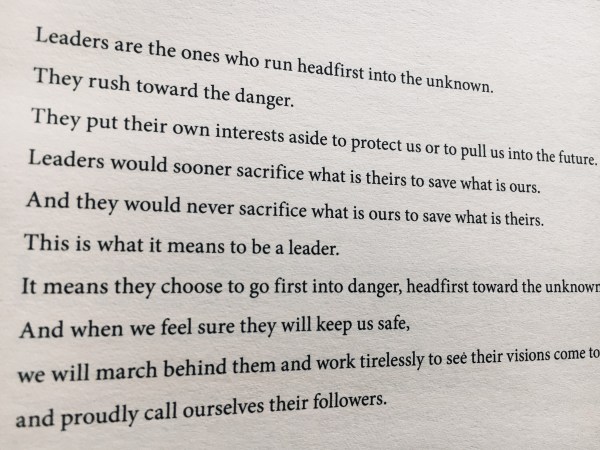
Sinek says: “We call them leader not because they are in charge but because they are willing to run head first into the unknown or dangerous.”

It’s not about status or rank, leadership is a skills that needs to be developed and perfected over time.  If you aspire to be a great leader then you might want to sign up for a Leadership Pod yourself and find out how you can unleash the power not only within yourself but in those you work with across your organisation.

Like a parent, you are not an expert parent but you keep practicing and practicing and hopefully, you’ll get it right someday.” (Simon Sinek)


Do you consider yourself to be a great leader? Have any thoughts or tips to share? Let us know what you think by posting in the comments below.


3minuteleadership.org


How to create an environment where your staff to lie to you (or how to make sure you don’t)

I’m going to let you into a secret… most employees want to work hard and do well.  I don’t think there are many in the workplace who would lie to you for malicious reasons.  However, the best employees might lie to you if they think this is the best course of action.

How can that be? I hear you ask.

Imagine this…

You have done an excellent job of hiring talented and highly-skilled people.  Across your organisation, there are people who bring a wide range of expertise and are committed to using this for the good of the business.  And yet you find out that they are keeping things from you or feeling the need to ‘spin’ the truth.  Your first reaction might be to think that they are stupid and incompetent.  Or you might think that they are being insolent; deliberately lying to because they think they know better than you do.  But how dare they, right?  I mean, you’re the boss for a reason and they should do what you say, yes?

The thing is, you might want to consider if there is something you have done to create an environment where, for good reasons, they think it’s better to lie to you than generate problems by telling you the truth.  The alternative to this could well be silence which is another clear indication that all is not well in the ranks.

Here are some instances where your actions might be encouraging your staff to hide the truth:

1)      When you make the job more difficult than it needs to be – they are getting on with something they know is valuable for the business and they have planned their time proportionately.  Then, you find out about it and decide it’s not the way you want it done even though your way will take a lot more time and resource that they and others should be spending on other things.  In an attempt to avoid that, they try to get the work done ‘under the radar’ because it’s easier than raising their head to get it blown off.
2)      When you take work off them because you think they have ideas above their station or think someone else could do it better – You find out a member of staff is working on something you think should be done by someone else so you tell them off an take it off them without asking any questions.  This is upsetting for them because they have worked hard on something they were interested in or felt they were good at.  If they felt that you would be encouraging and supportive, they probably would have been glad to involve you in the first place.
3)      When you dismiss something they are confident is a good idea – let’s say you have someone who has experience of delivering  certain type of activity and is confident that it’s a good idea and they can do it well.  It’s in line with organisational priorities but you want it doing a certain way, they think you are missing a trick but you won’t listen to them.  It’s understandable that they might try telling you just enough to get on with it the way they think is best.
4)      When you pull their work apart – they have identified a clear opportunity within the organisation’s objectives without any risk.  They would love to speak to you about it to ensure it’s how you want it to be and get your advice but they’ve shown you something before and you’ve ripped into it, giving criticism that is disproportionate and far from constructive.  Ultimately, you’ve knocked their confidence and destroyed their trust. They are not keen to come back for more so they keep it to themselves because they think it will allow them to get the job done more easily.
So hopefully, you’ve realised that if good people are keeping things from you, it’s worth reflecting on whether you have created an environment where they think that’s the best course of action.  In terms of what you can do about it, I’d advise that you start listening carefully and understanding how you can help rather than hinder.

My approach is always to think about how I can support my staff to do their best work.  I try to ensure clear direction from the beginning and offer pointers where I think they might help.  Questions are also a useful tool for helping them to think things through and hopefully bring them around to your way of doing things.  Ultimately, if you are critical, judgemental or heavy-handed, they won’t tell you what’s going on and I’d say understandably so.


3minuteleadership.org


Why diversity is more than demographics

When I first became a Manager, I had one member of staff in my team.  She was my antithesis.  Completely the opposite of me.  I didn’t understand her way of working or why it was so difficult and I found it very frustrating.  She would focus on the minute details, take her time over things and make sure everything was exactly right.  In contrast, I support the Facebook mantra of ‘done is better than perfect’.  That doesn’t mean a lack of standards but I’m not looking for the best piece of work ever but sometimes if you spend too long making it perfect, you end up missing the moment.

Not long after we had begun working together, I went on a training course about emotional intelligence and it was there that I had a light bulb moment.  We did an activity about working styles and in doing this, I realised that my colleague was a ‘be perfect’ whereas I’m a ‘hurry up’.  As soon as I realised that, my approach changed and we had a much more successful working relationship from there on in.  By the time she left the organisation, I had learnt that the opposite skills that she brought to the team were exactly what I needed and once I was back to working with someone similar to myself, I felt a loss of skills that had been extremely valuable.

Today, I deliberately look for difference when hiring people.  It might be tempting to recruit in my own image and it can be easier to work with others who think the same way that you do and take the same approach but I now understand the true value of diversity and aim to construct a team where each individual brings something different and can shine in their own right.  My current team is a fantastic example of this – individually unique and perfect together.  They each bring something to the party which makes for endless good times!

Often when we talk about diversity we think about demographics – sex, race, age, ability – and this is extremely important but I do think it’s more than that.  In my view, we need to think about difference more broadly and recognise the value of bringing people, views and skills together.  The reason diversity is said to be good for business is that it brings a variety of viewpoints and a wider range of experience which improves decision making and problem solving .  An article published in The Guardian claims that ‘unconscious bias and a tendency to hire in their own image can lead managers to bring in the wrong candidate for their team ’ and suggests that ‘a lack of diversity is one of the biggest issues threatening the advertising industry today, challenging the credibility of the industry and preventing businesses from being run as effectively as they could be’.   The advice in this article is to ‘consider each hire based on the value they can add to the team, rather than simply in a specific role. It is not always about hiring the best person for the role, rather the best person for the team as a whole’.

Keep an eye on the skills in the team and consider what’s missing.  Then when you recruit in the future you can look for someone who will add value to the team rather than bringing what you already have.

Have you got your own stories about the benefits of having a diverse team?  Can you relate to the experiences above or do you have your own which challenge this view?  Let us know in the comments below.


If you want to understand the roles in your team or find out if you have unconscious bias, try these tools:


www.3minuteleadership.org 


Photo: Pixabay.com


5 Hallowe’en behaviours that leaders should ditch for the rest of the year

It’s that time of year again when many people enjoy dressing up in a scary costume and commemorating the dead.

All hallows eve (hallowe’en) is a festival that remembers those who have passed on and celebrates the souls of the departed.

Around about this time, lots of us delight in making ourselves look freakish.  Children roam the streets, knocking on the doors of strangers hoping to find treats and we all wonder who will be crowned the apple bobbing champion for this year.

When it comes to work, we recognise that the Hallowe’en theme is not something to aim for all year round so we thought we would share seasonal blog which sets out 5 typical hallowe’en behaviours that leaders should ditch for the rest of the year.

1)      Be a horror – do your staff think you’re a nightmare?  Maybe you change your mind all the time about what you want from them, criticise their hard work and knock their confidence.  If you are a horror all year and not just hallowe’en, they may well decide they’ve had enough of the bad dreams and move on to something better.

2)      Scare people – if you regularly make people worry by convincing them that bad things will happen rather than reassuring them about the future, it is likely that they will eventually have one scare too many and leave you to chase away the ghouls by yourself.

3)      Wear a mask – whilst one of the most fun things about hallowe’en is making yourself unrecognisable, if your team are constantly trying to figure out who you are, you will be missing out on the benefits of authentic leadership and the loyalty and warmth that can come with it.

4)      Trick people – if you like to lull people into a false sense of security and then change your mind or if you delight in catching people out, you are likely to be making people feel insecure which won’t encourage them to hang around for long.

5)      Forget the treats – on hallowe’en, it’s important to remember the treats for that inevitable knock on the door.  In the workplace, you should remember to treat people every day by offering rewards for their efforts. Just a simple ‘thank you’ can go a long way towards making people feel valued.  This will ultimately keep them working hard for you and could stop them running away in fright.

Have you had any scary experiences in your office that need to be banished for good?  Tell us your experiences in the comments below.


3minuteleadership.org


Photo credit: http://www.pixabay.com

If you want to nurture a team of people that work hard, do well & stay with you, ask yourself these questions

This morning, we shared an item published on Guardian Careers in a feature called ‘What I wish I could tell my boss’.  The piece was entitled ‘before you became my manager, I loved my job’ and it tells the story of someone who went from having a ‘nurturing, efficient and kind’ boss to one that was much more controlling and disempowering.  It raises some important points, the key one being – are you making your people miserable?

A few years ago, a speaker at the Wales public service summer school, asked a room packed full of leaders and managers from the public and voluntary sector to consider how they treat their teams and how people perceive you as a result.

The speaker took us through an exercise where she invited us to close our eyes and imagine… it’s your last day of work ever.  You have reached retirement and the office has thrown a farewell party for you.  In the room are people from your teams throughout your career and they have brought their families along with them.

Look at the faces around you.  How do they look?  Are they warm and happy because you’ve been supportive and helped them to achieve throughout their working lives so they went home every night feeling satisfied and fulfilled?  Or do they look tired and miserable? Even angry? Because you have made their lives difficult and caused them to go home stressed, fed-up and tired of an endless struggle to get things done to your satisfaction.

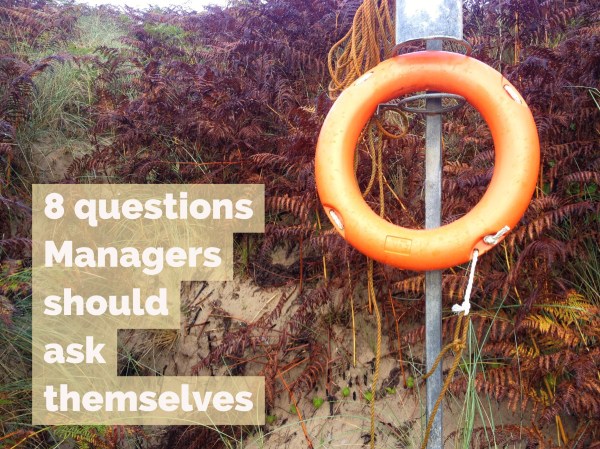
If you want to reach that day and have a room full of people ready to celebrate with you and wanting to shake your hand, ask yourself these questions below and see if there are any improvements you can make.
1)      Are you encouraging people to speak up and taking on board their views?  I am shocked sometimes by the team meetings I attend where people won’t speak up.  Often this is because Managers don’t want to be questioned on their decisions they just want people to do as they are told.  In the worst case scenario, Managers will actually put people down in front of the group which is a sure fire way to shut people up permanently.  However, it won’t get you a team of engaged employees who are willing to tell you if they see an issue on the horizon and you will miss out on all those great ideas they really want to take forward.

2)      Are you wasting their time or failing to not treating them with basic courtesy? It seems that sometimes, managers forget that these people are adults and professionals in their own right with busy lives and schedules.  If you are making them wait for a meeting that you could never make anyway or forcing them to wait outside your office like school children, perhaps you need to rethink your approach.

3)      Are you micro-managing?  We all hate it when we are asked to do something and not allowed to get on with it.  If you find that you are struggling to let go of a task once delegated and wanting to control every last detail, think about whether the things you want are really worth demoralising someone else for.  And if they are that important, how can you make sure you set those things out at the beginning so you can step back, confident that the final product will be to your liking.

4)      Do you tear apart their good work?  If someone has worked hard to deliver a piece of work that they think is worthwhile, is there a benefit to pulling it apart?  Giving constructive feedback is useful and I’m sure they want to know how they can improve but keep it in perspective and keep criticism to yourself.  Be specific about any improvements you would like to see rather than making sweeping statements about what you don’t like.  Also consider whether it’s wrong because you gave poor direction when setting the task.  If this is the case, consider giving them a break and giving better instruction next time.

5)      Do you give them the opportunity to give feedback on your management style and adapt your approach or do you expect them to adapt to you?  In the regular 1-1s I have with my staff, I often ask them if they are happy with the way they are being managed.  I’ve realised that it isn’t one style fits all and if I want to get the best out of them, I need to adapt my style to suit their needs.  High performance means supporting them to achieve and I can only do that if I understand who they are and what they need from me.

6)      Are you asking them to do something you know they struggle with and being critical when they don’t meet your high standards?  For a team to succeed, individuals should play to their strengths and be recognised for what they are good at.  There isn’t much point in pushing them to be good at something if it isn’t their bag and maybe you already have someone in the team who can do it better.  By all means encourage them out of their comfort zone and help them to improve but don’t set them up to fail by asking them to do something that is outside of their skillset and then criticising them when they don’t meet your high standards.

7)      Are you asking them to do something one week, then forgetting and either asking them to do it differently the next week or worse, asking someone else to do the exact same thing?  We all say something and then say something different or change our mind but if you are doing this without realising on a regular basis you might need to think about your organisational skills.  It is confusing and frustrating for people if you continually ask for something and then change your mind, not follow up or ask someone else to do it as well.  Make sure you know what each of your team is doing so you avoid duplication and keep them engaged.  If you can’t remember, they will think that they and the task are not important.

8)      Are you failing to recognise their skills or value their expertise?  The chances are you have recruited capable and talented people to your team but just take care that you are recognising their contribution and valuing them for it.  If you don’t they will be miserable and ultimately ditch you at the earliest opportunity, taking their talents somewhere they will be appreciated.
In the Guardian piece, the author concludes: ‘you taught me that life is far too short to work with people who do not value your knowledge, skills and passion.’  Managers who don’t respect the talent in their teams will lose them, either because they find something better and leave or because they switch off in their head and in their heart.  If you want to nurture a team of people that work hard, do well and stay with you, ask yourself these questions on a regular basis and make sure you are doing your job in the right way.


What do you think?  Have you experienced any of these things from either side?  Or do you have other questions you think we should add to this list?  Add your thoughts in the comments below and let’s continue the discussion.


3minuteleadership.org    

 

Giveaway: Drive – the surprising truth about what motivates us

This month, we are giving away a copy of Daniel Pink’s New York Times top 10 bestseller ‘Drive: The surprising truth about what motivate us’ and here’s the reason why…


A couple of years ago, as part of a management course, I attended a workshop that explored how we can keep people motivated.  Keen to get the best out of my teams, I was listening intently, excited at the prospect of learning new ways to engage people and enhance performance.  As the tutor explained Maslow’s hierarchy of needs, he outlined the different levels of need which need to be fulfilled for an individual to achieve the central goal of ‘self-actualisation’ or ‘full realisation of potential’.

This was great but I already knew about Maslow and was hoping to be able to build on this knowledge and take something new from the session.  Having an awareness of modern theories in this area, I was puzzled to hear the tutor say that there haven’t been any motivational thinkers since Maslow in the 1960’s and 70’s.

After the tutor had finished presenting, he moved around the room to speak to the different groups.  When he reached our group, I raised my thoughts with him:

‘You mentioned that there haven’t been any motivation theories since Maslow but I actually do know of one’.

‘Ah yes’ he said ‘are you talking about Daniel Pink?’

I confirmed that I was indeed speaking of Daniel Pink and his theory set out in the book ‘Drive’.  To my surprise, the tutor responded:

‘Yes, we’re not allowed to teach that’.

Thankfully for me, I’d read Pink’s theory already and put the ideas into practice to great effect so I was dismayed to realise that others were being prevented from exploring Pink’s theory.

At a later event I went to where we were discussing well-being, the conversation turned to staff and motivation.  It was clear that there remains a view that people ‘just’ go to work for money and that’s all they are looking for.  I don’t believe this is the case and whilst money is important – of course, we all want to have nice things and a comfortable lifestyle where we can spend our days experiencing joy and not worry – money alone does not provide job satisfaction and fulfilment.  Drive explores this idea in more detail, considering why people go to work and how Managers can capitalise on that to encourage optimum performance.

It wouldn’t be fair for me to spoil the book for you so if you, like me, did not cover Daniel Pink in your management course but want to know how to help people in your team to reach their potential, I suggest you retweet or share on social media and subscribe to this blog before 27th October to be in with a chance to win your own copy and see what difference it could make.


3minuteleadership.org


What ‘The Handmaid’s Tale’ teaches us about power and engagement

“Now I’m awake to the world.  I was asleep before.  That’s how we let it happen.  When they slaughtered congress, we didn’t wake up.  Then they blamed terrorists and suspended the constitution.  We didn’t wake up then either.  They said it would be temporary.  Nothing changes instantaneously.  In a gradually heating bathtub you’d be boiled to death before you even knew it.”

This monologue sets the scene for an episode of the recent television drama ‘The Handmaid’s Tale’, attempting to explain how the leaders of the Republic of Gilead came to be in power.  It suggests that they gained control by making small changes, bit by bit, until nothing was the same and they had so much hold over everything, there was no choice but to do what they said.

In the story, a religious dictatorship has taken control and its leaders introduce a strict regime within which, women’s rights are removed and a caste system introduced.  One morning, the main character ‘Offred’ has her debit card declined when attempting to buy a coffee.  She later discovers that this is because ‘they changed the law’ and women are no longer allowed to have assets.  Instead, they find that their money and any estate must be handed over to their male next of kin.

We are told that there is a serious problem with infertility in the Republic of Gilead and so fertile women are sent to families with standing in the regime where they find themselves forced to bear children for the family.  When the women are taken by the regime, they lose their identity.  Offred is literally ‘of Fred’ and we see in the programme that when a handmaid is reassigned, their name changes according to the man they belong to.

Children are taken away and second marriages are dissolved.

The dramatization brings to life the famous book by Margaret Atwood which was published in 1985.  Since its release, the book has won a number of awards and is a standard course text for English Literature students across Britain and maybe even further.  What makes the tale so chilling is the knowledge that when Atwood wrote the novel, she committed to only writing things that have actually happened in the world.  It’s quite scary to think that what we see in this show is or has been a reality for some.

The novel tells a cautionary tale of totalitarianism and setting it in Trump’s America makes it scary to watch as it feels conceivable that civilisation could crumble, allowing power to settle in the wrong hands.  As we watch the President’s first year, we see many rising up against a perceived threat to civil liberties and growing unrest makes many fearful for the future.

So how on earth can anyone gain so much power that they can make people live as we see in Gilead?

It begins with the construction of ‘them and us’ using negative for ‘them’ and positive for ‘us’, creating an enemy which people can easily be turned against.  The President’s travel ban is a good example of this as he sought to ‘protect the nation from terrorist attacks by foreign nationals’.  It created unrest across America and uneasiness amongst those ‘foreign nationals’ who live in the US and those who value diversity.  He has also been criticised for comments about other groups such as women (see Trump sexism tracker) and those with disabilities.

Those who agree with these views take strength from such comments and show how easy it is to ‘us’ against ‘them’ as we saw during the election campaign and more recently in Charlottesville.   Of course what these perpetrators don’t realise is in a culture where this kind of power has taken hold, no one is safe.

One of the key techniques in a totalitarian regime is encouraging people to turn each other in when they are not respecting the regime or its leader.  We only have to look to Nazi Germany, communist China and North Korea to see that a central part of retaining power is encouraging people to report those who have done something wrong.  Even a small misdemeanour can lead to death.  Punishing those who have done wrong and rewarding those who turned them over is the perfect way to reinforce the status quo.  An example of this is the so called ‘slut-shaming’ which encourages women to rat each other out and expose others who are then subject to further abuse.

I’m sure it isn’t just me that wants to hold on to my freedom and so the most important thing is to pay attention to what’s going on in the world and not be asleep while things are changing beyond your control.

Have you been watching The Handmaid’s Tale?  Let us know what you think it teaches us about leadership in the comments below.


3minuteleadership.org


Blog at WordPress.com.

Up ↑