
Help people find their ‘flow’ and make every day feel like Friday

Have you seen the new Lucozade ad?  The energy drink brand has decided to shake its image as a hangover cure and look for a new audience amongst busy professionals.  The campaign, titled ‘find your flow’, features normal people in everyday situations performing beyond their best thanks to Lucozade.

“Flow. The unmistakeable feeling of unstoppable. Of no problem that can’t be solved. Of no-one else can do it better. That whatever the day throws at you, you simply take it in your stride because you’ve found your rhythm. You’re on top form.” (Lucozade 2015, Find your flow)

The ad company responsible, Grey London, have taken inspiration from psychologist Mihaly Csikszentmihalyi who created the concept of ‘flow’ after extensive research on the topic.  It’s the feeling of being completely ‘into’ what you are doing.  Of being wholly absorbed in a task or activity and of losing yourself in a moment.

Csikszentmihalyi describes ‘flow’ asbeing completely involved in an activity for its own sake. The ego falls away. Time flies. Every action, movement, and thought follows inevitably from the previous one, like playing jazz. Your whole being is involved, and you’re using your skills to the utmost.” 

That’s what I want to feel when I’m at work and what I want my team to feel also.  I’d like them to love what they do so much that they can immerse themselves in their tasks and spend most of their time ‘in the zone’.

Why should we aim to help individuals find their ‘flow’ in the workplace?

I’m really conscious that people spend a lot of time at work.  Over a lifetime, it’s around 90,000 hours if we work full-time from leaving school to retirement.  This is time that many people would rather spend doing something else such as sitting in the garden, playing with the children or walking the dog.

It’s an ambitious aim but I want the people in my teams to enjoy what they do almost as much so they are focused on delivering great things for the organisation rather than wishing they were somewhere else.  My view is that if I can help them find their ‘flow’ at work, I can help them to maximise their contribution to the organisation and enhance their overall life satisfaction.

How do we create an environment that supports individuals to find their flow’?

Based on 10 factors which are known to accompany the feeling of ‘flow’ here are 8 things that leaders should seek to provide in the workplace to allow employees to immerse themselves in their activities:

1)      Set clear goals that are challenging but achievable

2)      Allow people to concentrate on their goals and focus their attention

3)      Ensure their work is rewarding and ensure recognition of their efforts

4)      Create an environment where they feel secure and not self-conscious

5)      Give feedback

6)      Ensure tasks are achievable and suitable for the individual’s level of skill whilst providing a healthy challenge

7)      Allow ownership of a task or responsibility

8)      Minimise any distractions that will prevent the individual from focusing on the activity


Do you agree that helping people to find their ‘flow’ is an important goal?  Have you tried to create this kind of environment in your workplace?  Let us know your experiences by posting in the comments below.


3minuteleadership.org


Photo credit: Pixabay
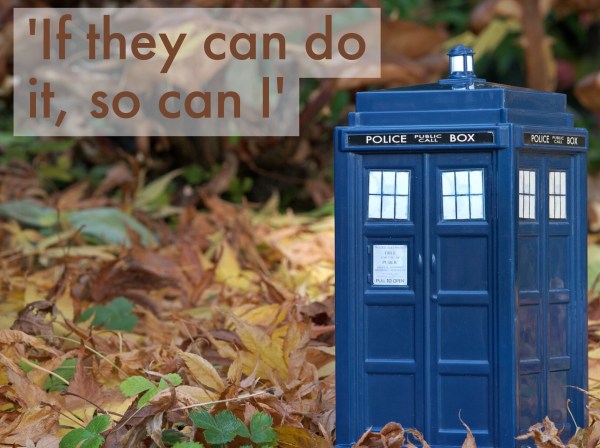
 

Why it matters that we finally have a woman playing The Doctor

It’s been a long time coming but many women across Britain have finally realised a dream which I wasn’t sure would ever come true a female lead in the British cult series – Dr Who.

A few years ago, I remember talking to a producer of Dr Who and asked the question ‘when is the Doctor going to be a woman?’. She advised me that it would never happen because the fans didn’t want it and the ratings would fall if that decision was made.

We now get to find out if that is a valid concern or indeed if the change means the series can inspire a whole new audience.

Why does it matter whether we have a female Doctor?

It isn’t just a nice thing to do for women, it really matters that we have female role models who are visible and leading the way. Being able to see women in prominent roles and breaking new ground is an inspiration for girls everywhere. It tells our daughters that anything is possible and they can actually be whatever they want to be.

Role models help to raise aspirations and show girls they can succeed. Whether it’s leadership, media, engineering or something else, we need to see that women can achieve in whatever they choose and this character provides someone for our girls to look up to.

For those girls watching Jodie Whittaker taking on the Daleks, it tells them they can have leading roles, become action heroes and achieve what seems impossible if they want to. We see far too little of girls having adventures so many of us are cheering this turn of events and hope that it marks the beginning of an era where girls can get right in the thick of it too.

Typically, women are seen as not having power so hopefully having a woman play an extraterrestrial Time Lord who zips through time and space to solve problems and battle injustice across the universe will help to change this.

Do women have equal opportunities in the media?

It’s been a big week for women with names and salaries of the BBCs highest paid stars being published in a bid to improve transparency of the public service. Reading the news articles ahead of the release, I was disappointed to see this quote: ‘It’s good to see some women on the list too’. This is the type of attitude that creates inequality in the first place and allows it to continue. It’s shocking to discover that women account for just 1/3 of the list and men exclusively hold the top 12 highest paid roles.

What impact does a lack of female role models have on wider society?

An article published by Forbes explains the need for role models perfectly:

“Seeing few people who look and act like them in industries like science and politics discourages girls from pursuing their interests if those interests are not popular. This robs the world of future talent that has massive potential to feed innovation, create change, and boost the economy”

When young women and girls see Jodie Whittaker or other leading lights taking on new challenges and succeeding in the chosen field, they think ‘if they can do it, so can I’. So thank you to the BBC for taking diversity seriously and finally appointing a female Doctor to show our girls they have options.

What can you do to help ensure we have good role models for girls to look up to?

You can be visible – if you have any kind of role that challenges gender stereotypes, do what you can to make it known to others so you can inspire girls coming though.

You can be the change – when you secure a role in an area where women are under-represented, you can help to create a space where women are welcome and judged on their own merits.

You can help others – if you make it to a position of authority or even achieve something that others admire, you can share your story and experiences to help others do the same.

If you have any thoughts about what more needs to happen to promote female role models or have an experience to share with us, please post in the comments below.


3minuteleadership.org


Photo credit: Pixabay

Is a decent salary and good pension really enough to motivate people?

After watching a video on motivation shared by Harvard Business Review, there were some points I wanted to share.

Firstly, The Explainer: One more time, how do you motivate employees? says that force is the first thing not to use if you want to motivate employees.  It seems widely accepted today that ordering people to do something is not the way to inspire people and get them on board.

One of my early blogs focused on Daniel Pink’s thoughts on motivation, set out in his book Drive.  He says that the basic need is salary so employers should ‘pay enough to take money off the table’.  This video says something similar, setting out Hertzberg’s ‘hygiene factors’ of salary, working conditions and job security.  These factors echo Maslow’s theory of motivation which suggests that motivation requires people’s basic needs to be met as a starting point.  I’ve worked in organisations where the belief seemed to be that paying a decent salary and good pension is enough to motivate people.  Instead, I would suggest that these basic factors encourage people to stay with your organisation and so come to work every day but they are not enough to make people perform.

What we need to be thinking about as leaders is how to get people to take responsibility and move forward on their own.  This next layer includes factors such as challenging work, autonomy, recognition and advancement.  These things get people interested and fired up to push things forward so that they achieve high performance.

As a manager, I believe that achieving this is about taking a more hands-off approach and giving individuals space to try things and learn from them.  To avoid things taking a long time or moving in the wrong direction, I provide clarity around the overall aims and objectives, advice and guidance on how to complete the task and parameters for the work.  This includes my thoughts on the best way to go about things, how I envisage it will look or feel and time allowed for the task.

For me, this all takes the form of a discussion where individuals can challenge my views and share their own ideas.  Once we have agreed the requirements of the work, I leave them to carry on with it, checking progress on a regular basis and offering support so they know where I am if they have questions or need advice.

This approach requires trust and humility; it requires me to let them be expert in what they do and accept that they might know more or have better ideas.  The more I can let them act on their own beliefs and draw on their expertise, the more happy, satisfied and motivated they feel in their work. It has always seemed to me that it increases loyalty, respect and commitment as well.

Furthermore, I would suggest that motivating people requires an appreciation of the individual and respect for a diversity of views and opinions, spending time as a team and allowing space for relationships to develop, celebrating success, encouraging them to push forward and supporting them to achieve their personal goals.

Do you use any of the techniques above? How do you achieve motivation and performance within your team? Share your thoughts below.

3miuteleadership.org


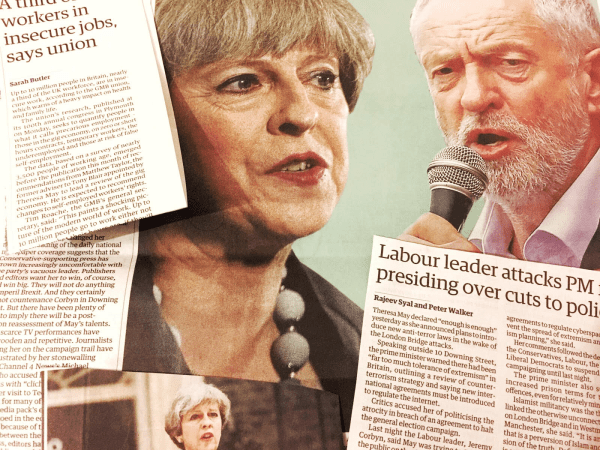
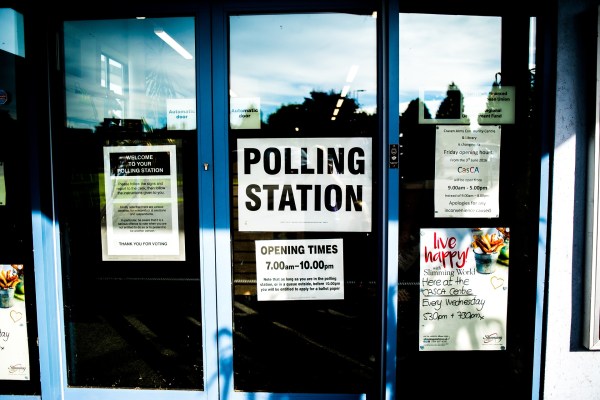
In the most important election of our lifetime, who will be first past the post?

As we are approaching election day in the UK, I am one of many people still undecided about who to vote for.  My previously staunch Labour family are seriously considering changing their colours and people up and down the country are wondering who best to lead what have the potential to be disastrous Brexit negotiations.

It’s going to be a tough job so you have to wonder who would want it!

In terms of contenders, it’s really a two horse race thanks to our first past the post-election system which keeps the other parties in their place.  Whilst I would like things to be more fair, the fact is that many voters are thinking Corbyn or May and if you’re not sure, then it’s a pretty tough choice.

Corbyn carried the can in many ways for the remain campaign defeat as he was accused of failing to provide a strong voice for those who wanted the UK to stay in the European Union.  Media articles suggested that he actually wanted to leave himself and who doesn’t accept that the union needs reform but the British people decided to go for broke so if he is elected, he’ll have to navigate some tricky negotiations to try and get a decent deal for Britain.

Theresa May’s position was that we are better ‘in’ but when challenged on her ability to lead the nation towards independence given her personal views, she answered “we gave people the choice and the British people decided to leave. Now we have to deliver on that choice and respect the will of the people”.  The role of Prime Minister now is to deliver what people want.

This chimes with a previous blog post which considered the role of elected representatives and whether once elected they should do what they think is best or what the electorate want.  Maybe it is better that these negotiations are led by someone who can deliver the will of the 52% leave voters but protect the concerns of the 48% who voted to remain.

It’s a difficult choice in this election and I have a feeling that the Prime Minister will get the mandate that she is looking for from the British people although if the polls are anything to go by, not with the majority she hoped for.

So why does she seem like such a strong candidate?  Apart from the systemic issue previously highlighted, Corbyn divides his own party so how can he unite a nation at a particularly turbulent time?

My husband came home from work recently and asked me ‘why don’t people like Corbyn?’.  For me, it’s because he doesn’t look ready to do the job and whilst I know it shouldn’t be about that, I wouldn’t hire someone who turns up for a job interview not looking smart so I’m not keen to have a Prime Minister who can’t dress for the occasion.  What would he consider appropriate for an important diplomatic meeting?  I can’t be certain and that concerns me.

Watching interviews with Andrew Marr and Jeremy Paxman, I was pleased to see he did dig a suit out of the wardrobe.  He also seemed considered in his responses and I found that he had good points to make and I wanted to listen to him.  He might have some positions which are controversial but I like his policies on the living wage, zero hours contracts and public services and he is clearly a socialist to the core.

May on the other hand was ‘on message’ with the Conservative vision for the future which she says will be secure and have a strong economy.  Will the public services be safe? Who knows. Her focus, she says, is on getting a good deal in the Brexit negotiations and strengthening the economy overall.

She did have a very clear call to action for all those people able to have their say in this election and that was for everyone to go out and vote regardless of their colours.  As the Prime Minister herself said “this is the most important election of our lifetime” so make sure you turn out on Thursday and make your voice heard.


3minuteleadership.org

How elected representatives can make good decisions and keep everyone happy

In February this year, Wales Online reported that there were calls for Bridgend MP, Madeleine Moon, to resign after she went against the electorate’s wishes and voted against the triggering of article 50 in a constituency that voted to leave the European Union.

It chimed with something I’ve been thinking about recently around the responsibility and accountability of those elected to a role.

As a Trustee of a membership organisation, I was elected to the Board by a body of representative members.  According to the ‘governance jigsaw’ published by the Charity Commission, the main duties of a Trustee include acting in the charity’s best interests, ensuring the charity is carrying out its purposes for public benefit and managing resources responsibly.  It seemed that some of my colleagues found themselves conflicted in fulfilling these duties as they struggled to make decisions that they thought might go against what they considered to be the wishes of the organisation’s members.

This conflict was particularly evident when we tried to take forward recommendations arising from a review of governance procedures.  It was as controversial and divisive as the Brexit vote as we sought to take forward reforms that had been developed by a panel of volunteers through consultation with the membership. 

The aim of the governance review was to modernise and encourage more members to become involved in the decision making process.  Changes proposed were designed to make it easier for committees to operate, streamlining their structure and allowing flexibility of roles.  Included in this, was an overhaul of committee roles in an attempt to make them more attractive for the next generation.  It was also hoped that the raft of changes put forward would ensure greater consistency across the organisation in how volunteer committees deliver the organisation’s charitable objectives. 

When I saw a television interview recently with the former Chancellor of the Exchequer, George Osborne, I noticed that when he was asked about his own decision making process, he said ‘in the end, all you can do is be true to your own values’.

Arguably, this is what Madeleine Moon was doing.  In her response to her critics, she said ‘fears over employment, workers right and trade deals were at the forefront of her mind’ and that she ‘tore herself apart’ coming to that decision.      

Moon appears to have taken the view that her role is to protect the long term interests of her constituency rather than represent their views. 

In my opinion, the electorate were given the chance to indicate what they wanted to happen in terms of our relationship with the EU.  As such, Moon should have voted to trigger article 50 because her constituency was clear in its desire.  Where her discretion comes in is in providing the necessary scrutiny to ensure proposals will deliver the best deal possible for her constituents.

In making a decision as a Trustee, the same judgement call needs to be made to ensure the members are represented and protected whilst you do your job as a leader of the organisation, setting the direction and supporting the charity to deliver its mission in the best possible way whilst securing the future of the organisation. 

Issues occur when members are against a decision that you as a Trustee believes is the best thing for the charity.  In this instance, Trustee’s must demonstrate their leadership skills and look to persuade members, bringing them along on the journey.


Have thoughts on this article? Been in a similar situation yourself? Share your views in the comments below.

3minuteleadership.org

Courage, positivity & agility – how Disney’s ‘Frozen’ inspires leadership at all levels

On a flight out to Hong Kong recently, I was flicking through the films in the online entertainment centre and decided that the ideal thing to watch on a long overnight flight is the Disney blockbuster Frozen. After all, who doesn’t want to sing along to ‘Do you wanna build a snowman?’ when they are jetting off to warmer climes? Clearly, I thought, this was a nice easy watching film to pass the time and relax me into sleep.

As I was watching, I couldn’t help but notice the leadership messages that were present in the film. The most obvious is with Elsa who offers a powerful message about authentic leadership as she is forced to open up to who she really is and with that, realises her full potential, building a spectacular ice palace. Once she stopped trying to hide her uniqueness, she discovered the true power within.

The character I thought had the most to offer us though was younger sister, Anna, who really comes into her own a she ventures out to find the new Queen of Arendelle and end the eternal winter that has been brought upon the kingdom. What we see from Anna is a willingness to take responsibility and she shows great courage in heading off into the icy unknown to save the day.

In Wales, the public service has developed a set of values and behaviours to encourage leadership at all levels  and Anna demonstrates a number of these in her efforts to find Elsa and coax her back to Arendelle.

Firstly, she acts with agility to adapt her role and purpose as she steps up to the plate in an attempt to make things right, an aim that she achieves after plenty of Disney drama! Anna maintains a realistic and positive attitude to challenges, adversity and change, encouraging others to do the same as she meets a range of challenges and obstacles along her journey. She also encourages and supports Elsa to think differently, to question and try new ways of doing things as she encourages her sister to use her power for good and shows others that there is nothing to be afraid of.

A report published by Deloitte a couple of years ago claimed that the need for leaders at all levels is one of the 12 critical issues for human capital. Particularly in relation to the public sector in the UK, they reported that ‘the challenge is to deliver services through a motivated workforce in an age of austerity’ and argued that this ‘does not require recruitment or development of more leaders but is about exercising leadership at all levels’.

At the time of the article, leadership was the number one talent issue facing organisations and yet only 13% of organisations believe they do an ‘excellent job’ of developing leaders.

Deloitte suggest that the whole concept of leadership is being ‘radically redefined’ with a need for people who can ‘inspire team loyalty through their expertise, vision and judgement’ . This is a long way from leadership typical of hierarchies where the individual’s position in the company gives them authority.

With new generations coming through, there is call for a different leadership style. Millennials feel disappointed and underutilised when they are not developed as leaders .

According to a survey from Virtuali and Workplacetrends.com, the millennial generation isn’t attracted to the money or recognition associated with leadership positions. Instead, they want to be leaders to inspire others, make a difference in the world and lead companies that care about more than the bottom line.

Millennials care less about money, legacy and hierarchy, and more about being collaborative, empowering and transformational leaders. However, many are unable to access leadership training or demonstrate a new approach.

The challenge for today’s workplace is to harness the potential amongst this new generation and empower them to take responsibility and challenge the status quo.  Imagine what we would be able to achieve if we encouraged all staff to lead rather than making leadership something attached to promotions and power.


http://www.3minuteleadership.org


Thoughts from top women in Wales on increasing representation in leadership & decision-making

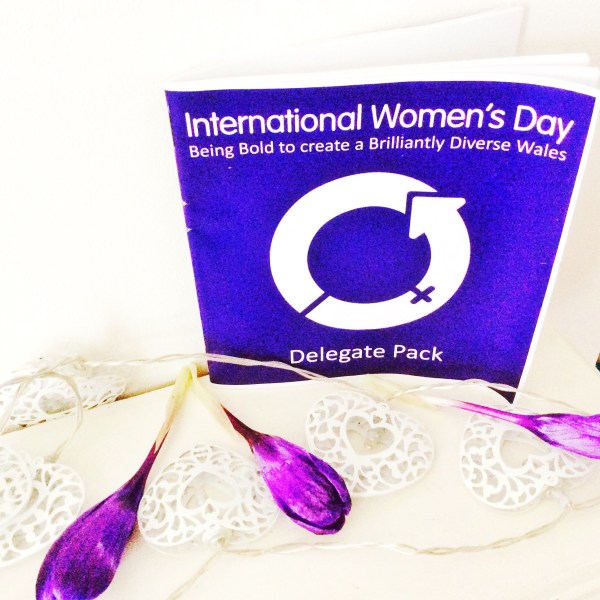
This week, I joined colleagues from across the Civil Service and Local Government in Wales to mark International Women’s Day at the Senedd (Welsh Parliament). An impressive line-up of leading ladies shared their own career journey and experiences to inspire others to follow in their footsteps.

Just a few days earlier, the Assembly Research Service published figures on gender equality. These figures show that slightly fewer women than men are economically active (72.4% compared with 83%) and a higher proportion work part-time (41.3% compared with 12.7%). Of those sectors prioritised for investment by the Welsh Government within their economic strategy, women account for just 32.7% of the workforce.

When we look at our public service leaders, we can see that despite accounting for 72% of Local Government staff,only 18% of Local Authority Chief Executives are female. Of our elected representatives, less than one-third of councillors are female and whilst women account for nearly half of our Assembly Members (41.7%), this has slipped from an admirable 52% during 2005 – 2007.

The Deputy Presiding Officer, Ann Jones AM, welcomed delegates and reminded us that the Welsh Assembly has a history of leading the way on gender equality. Despite this, she noted that everything that we have achieved as women has been achieved because we have been willing to stand together and fight for women’s causes.

The figures above show that there is still a great deal of work to do if we are to achieve gender equality in Wales.

A number of prominent women addressed the audience from the HR Director of DVLA to the Chief Executive of the National Assembly for Wales. Here are some of the things suggested throughout the event that would help to increase the number of women at the top:

1. Appoint a gender champion – change comes from the top and someone needs to take the lead to ensure gender is on the agenda in your organisation. Consider finding someone senior to take on the role of gender champion to push for fair representation of women.

2. Develop a positive intervention – sometimes the pace of change is too slow and we need positive interventions to accelerate progress. In particular, organisations in receipt of public money should be leading the way.

3. Create an inclusive environment – typically, women have a different style and the workplace should encourage everyone to contribute to the best of their ability and in their own way.

4. Pay attention to language – language shapes the world around you. If you are using ‘Chairman’, ‘guys’ (to mean everyone), or ‘he’ (to refer to a person male or female), then just stop. Right now.

5. Job advertisements and interview questions – evidently, boys associate more with verbs and girls with adjectives. Jargon and any language of power possibly put women off so consider getting a specialist to ‘gender lens’ your recruitment processes to make sure you aren’t unintentionally excluding women in this way.

6. Role models – you can’t be what you can’t see. Women need access to inspirational role models who are visible to encourage women to follow in their footsteps. And I don’t mean those women who conform to masculine norms and/or pull the ladder up behind them but those who have managed to succeed whilst staying true to their own identity and maintaining their integrity.

 7. Challenge – if we don’t challenge when we see actions or hear views that disadvantage women or reinforce stereotypes then change will be slow to happen. If you think something is wrong or unhelpful then say so. This will help to raise awareness and hopefully lead to better decisions.
Think I’ve missed something? Share your thoughts in the comments below.

Want to read more articles like this? Subscribe to the blog.


3minuteleadership.org


It’s just like a magic penny, hold it tight and you won’t have any

At the end of last year, I finally got the one thing I’ve wanted for absolutely ever – a four legged furry friend otherwise know as a dog! As we had our first few walks together, I observed the importance of trust in our relationship and considered how we were managing to build this.

I noticed the process we were going through as I first let her off the lead in an enclosed space where I knew I could reach her if she didn’t come back to me. As we played together with our ball, I was able to see that she wasn’t looking to get away and so I could move the boundary to give her more space. Now, I don’t worry at all, I feel confident to let her off the lead in the park because I know she will watch for me and come back if I call.

In my view, it’s similar in all relationships including those at work. The best way to build trust is through trust itself. Leaders and managers must offer some space for people to show they are trustworthy. Set the boundaries and be clear about expectations.  After that, you only need to keep a watchful eye in case they need your support but otherwise, you can let the team get on with it. This way, you allow people to show you that your faith is well placed.

When I interviewed someone a few years ago about agile working she said something which has stayed with me ever since: ‘why would you hire someone you don’t think you can trust?’.  She also made the point that people have families to take care of and mortgages to pay so why on earth wouldn’t they be able to take responsibility for their work? If there are performance issues, it’s far more likely to be a problem with management than anything else.

In the workplace, trust has been a key theme for organisations over the last few years. In 2014, HR magazine said ‘trust – or lack of it – is going to be a big issue this year’. Why? Because a command and control style of management and a theory X point of view creates an environment of distrust. As a new generation joins the workforce, the leadership debate has developed and new management styles are emerging.  Millenials expect some thing different and trust is a central part of the deal.

According to the CIPD, 37% of employees do not trust their senior managers and 33% think trust between employees and senior management in their workplace is weak. If this is your organisation, you probably notice low morale and a lack of employee engagement. It’s also likely that performance and productivity are suffering as a result.

So what exactly do we mean when we talk about trust in organisation and how can we get more?

An article on the traits of trustworthy people suggests that they are authentic, consistent, compassionate, have high levels of integrity, are kind, resourceful, humble, available and connected.  Research from MIT also identifies integrity and consistency as ‘the key differentiator between companies that violate trust and those that sustain it’.  In the popular book, The 5 Dysfunctions of a Team, Lencioni cites trust as the number one reason why teams (and, in turn, organisations) do not succeed.

The solution for organisations, I believe, is to demonstrate trust so that it can be seen in return.  Put the right framework in place to monitor what’s important and ensure you appoint leaders who are able to live up to the values that allow trust to develop.  It is also useful to make your leaders open to feedback from employees and other stakeholders by practicing listening on a regular basis.

Overall, the concept of trust and how it is built reminds me of a song I learnt in primary school:

It’s just like a magic penny, hold it tight and you won’t have any. [Trust] is something if you give it away, you end up having more.


For more on listening, try ‘Listen hard, even to what they are not saying’.

3minuteleadership.org


What makes a true leader? Fancy job title, fat salary or the courage to stand up for what you believe in?

Watching President Trump’s inauguration and the events that have followed has made me think about the history of the civil rights movement in America. It’s clear to see that civil rights and human rights in the US are at threat under the new president. His first day was marked by women’s marches in major cities throughout the world and he is already taking forward decisions that many people feared.

The first action has been to sign an executive order begin the process to repeal Obamacare. He has reinstated the Mexico City Policy known as the Global Gag rule which withholds US foreign aid money to NGOs that provide abortions and abortion counselling. He has signed two executive orders which will build that wall he’s talked so much about, boost border patrol forces and increase the number of immigration enforcement officers who carry out deportations. And today he has been advocating torture which has made me especially glad to be an Amnesty International donor!

All of this has driven me to rewatch films like Selma and The Help to remind me of how far America has come and how much it has to lose. In turn, these films have reminded me of a key leadership quality – the courage of conviction and willingness to risk everything to defend what you believe in. This is what marks out the great leaders of the world.

Nelson Mandela gave a 3 hour speech at the Rivonia Trial in 1964 where he and others were accused of sabotage. He concluded his speech by setting out his vision for equality and harmony. So strong was his belief that he finished his speech saying that he would give his life to achieve the ideal he dreamed of:

“During my lifetime I have dedicated my life to this struggle of the African people. I have fought against white domination, and I have fought against black domination. I have cherished the ideal of a democratic and free society in which all persons will live together in harmony and with equal opportunities. It is an ideal for which I hope to live for and to see realised. But, My Lord, if it needs be, it is an ideal for which I am prepared to die. Nelson Mandela, 1964

In the film Selma, directed by Ava Duvernay, we see the great Martin Luther King lead a march from Selma to Montgomery which had been prevented previously by state troupers by force of violence. During his campaign for civil rights, King was arrested many times, had his house bombed and was finally assassinated in 1968. He believed so much that what he was calling for was the right thing that he continued even though he risked his own personal safety and freedom.

Disney’s The Help portrays the same conviction when a budding journalist asks the African-American maids to tell their stories. In the film, the women she interviewed knew that they were likely to lose their jobs if they were identified, they could have their house burned down or even be killed for telling their story. They did it anyway and showed great courage in doing so.

And that’s it for me – a fundamental leadership quality – the courage to stand up for what you believe in regardless of the consequences. If we didn’t have people like that, we would never achieve any change. These leaders often are not the leaders with the fancy job title and fat salary. These are community leaders and individuals who are willing to put themselves on the line to speak out against injustice. Those people are the real leaders in our society.

3minuteleadership.org

Blog at WordPress.com.

Up ↑