
Help people find their ‘flow’ and make every day feel like Friday

Have you seen the new Lucozade ad?  The energy drink brand has decided to shake its image as a hangover cure and look for a new audience amongst busy professionals.  The campaign, titled ‘find your flow’, features normal people in everyday situations performing beyond their best thanks to Lucozade.

“Flow. The unmistakeable feeling of unstoppable. Of no problem that can’t be solved. Of no-one else can do it better. That whatever the day throws at you, you simply take it in your stride because you’ve found your rhythm. You’re on top form.” (Lucozade 2015, Find your flow)

The ad company responsible, Grey London, have taken inspiration from psychologist Mihaly Csikszentmihalyi who created the concept of ‘flow’ after extensive research on the topic.  It’s the feeling of being completely ‘into’ what you are doing.  Of being wholly absorbed in a task or activity and of losing yourself in a moment.

Csikszentmihalyi describes ‘flow’ asbeing completely involved in an activity for its own sake. The ego falls away. Time flies. Every action, movement, and thought follows inevitably from the previous one, like playing jazz. Your whole being is involved, and you’re using your skills to the utmost.” 

That’s what I want to feel when I’m at work and what I want my team to feel also.  I’d like them to love what they do so much that they can immerse themselves in their tasks and spend most of their time ‘in the zone’.

Why should we aim to help individuals find their ‘flow’ in the workplace?

I’m really conscious that people spend a lot of time at work.  Over a lifetime, it’s around 90,000 hours if we work full-time from leaving school to retirement.  This is time that many people would rather spend doing something else such as sitting in the garden, playing with the children or walking the dog.

It’s an ambitious aim but I want the people in my teams to enjoy what they do almost as much so they are focused on delivering great things for the organisation rather than wishing they were somewhere else.  My view is that if I can help them find their ‘flow’ at work, I can help them to maximise their contribution to the organisation and enhance their overall life satisfaction.

How do we create an environment that supports individuals to find their flow’?

Based on 10 factors which are known to accompany the feeling of ‘flow’ here are 8 things that leaders should seek to provide in the workplace to allow employees to immerse themselves in their activities:

1)      Set clear goals that are challenging but achievable

2)      Allow people to concentrate on their goals and focus their attention

3)      Ensure their work is rewarding and ensure recognition of their efforts

4)      Create an environment where they feel secure and not self-conscious

5)      Give feedback

6)      Ensure tasks are achievable and suitable for the individual’s level of skill whilst providing a healthy challenge

7)      Allow ownership of a task or responsibility

8)      Minimise any distractions that will prevent the individual from focusing on the activity


Do you agree that helping people to find their ‘flow’ is an important goal?  Have you tried to create this kind of environment in your workplace?  Let us know your experiences by posting in the comments below.


3minuteleadership.org


Photo credit: Pixabay

 

Is a decent salary and good pension really enough to motivate people?

After watching a video on motivation shared by Harvard Business Review, there were some points I wanted to share.

Firstly, The Explainer: One more time, how do you motivate employees? says that force is the first thing not to use if you want to motivate employees.  It seems widely accepted today that ordering people to do something is not the way to inspire people and get them on board.

One of my early blogs focused on Daniel Pink’s thoughts on motivation, set out in his book Drive.  He says that the basic need is salary so employers should ‘pay enough to take money off the table’.  This video says something similar, setting out Hertzberg’s ‘hygiene factors’ of salary, working conditions and job security.  These factors echo Maslow’s theory of motivation which suggests that motivation requires people’s basic needs to be met as a starting point.  I’ve worked in organisations where the belief seemed to be that paying a decent salary and good pension is enough to motivate people.  Instead, I would suggest that these basic factors encourage people to stay with your organisation and so come to work every day but they are not enough to make people perform.

What we need to be thinking about as leaders is how to get people to take responsibility and move forward on their own.  This next layer includes factors such as challenging work, autonomy, recognition and advancement.  These things get people interested and fired up to push things forward so that they achieve high performance.

As a manager, I believe that achieving this is about taking a more hands-off approach and giving individuals space to try things and learn from them.  To avoid things taking a long time or moving in the wrong direction, I provide clarity around the overall aims and objectives, advice and guidance on how to complete the task and parameters for the work.  This includes my thoughts on the best way to go about things, how I envisage it will look or feel and time allowed for the task.

For me, this all takes the form of a discussion where individuals can challenge my views and share their own ideas.  Once we have agreed the requirements of the work, I leave them to carry on with it, checking progress on a regular basis and offering support so they know where I am if they have questions or need advice.

This approach requires trust and humility; it requires me to let them be expert in what they do and accept that they might know more or have better ideas.  The more I can let them act on their own beliefs and draw on their expertise, the more happy, satisfied and motivated they feel in their work. It has always seemed to me that it increases loyalty, respect and commitment as well.

Furthermore, I would suggest that motivating people requires an appreciation of the individual and respect for a diversity of views and opinions, spending time as a team and allowing space for relationships to develop, celebrating success, encouraging them to push forward and supporting them to achieve their personal goals.

Do you use any of the techniques above? How do you achieve motivation and performance within your team? Share your thoughts below.

3miuteleadership.org


It’s just like a magic penny, hold it tight and you won’t have any

At the end of last year, I finally got the one thing I’ve wanted for absolutely ever – a four legged furry friend otherwise know as a dog! As we had our first few walks together, I observed the importance of trust in our relationship and considered how we were managing to build this.

I noticed the process we were going through as I first let her off the lead in an enclosed space where I knew I could reach her if she didn’t come back to me. As we played together with our ball, I was able to see that she wasn’t looking to get away and so I could move the boundary to give her more space. Now, I don’t worry at all, I feel confident to let her off the lead in the park because I know she will watch for me and come back if I call.

In my view, it’s similar in all relationships including those at work. The best way to build trust is through trust itself. Leaders and managers must offer some space for people to show they are trustworthy. Set the boundaries and be clear about expectations.  After that, you only need to keep a watchful eye in case they need your support but otherwise, you can let the team get on with it. This way, you allow people to show you that your faith is well placed.

When I interviewed someone a few years ago about agile working she said something which has stayed with me ever since: ‘why would you hire someone you don’t think you can trust?’.  She also made the point that people have families to take care of and mortgages to pay so why on earth wouldn’t they be able to take responsibility for their work? If there are performance issues, it’s far more likely to be a problem with management than anything else.

In the workplace, trust has been a key theme for organisations over the last few years. In 2014, HR magazine said ‘trust – or lack of it – is going to be a big issue this year’. Why? Because a command and control style of management and a theory X point of view creates an environment of distrust. As a new generation joins the workforce, the leadership debate has developed and new management styles are emerging.  Millenials expect some thing different and trust is a central part of the deal.

According to the CIPD, 37% of employees do not trust their senior managers and 33% think trust between employees and senior management in their workplace is weak. If this is your organisation, you probably notice low morale and a lack of employee engagement. It’s also likely that performance and productivity are suffering as a result.

So what exactly do we mean when we talk about trust in organisation and how can we get more?

An article on the traits of trustworthy people suggests that they are authentic, consistent, compassionate, have high levels of integrity, are kind, resourceful, humble, available and connected.  Research from MIT also identifies integrity and consistency as ‘the key differentiator between companies that violate trust and those that sustain it’.  In the popular book, The 5 Dysfunctions of a Team, Lencioni cites trust as the number one reason why teams (and, in turn, organisations) do not succeed.

The solution for organisations, I believe, is to demonstrate trust so that it can be seen in return.  Put the right framework in place to monitor what’s important and ensure you appoint leaders who are able to live up to the values that allow trust to develop.  It is also useful to make your leaders open to feedback from employees and other stakeholders by practicing listening on a regular basis.

Overall, the concept of trust and how it is built reminds me of a song I learnt in primary school:

It’s just like a magic penny, hold it tight and you won’t have any. [Trust] is something if you give it away, you end up having more.


For more on listening, try ‘Listen hard, even to what they are not saying’.

3minuteleadership.org


Why settle for mediocre? Aim to make your people outstanding

It’s that time of year for me when I’m talking to people about performance over the last six months. 

Committed to helping people be the best they can be and also to delivering maximum value with public funds, this is a process I’ve spent much time considering in order to ensure it delivers for the individuals I support.
My quest for perfection in performance management, has led to a number of steps that can provide a framework within which individuals can develop and deliver for your organisation.

Setting clear objectives is the first task if you want to create an environment where people can succeed. This step should provide clear direction in line with the organisation’s aims and ensure that person can meet their goals in a timely manner and know when the objective has been achieved. In particular, agreeing objectives which are SMART brings clarity to plans and ensures they can be completed within an agreed timeframe.

After this stage, it is important to work with the individual to agree what ‘good’ looks like. I’m not sure it’s possible for individuals to really excel in delivering their priorities if you haven’t discussed exactly what is required. Setting out expectations clearly from the beginning allows people to go the extra mile to ensure a high standard.

In observing performance management in a number of organisations, I’ve noticed that reviews too often become a process that people have to go through with little awareness of what they are about (see what’s wrong with performance management and annual reviews). In many cases, managers set objectives and sign off progress without much thought or discussion.

For me, it’s about creating a structure for people to succeed with a focus on encouraging and supporting them to exceed expectations. It seems to me that managers should consider it a priority to ensure their people are encouraged able to become ‘outstanding’ and concentrate their efforts on achieving this goal. I’m sure all organisations desire to have high performing teams so let’s stop thinking that mediocre is good enough and give people something to aim for.

Finally, I don’t believe that performance conversations looking back over a six month period go far enough to provide focus and motivation. Whilst my objectives might be set annually, I set out my plan to achieve them by looking forward over a three month period and reviewing progress on a monthly basis. This ensures the thinking time and prioritising which is necessary to make an impact. I’m then able to look back and see if I have achieved my goals, ensure my time is spent on the right things and to know if my objectives are the right ones.

As the year comes to a close, I wonder how your teams have performed over the last twelve months and offer a challenge to all of you to make a commitment for the new year to adopt a system that allows your people to shine in 2017.

3minuteleadership.org

Adopting a coaching approach

Coaching is an important and valuable skill for leadership today and is a useful tool for developing people in your team.

I’ve found that by asking questions and helping individuals to think things through, they have a much deeper understanding of the issue. Compare that with a situation where you tell them the answer, you can’t be sure they have grasped the point you are trying to make.

This approach has been extremely useful in ensuring my team knows how their work fits with the bigger picture and what we are trying to achieve. Not what the job is that must be done but what the task is designed to achieve and how we can make this happen.

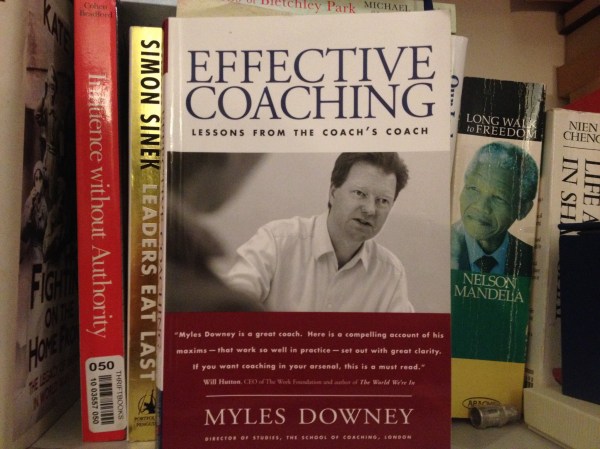
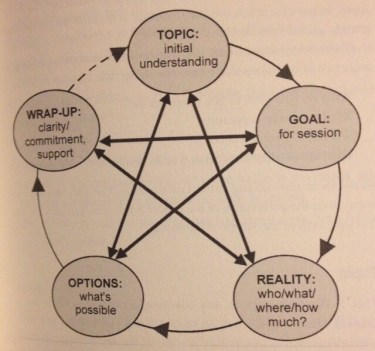
One of my main influences has been Myles Downey who sets out the GROW model in his book, Effective Coaching. To illustrate this model, I am going to explore an example from a time that I worked with a member of my team to develop a research project.  The individual, who I will call Lauren, needed to understand the importance of the project she was working on and the potential to influence change if approached in the right way.

img_0743
GROW model
1. Identify the topic – you must first understand exactly what topic needs to be discussed. For Lauren, it was a research project she was working on.

2. Goal – this part explores what the individual needs to achieve. In my example, I wanted her to understand the purpose of the project so that she could ensure she developed the work to achieve the overall aim and bring about the change in society that we were looking to achieve. Having an understanding would ensure a better quality of work.

3. Reality – there were boundaries and constraints that would limit the project so understanding the reality would ensure the work concentrated on what was achievable within these.

4. Options – here we explored what actions she could take that would ensure the potential of this piece of work was maximised. It is important to say here that Lauren had previously been an academic researcher who would have explored a topic to add to a wider body of work. This work, however, was for a charity so I was keen that the budget was used to fund a project that pushed forward the agenda and influenced behaviours.

5. Wrap-up – after exploring a range of questions about the project, it was time to come to some conclusions so we recapped what Lauren understood about the project as a result of our discussion.  We then established a commitment to focus her actions on things that would ensure we maximised the value of the project and we agreed that I would support her going forward by meeting on a regular basis to discuss progress.

Exploring the project in this way had a significant impact on Lauren’s understanding. On a training course years ago, the tutor expressed a learning mantra which I have held close ever since. He said that in teaching others, you must remember the following –

I listen, I forget.      I see, I remember.      I do, I understand.

Rather than telling someone the answer or showing them how to do it (doing it for them), adopting a coaching approach ensures the individual does the work to think things through which means they are able to develop a real understanding of the issue at hand and develop a true commitment to taking things forward in an effective manner.

3minuteleadership.org

Leading a resilient nation for future generations

Last week, I attended an event led by Cardiff Business School which explored how procurement can be used as a tool to tackle poverty. With a background in equalities, I have been promoting this kind of approach for a while as a way to increase social value by ensuring public funds are used as a lever for change so it was exciting to have a whole day talking about how we might do that.

One of the main topics of discussion in Wales right now is the Well-being of Future Generations Act which came into force earlier this year. The Act legislates for sustainable development and sets out seven well-being goals that public bodies have to work towards.

During the day, we discussed the goal for A Resilient Wales and how we might achieve this nationally. The discussion was informed by a presentation on resilience in manufacturing and covered resilience in its broadest sense.  As we explored the challenges, it became obvious to me that there is a fundamental requirement for strong leadership which facilitates the development of resilience in organisations, communities and individuals.

Firstly, to achieve resilience, leaders have to mark it out as a priority. We can all continue delivering in a way that is unsustainable, providing services for the here and now without protecting our resources (human and financial) to continue into the future. Or, we can take a moment to think about what we’re doing and whether we are doing it in the best way, not just for now but for the long term. In order to make this happen, we need our leaders to take a stand and consider how we can stop doing more for less and instead focus on ensuring we can stand up to the pressures of reduced budgets and increased expectations to ensure we maintain economic, social, cultural and environmental well-being.

Once we have committed to achieving resilience, I would argue that the first step in reaching the goal, is building resilience amongst our people. Delivering national well-being requires energy and commitment from our officers in the public service. Richard Branson was in the news not long ago for saying that the customer comes second and staff come first. His rationale being that if you look after your employees, they will look after the customer. This kind of philosophy is one that I believe is in keeping with the objectives of well-being and sustainable development in Wales. If we are thinking about the long term and the impact on future generations, then surely what we need to do is consider the way we are working and address that for the long term so that the people who will deliver national well-being have the energy, passion and drive to do so.


3minuteleadership.org

Leadership is…

Leadership is… having so much fun that others want to join you.

A few years ago, I was fortunate enough to have the opportunity to work with an organisation in Africa. The charity needed support to develop a strategic plan that would help them apply for funding to deliver their work on women’s rights.

Bq06qMRIgAI6-ha

During my time with them, I was asked by the Director ‘what is our main objective?’ which made me think it would be useful for them to have their vision and mission at the heart of the organisation to make sure their objective was clear to all who worked there and all who visited.

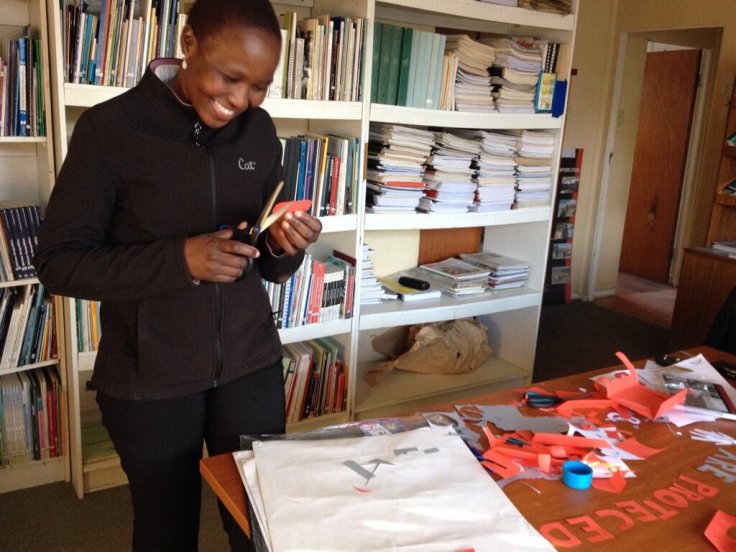
The main entrance to the office led to their kitchen and the first thing people saw when they visited was a noticeboard which up to then had been empty. This seemed to me to be the perfect place for a vision board so, being a creative type, I took myself off to buy some craft materials and set to work developing a visual display that would communicate the organisation’s key aims.

At first, they thought I had gone a bit mad and it started off being my project and colleagues looked on as I started work. I was in my element bringing something to life in a way that was meaningful. Slowly, people started to want to be part of the project and began helping to cut out letters and stick them to the board.

By the end of the process, they were creating their own board and I was able to take a step back and enjoy the piece they were bringing together.

This was when I realised that having fun is an essential part of leadership. If it isn’t an enjoyable experience, why would anyone want to come with you? Since then, I have made sure my team enjoys what they do and I positively encourage them to have a good time as often as possible.

Of course, sometimes things get serious and everyone understands that but in my teams I ensure there is a healthy balance and the hard serious stuff is rewarded by building in something they enjoy. This might be having the team meeting off site where they can have coffee together or enjoy brunch. Or it might be going for drinks after a big event that they have been working on for a while. Or even it might simply be allowing them to not take things so seriously.

BrjNY4GCEAEuOVa

Too often I see managers who bear down on their people because there is something important ahead and they want it to be right. This puts pressure on individuals and can make work unpleasant. The best thing you can do as a leader is trust your team and encourage them to enjoy what they do. After all, people spend a lot of time in the workplace so why not make it somewhere they want to be?

For more photos of my trip visit: A Woman’s Place in Lesotho, Flickr

Related:

A Woman’s Place in Lesotho: www.cteg.org.uk/a-womans-place-in-lesotho/

Lesotho lawyers speak out: www.cteg.org.uk/lesotho-lawyers-speak/


3minuteleadership.org 


Mastering motivation

A few weeks ago, I was at a conference and found myself engaged in a debate around what motivates people at work.

The colleague I was talking to was from a large public sector organisation and seemed to be a Theory X thinker, assuming that people would rather be anywhere than in the office and only go to work for money.

My perspective is that whilst people ultimately work because they have bills to pay (who wouldn’t prefer to be on the beach or in the garden), once that basic need is met, money ceases to be the main motivator. In this sense, Theory Y is where I sit as I assume that people want to work and manage my people with this in mind.

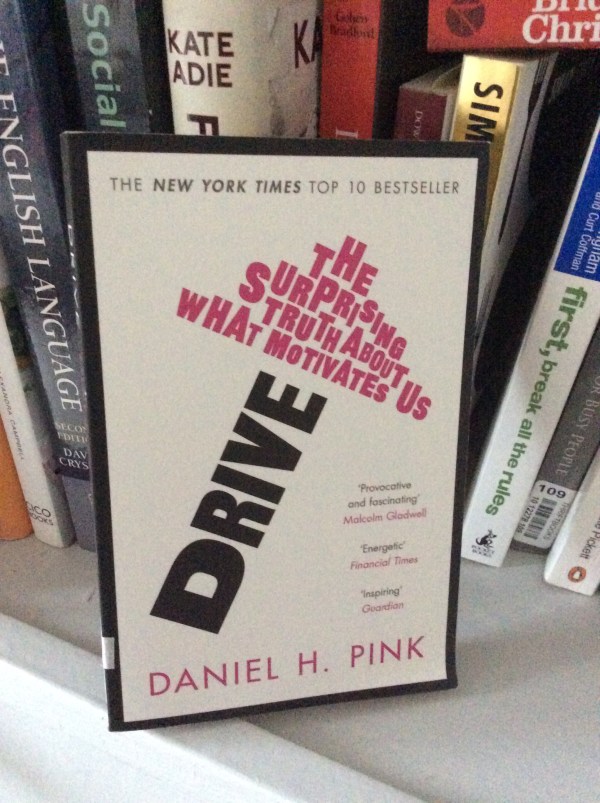
Most of my thinking has developed from a concept set out in Daniel Pink’s book called ‘Drive’. This book is so recent that it was not covered in a recent management course I attended. We were told in the session that ‘there hasn’t really been any theory developed on motivation since Maslow’.

But some of us know different.

Pink starts off with an argument that book that generations coming through today are not motivated by money. He believes that the model of performance related pay where people are set targets which are rewarded with bonuses is out of date and actually those joining the workplace over the last couple of decades are driven more by values than money. With this in mind, according to Pink, the first thing employers have to get right is to ‘pay enough to take money off the table’.

Once the basic financial need has been met, we can move away from Maslow’s basic needs of food and shelter and move towards the top of the hierarchy to achieve esteem and self-actualisation.

So to bring it back to Pink’s ideas, achieving motivation requires leaders to allow our employees to achieve the following three things:

Autonomy – Mastery – Purpose

Basically, to motivate people we need to trust them to do things their own way, setting the direction and letting them get on with it. This is AUTONOMY.

We need to give them the space and support them where necessary, allowing them to get really good at what they do. This means that they are able to learn and improve until they achieve MASTERY.

And we need to be clear about why they are doing what we have asked them to do so that they know what they are doing is for a good reason. This means they understand their PURPOSE.

Applying this to the way my team works completely changed my focus and delivered some fantastic results. Of course it didn’t mean I left them on their own completely, it just changed the way we worked together. Instead of telling people what to do and how to do it, this approach requires leaders to set the direction and support individuals to achieve. It requires managers to ask more questions and find out where you can add expertise to improve the outcome. What you will find is that the team checks in with you more because they want to get things right. It’s definitely worth adopting because the rewards of empowering people are immense.

Go on try it! I dare you…

If you want to hear it from the man himself, check out this TED talk: https://www.ted.com/talks/dan_pink_on_motivation?language=en

Or you can buy the book here:

//ws-eu.amazon-adsystem.com/widgets/q?ServiceVersion=20070822&OneJS=1&Operation=GetAdHtml&MarketPlace=GB&source=ac&ref=qf_sp_asin_til&ad_type=product_link&tracking_id=3minulead-21&marketplace=amazon&region=GB&placement=184767769X&asins=184767769X&linkId=&show_border=true&link_opens_in_new_window=true
3minuteleadership.org

Blog at WordPress.com.

Up ↑