The Meritocracy Myth: Who Really Gets Ahead?

With Trump making a stand against EDI policies in the US, this has been a topic of conversation amongst leaders and HR professionals in the UK. 

At first, I wondered if it would have an impact on this side of the atlantic and it is now clear that it draws out the opposition very quickly.

As I’ve seen for many years, those affected are amongst the first to say that they want to be appointed on merit and who would disagree? The issue is that many don’t recognise how this has been happening for men forever.

Maybe this has changed today but only because the rise in commitment to EDI has ensured that systemic barriers are better understood and removed to level the playing field.

What is meritocracy?

Meritocracy is the idea that an individual’s success should be determined by talent and effort. Those from under-represented groups commonly say that they want to be recruited because they are the best at the job and of course, that should be the case.

However, that view fails to recognise that merit is subjective and can be clouded by economic advantage. If you are looking to recruit a junior accountant, for example, you might have a choice between someone who has demonstrated academic excellence but has had to work in non-related roles to support themselves and/or their family.

The other candidate may have average grades but was connected and wealthy enough to secure an unpaid internship overseas. Without awareness and policies, you are likely to find yourself appointing the candidate with the most relevant skills and experience but that is based on privilege, not merit.

It begs the question – what is merit? Who is deciding? And how can we prevent privilege from clouding to process?

The concept – meritocracy – was first introduced by Michael Young in the 1950’s and originally referred to ‘a critique of a system in which the elites define merit narrowly so as to protect their position at the top of society’. 

A 2021 survey revealed that in the UK, the perception is that hard work and ambition are the most important things for success but in reality, the evidence suggests that the link between merit and success is tenuous.

The research shows that society is far from being meritocratic. In fact, external factors influence individual success from before they are even born. The disadvantage starts early and continues into adulthood. 

How can we create a level playing field?

When I set out to diversify my team, I noticed we were hiring the “usual suspects.” We were offering good jobs in a diverse community, yet few local candidates applied. Why?

Through research and conversations, I realised the talent was there—people with the right skills simply weren’t seeing us as an option.

Here’s what changed:
✅ We reworked job descriptions—not just generic “commitment to EDI” statements, but specific language reflecting the communities we serve.
✅ We rethought merit. When faced with one candidate who had textbook knowledge but no application experience and another with deep lived experience—who was truly more qualified?

Final Thought

Merit isn’t as objective as we like to think. If we take it at face value, we risk reinforcing privilege. But by questioning how we define and measure it, we open doors to real talent.

How do you define merit? Have you seen privilege at play in recruitment or career progression? Let’s start a conversation – share your thoughts in the comments below.

Image by Gerd Altmann from Pixabay
From the Past to the Present: Leadership Lessons from Charity Adams and the 6888th Batallion

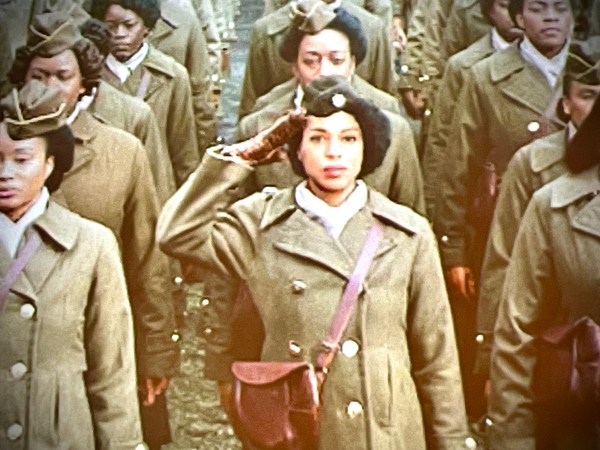
I’m inspired by women in non-traditional roles and WW2 is an interest I inherited from my Dad so I was excited for the new Netflix offer ‘The Six Triple Eight’.  The film tells the story of the first and only all-black unit of the women’s army corps which was led by Charity Adams who was the first African-American woman to become an Officer. With the level of racism and sexism in America in 1945, it seems an impossible feat.

Facing challenges at every step and deliberately set up with an impossible task, Charity had a determination that allowed her to become the highest ranking African-American woman by the end of the war. 

Her trailblazing journey highlights themes of inclusion, resilience, and effective leadership under pressure that are deeply relevant today. Here’s why her legacy continues to inspire and guide modern conversations about diversity and leadership:

1. Breaking Barriers in Leadership

Then: Charity Adams broke racial and gender barriers in a time when opportunities for Black women in leadership roles were virtually nonexistent. She led the “Six Triple Eight” to overcome systemic discrimination, logistical challenges, and the monumental task of sorting millions of pieces of undelivered mail to boost the morale of soldiers during the war.

Now: Her story underscores the importance of representation in leadership. Diverse leaders bring unique perspectives to problem-solving and decision-making, which are essential in today’s globalized and inclusive work environments.

2. Demonstrating Resilience and Excellence

Then: Despite facing racism, sexism, and immense pressure, Adams demanded excellence from herself and her team. She emphasized the value of discipline, collaboration, and purpose in achieving their mission.

Now: In modern workplaces, leaders must navigate complex challenges while fostering resilience in their teams. Adams’ example reminds us that adversity can be overcome through strategic thinking, strong leadership, and a commitment to the mission.

3. Advocating for Equity and Inclusion

Then: Adams proved that Black women could lead effectively in roles traditionally reserved for white men, challenging stereotypes and paving the way for future generations.

Now: Organizations still struggle with inequities in leadership opportunities for women and minority groups. Her example encourages leaders to actively address bias, create inclusive environments, and champion equitable opportunities.

4. The Power of Purpose-Driven Leadership

Then: Adams was not motivated by power or personal gain but by a sense of duty to her country and her team. Her purpose-driven leadership inspired her unit to achieve a seemingly impossible mission.

Now: Purpose-driven leadership resonates deeply in today’s world, where employees and stakeholders value leaders who prioritise social impact, ethical practices, and meaningful change.

5. Legacy as a Catalyst for Change

Then: Charity Adams’ story was not widely celebrated for decades, reflecting how the contributions of marginalized groups can be overlooked. Recent recognition highlights the need to acknowledge diverse histories.

Now: Her legacy serves as a call to action for modern leaders to recognize and amplify under-represented voices, ensuring that everyone has a seat at the table and their contributions are valued.

In today’s era, where diversity and inclusion are business imperatives, Charity Adams’ life offers timeless lessons on how to lead with integrity, resilience, and purpose. Her example encourages us to challenge systemic inequities, inspire others through our actions, and lead boldly in pursuit of a better, more inclusive future.

Charity Adams’ story reminds us that leadership is not about titles or power but about purpose, resilience, and inclusion. Her legacy challenges us to build workplaces and communities where everyone has the opportunity to lead and thrive.

If you’re looking to foster this kind of leadership in your own organisation or develop a culture where inclusion and resilience are at the forefront, I’d love to help. Through leadership development, culture support, and tailored coaching, I work with teams and individuals to inspire meaningful change and unlock their potential. Let’s connect and explore how we can create a better future together.

Leadership in the Wild: What Nature Teaches Us About Women in Power

The world has just witnessed the overwhelming defeat of Kamala Harris in the US election. In 2016, Hillary Clinton became the first woman in the US to win the popular vote, but this still wasn’t enough to secure the White House. In her concession speech, Clinton stated, “I know we have still not shattered that highest and hardest glass ceiling, but someday someone will.”

While the number of women in leadership roles is increasing, progress remains slow. Only 11% of FTSE 100 CEOs are women, and according to the UN, gender equality in the highest positions of power will not be achieved for another 130 years at the current rate. Furthermore, just 20% of presiding officers in parliaments worldwide are women.

In 2020, Smith et al. published a fascinating study examining female leadership in the animal kingdom to uncover insights that could help level the playing field for human leadership. The authors highlighted that attitudes about female leaders often reflect societal biases rather than actual performance. Prejudicial evaluations frequently cast women as less assertive, competitive, or independent than their male counterparts.

This bias extends to how women are perceived. For example, studies have found that people tend to prefer male voices over female ones—a phenomenon that famously led Margaret Thatcher to undergo voice coaching to sound less “shrill.” Men, too, are penalised for displaying traditionally feminine traits such as care and empathy, creating a rigid framework for leadership expectations.

What was the study?

The study focused on species with clearly defined leadership systems, identifying 8 out of 76 species with strong female leadership. This rarity—just 10% of the observed species—mirrors societal challenges in human leadership structures.

The findings revealed that primates, including monkeys, apes, and lemurs, predominantly exhibit masculine leadership, reflecting human preferences for male authority figures. Physical size was also identified as a barrier to female leadership, with smaller figures often failing to command the same level of authority.

Interestingly, female leadership tended to emerge in contexts requiring collective decision-making. For example, adult females with dependents often lead in species that rely on cooperative movement. In the human realm, mothers play a similar leadership role within families, but this critical skill set is rarely recognised or valued in professional settings.

Strong female leaders were more likely to succeed when they formed coalitions with others. Women’s leadership styles often centre on collaboration and uniting people around shared goals while navigating differences. This cooperative approach can be particularly effective in times of conflict.

Physical presence also plays a significant role in perceptions of leadership. Amy Cuddy’s research on body language highlights the importance of taking up space. In the human context, women are encouraged to “make themselves bigger” to project authority. The contrast between Hillary Clinton and Donald Trump during their election debates exemplifies this: Trump’s looming presence often overshadowed Clinton, both physically and metaphorically.

Finally, the study suggested that women are, on average, less motivated to engage in winner-take-all competitions for high-status positions. Those who do often feel pressure to adopt masculine traits to succeed, which can perpetuate a culture that discourages broader female participation.

What does this tell us about workplace culture?

The study demonstrates clear differences in how men and women lead, with feminine leadership often facing systemic challenges in human societies. At the same time, women’s collaborative and inclusive styles, whilst undervalued, have the potential to unite teams and deliver exceptional outcomes.

Organisations that fail to recognise and embrace these differences risk creating workplaces where conflict and stress persist, ultimately affecting business performance. By fostering an inclusive culture and creating space for diverse leadership approaches, organisations can unlock the full potential of their workforce and achieve greater harmony and success.

From this study, we can see that:

1) There are clear differences in the leadership of men and women with challenges for a typically feminine approach within human society. At the same time, there is evidence of key strengths in women’s leadership which, whilst appearing to be a softer approach, has the power to unite and support.

2) A lack of awareness of differences and the inability to create space for feminine approaches can lead to conflict in the workplace and significant challenges (and stress) for women leaders which ultimately impacts business performance.

3) Organisations that are serious about increasing female representation within their organisations, need to be aware of differences to support colleagues and ensure harmony so that colleagues can focus all of their efforts on achieving success. 

If you’d like support in increasing gender awareness and creating an inclusive culture, contact us for tailored advice and solutions.

Image: Tumisu via Pixabay

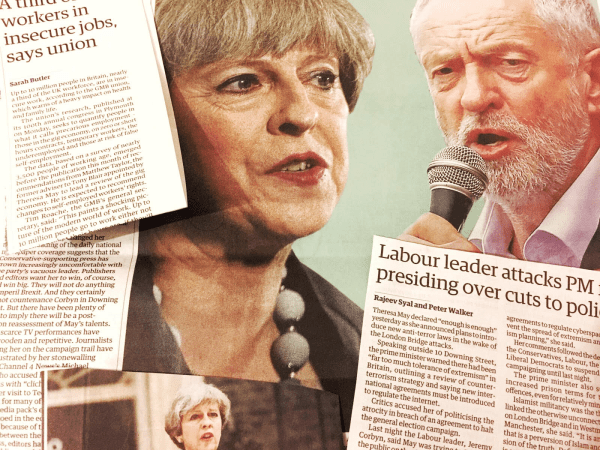
In the most important election of our lifetime, who will be first past the post?

As we are approaching election day in the UK, I am one of many people still undecided about who to vote for.  My previously staunch Labour family are seriously considering changing their colours and people up and down the country are wondering who best to lead what have the potential to be disastrous Brexit negotiations.

It’s going to be a tough job so you have to wonder who would want it!

In terms of contenders, it’s really a two horse race thanks to our first past the post-election system which keeps the other parties in their place.  Whilst I would like things to be more fair, the fact is that many voters are thinking Corbyn or May and if you’re not sure, then it’s a pretty tough choice.

Corbyn carried the can in many ways for the remain campaign defeat as he was accused of failing to provide a strong voice for those who wanted the UK to stay in the European Union.  Media articles suggested that he actually wanted to leave himself and who doesn’t accept that the union needs reform but the British people decided to go for broke so if he is elected, he’ll have to navigate some tricky negotiations to try and get a decent deal for Britain.

Theresa May’s position was that we are better ‘in’ but when challenged on her ability to lead the nation towards independence given her personal views, she answered “we gave people the choice and the British people decided to leave. Now we have to deliver on that choice and respect the will of the people”.  The role of Prime Minister now is to deliver what people want.

This chimes with a previous blog post which considered the role of elected representatives and whether once elected they should do what they think is best or what the electorate want.  Maybe it is better that these negotiations are led by someone who can deliver the will of the 52% leave voters but protect the concerns of the 48% who voted to remain.

It’s a difficult choice in this election and I have a feeling that the Prime Minister will get the mandate that she is looking for from the British people although if the polls are anything to go by, not with the majority she hoped for.

So why does she seem like such a strong candidate?  Apart from the systemic issue previously highlighted, Corbyn divides his own party so how can he unite a nation at a particularly turbulent time?

My husband came home from work recently and asked me ‘why don’t people like Corbyn?’.  For me, it’s because he doesn’t look ready to do the job and whilst I know it shouldn’t be about that, I wouldn’t hire someone who turns up for a job interview not looking smart so I’m not keen to have a Prime Minister who can’t dress for the occasion.  What would he consider appropriate for an important diplomatic meeting?  I can’t be certain and that concerns me.

Watching interviews with Andrew Marr and Jeremy Paxman, I was pleased to see he did dig a suit out of the wardrobe.  He also seemed considered in his responses and I found that he had good points to make and I wanted to listen to him.  He might have some positions which are controversial but I like his policies on the living wage, zero hours contracts and public services and he is clearly a socialist to the core.

May on the other hand was ‘on message’ with the Conservative vision for the future which she says will be secure and have a strong economy.  Will the public services be safe? Who knows. Her focus, she says, is on getting a good deal in the Brexit negotiations and strengthening the economy overall.

She did have a very clear call to action for all those people able to have their say in this election and that was for everyone to go out and vote regardless of their colours.  As the Prime Minister herself said “this is the most important election of our lifetime” so make sure you turn out on Thursday and make your voice heard.


3minuteleadership.org

Halloween, fancy dress and the ‘Trumpkin’

As Halloween approaches, many of us will be planning for parties and wondering what costume to wear. The festival marks the religious feast of ‘all hallows’ eve’ which is more commonly known in Christian communities as ‘all souls day’. It’s a day to remember the dead which is why it is linked to ghosts, ghouls and all things spooky.

It’s not clear whether this day has arisen from harvest festivals and pagan roots or if it was Christian all along. Celtic customs and beliefs are said to have had an influence – for example, the Welsh used to hold a festival called ‘calan gaeaf’ which was held on the 31st October to celebrate the beginning of winter. However it came about, this is typically the time of year that we enjoy activities such as pumpkin carving, apple bobbing, trick or treating and costume parties.

You might wonder what Halloween has to do with leadership but there a number of things that we can learn from this celebration of the supernatural.

1. Be yourself – Halloween is about dressing up in a clever disguise. This is great for a night of fun but if you are constantly pretending to be someone else as a leader, this will be noticed by others and impact your credibility, hindering your ability to develop trust in relationships. It takes a lot of energy to pretend so the mask could slip, revealing you as a fake. The best thing you can do as a leader is be yourself – even if you are a little ghoulish! People will respect you more for letting your imperfections show.

2. Be vulnerable – Dressing up in a silly outfit and leaving the house takes confidence. Leaders should have the confidence to be vulnerable. This is the very heart of authenticity as it takes confidence to reveal a part of you that might usually prefer to keep to yourself. Your team will respond well to you as an individual if you are able to reveal a fun centre and allow yourself to dress up in a Halloween costume.

3. Be engaging – an engaged team works harder because they want to achieve and succeed. The great thing about Halloween is that many people do engage and participate. If you can bring in a little Halloween magic into the workplace, you can develop a high performing team.

4. Be fun! – I’ve written about this before and I believe in it fully. Having fun for me is a central part of leadership. I want my team to enjoy their work which means finding the fun in the job that must be done (remember Mary Poppins?). If people enjoy what they do, they will do more of it and I certainly want my team to do as much as they possibly can! Fun is a great morale booster so celebrate every festival and allow them to loosen up from time to time.

A life size ‘Trumpkin’


Finally, another Halloween trend taking the U.S. by storm is the creation of a ‘Trumpkin’. In the run up to the election, pumpkins everywhere are being carved in to replicas of the man himself. We also saw a few carved Clintons during our recent tour of Massachusetts. Perhaps this is a trend we can adopt here in the UK with imitations of Theresa May, Boris Johnson or Jeremy Corbyn. If you do decide to recreate your favourite leader in a pumpkin fashion, be sure to share with me on Twitter @ChristineB_OS

You may also be interested to read my post Leadership is… which considers the importance of fun in leading others.

3minuteleadership.com

How Donald is trumping Hillary in the ultimate leadership race

As I sit in the airport lounge waiting to head home from the US, there is yet more analysis of Clinton and Trump being broadcast ahead of the final presidential debate which takes place tonight. The election is a hot topic which has been evident everywhere we have visited on our trip and a regular topic of conversation as we’ve travelled around Massachusetts.
In terms of the analysis, I have been most interested in the discussion around non-verbal communication and what that means for the leadership contest. How these candidates present themselves is probably even more important than the policy positions they are trying to promote. Conversely, women are even more likely to be subject to analysis on these terms, judged not only on what they say but also what they wear and how they come across.

So what can we say about Clinton and Trump from their performance within these debates?

Watching the third and final debate, what struck me first was the way they try to convey power and authority. As I watched them both at their lecterns, it brought to mind a TED talk I saw a while back by Amy Cuddy which explains how the power pose can increase testosterone. What I’ve noticed since then is that men tend to naturally take a bigger position when they speak. They might put their hands on their hips or elbow on the chair next to them so they take up more space. On the other hand, women quite often remain quite small with their hands on their lap and their legs crossed.

Watching the debates, I noticed exactly this.  Trump is already much bigger that Clinton and he builds on this by holding on to either side of the lectern which communicates strength and power. Clinton has her arms in side the lectern and hands together. What I get from her stance is more of a feeling of grounding. She is already smaller and stands steady and confident as she tries to communicate that she is reliable and grounded.

Commentators in the US are saying that Clinton isn’t doing well when it comes to authenticity. Watching her in action, I can see why this is that case. She comes across as a stateswoman – immaculately groomed and well polished with an air of constant calm and serenity. This is next to Trump with his crazy hair and ridiculous facial expressions which makes her look like she is wearing a mask to hide what she truly feels.

She may look presidential but this doesn’t appeal to many voters who have had enough of politicians who they believe tell lies and waste public money. Trump on the other hand isn’t afraid to make outrageous statements and even though he may not always have his facts straight, he shares his views with such passion and conviction, he gets away with it because people are currently seeming to prefer candidates who have no care for political correctness rather than those who toe the line.

From the rise of UKIP in Britain, the shock EU referendum result and now the very real possibility that Trump could become the next President of the United States, it is very clear that people want something different. Fed up with the political establishment telling them what to do and making decisions they don’t agree with, voters are starting to take a stand.

What the outcome will be of this next election, no-one can be quite sure but we do know that the world will be watching on November 8th to see what happens next.

3minuteleadership.org 


You might also be interested in: Authenticity and believing what you say 

But women have babies don’t they?

Last week, the Labour party announced a mentoring scheme for women in the name of Jo Cox MP which aims to support over 600 women leaders who will be able to make a strong contribution to public life.

The announcement made me think about the wide range of programmes in place and to wonder why we have seen a raft of women’s development schemes and still have a significant under-representation of women in leadership roles, even in sectors where women dominate.

Now, I am in favour of this and similar programmes as I know from personal experience that they are extremely valuable in developing self-confidence which women often seem to lack and is vital for putting yourself forward for opportunities and making your voice heard.

For women to be able to discuss the challenges is absolutely necessary in tackling this issue as they realise they are not alone and are able to learn from the experiences of others. Prominent women have begun sharing their own lessons and this can be invaluable. For example, ever since I read Sheryl Sandberg’s ‘Lean In’, I make sure I sit at the table, not at the periphery, and believe that my view is as valid as any other.

When you notice something that makes a difference, it’s important to pass on the message and encourage other women to do the same. For too long, women who have made it to the top have pulled the ladder up behind them and those of us climbing the ladder today have a duty to look back and help others to follow.

My belief is that whilst investment into development initiatives is to be welcomed, there are further commitments organisations can make if the really want to make an impact.

An article on women in British politics declares that ‘women aren’t the problem, the parties are’ and I have to agree that there is an entrenched gender bias which holds women back. It’s true in other organisations too.

Over the last seven years, I have been supporting organisations with gender equality initiatives, talking to a wide range of different groups about the barriers for women. You would be amazed by some of the comments I have heard along the way. A common assumption has been ‘but women have babies don’t they?’ and the most recent justification for women not getting involved in committees was ‘they don’t like driving at night’ (I was pretty stunned too).

It’s positive that I am starting to hear of individuals who commit to ensuring gender balance on recruitment panels or refusing to speak at events if there are no women on the programme. Women and indeed male supporters of our plight need to start refusing to participate unless there is gender balance in order to highlight the issue and show that it is important.

We also need to create an environment that women want to be part of. It was a few years ago that I was watching a debate in the House of Commons which was actually about the under-representation of women in parliament. The debate was playing in the office and a colleague said to me ‘what are you watching? The football?’ because she could hear jeering and cheering in the usual Westminster/football stadium style.

It isn’t enough to state an aspiration to support women and provide another leadership programme. We need to develop cultures which allow women to participate and succeed on their own terms.

We need to see a true commitment to breaking down the barriers for women and ensure change happens at a rate that will make a difference.


3minuteleadership.org

Authenticity and believing what you say

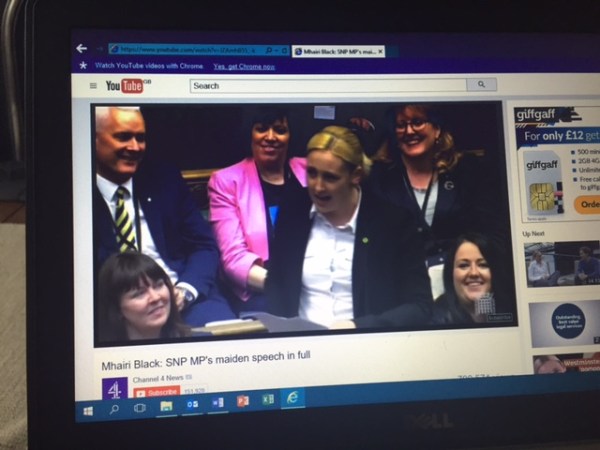
Over the last few days, I’ve been developing a speech writing workshop which has involved trawling through videos on you tube to find a range of public speakers that my group can study.

In trying to get gender and political balance, I’ve had to look particularly hard for footage of women. My search eventually led me to watch some clips of Mhairi Black and I couldn’t help thinking what a great leader she is. So what does she have that makes her stand out? What is it that gives her authority and makes people want to support her?

Well, the first thing is that she commands attention. When she speaks, people listen. She’s given some great performances lately and that makes us want to hear more.

The next thing is that she comes across as standing up for people and raising issues that matter on the ground. The speeches I watched were about pensions and Trident in which she highlights the negative impact of policy decisions on constituents. She really seems to care about the issues and doing the right thing for people.

What she does very cleverly is draw comparisons with things that everyone can relate to. For example, in her speech on pensions, she talked about mobile phone contracts which made the pensions issue that is so real for the WASPI women, something which felt real to everyone listening.

And she’s inclusive. She tries to bring people together by setting out her vision and inviting others to join her by focusing on the issues and transcending political boundaries.

All of this from the youngest Member of Parliament in the House of Commons who also happens to be female and a proud LGBT rights activist. Challenging every stereotype there is around politicians, you can’t help wanting to be just like her making her a fantastic role model for others.

All of these things together, I would argue, make her an excellent example of the authentic leader we hear so much about today. She has a real sense of honesty and integrity that instils confidence.

I think it was Tony Benn who said ‘if you say what you believe and believe what you say’ you can’t go far wrong and this certainly seems to be true in this case and a truth I think all leaders would do well to keep close to their heart.
3minuteleadership.org

Blog at WordPress.com.

Up ↑