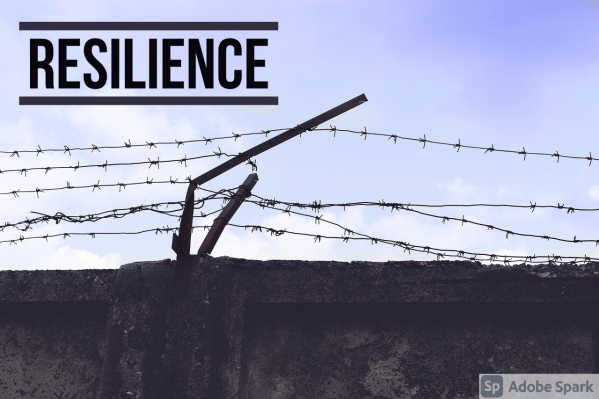

From Fear to Freedom: Unlocking Your True Potential

What if fear of failure is the only thing standing between you and the life you actually want?

How many of us are afraid to put ourselves out there because we don’t want to fail? It’s a real dilemma – we don’t want to try something and look stupid so we can often just play it safe and stay in our lane. But progress and change require something different. It’s true that ‘outside of our comfort zone is where the magic happens’. So how can we build the courage and confidence to try?

In Amazon CEO, Andy Jassey’s top tips for success, he lists ‘don’t be afraid to fail’ as essential for invention. Inventing or re-inventing yourself is as important as anything else. Life has many chapters and we may need to invent ourselves many times. The key to pushing through a fear of failure is resilience and for me, a major part of resilience is learning.

Over the last couple of years, I have been going through my own reinvention with seismic shifts in my personal life leading to an adjustment in priorities. When this transition really hit a crisis point, I felt that my personal brand had fallen flat and I needed to really dig in to redefine my vision and goals.

It pushed me to develop my own consultancy offer and share my ideas with the world which is certainly outside of my comfort zone. There has been lots of trying new things and learning as I go. I’m very much on board with the idea that it is ‘better to ship passion than wait for perfection’ which is hard but I know that over time the approach will develop and whatever I do now, will transform gradually to become the final product.

Brené Brown puts Roosevelte’s ‘Man in the Arena’ quote at the heart of much of her work on vulnerability and I keep this close as I try new things. It basically says that the one who tries will either know the triumph of high achievement or ‘at the worst, if he fails, at least fails while daring greatly’ – the idea of this makes it much easier for me to push through the barriers.

Why are we afraid to fail? For many, failure connects to their self-worth and self-esteem. It’s the nervous system warning you of a threat and we want to avoid the shame and embarrassment of not achieving our goals.

Here are 3 things we can do to overcome the fear and remove barriers to success:

  1. Build a deep sense of self-worth – really work on you and know who you are. Focus on finding stability within yourself and understanding your worth on your own terms, not based on the validation of strangers.
  2. Identify what you are afraid of – consider what it is you want to do and identify what you are afraid of. Consider how likely it is that these things will happen, how others might perceive the ‘failure’ (it is often not the way you think!) and what you can put in place to reduce the risk of things not working out.
  1. Focus on the learning – think through in advance what you can learn if it doesn’t go exactly as you planned. Manage your expectations and consider next steps so that you can build or pivot if you don’t achieve your ideal outcome.

I’ve seen many people miss out on opportunities because they feel the fear and let it dominate their actions so whatever it is you dream of, consider how you can just get started and ‘do the thing!’.

Have you let fear hold you back? Or have you been able to learn from failure? I’d love to hear your story! Drop it in the comments and let’s learn from each other.

Image: Pete Linforth from Pixabay

From the Past to the Present: Leadership Lessons from Charity Adams and the 6888th Batallion

I’m inspired by women in non-traditional roles and WW2 is an interest I inherited from my Dad so I was excited for the new Netflix offer ‘The Six Triple Eight’.  The film tells the story of the first and only all-black unit of the women’s army corps which was led by Charity Adams who was the first African-American woman to become an Officer. With the level of racism and sexism in America in 1945, it seems an impossible feat.

Facing challenges at every step and deliberately set up with an impossible task, Charity had a determination that allowed her to become the highest ranking African-American woman by the end of the war. 

Her trailblazing journey highlights themes of inclusion, resilience, and effective leadership under pressure that are deeply relevant today. Here’s why her legacy continues to inspire and guide modern conversations about diversity and leadership:

1. Breaking Barriers in Leadership

Then: Charity Adams broke racial and gender barriers in a time when opportunities for Black women in leadership roles were virtually nonexistent. She led the “Six Triple Eight” to overcome systemic discrimination, logistical challenges, and the monumental task of sorting millions of pieces of undelivered mail to boost the morale of soldiers during the war.

Now: Her story underscores the importance of representation in leadership. Diverse leaders bring unique perspectives to problem-solving and decision-making, which are essential in today’s globalized and inclusive work environments.

2. Demonstrating Resilience and Excellence

Then: Despite facing racism, sexism, and immense pressure, Adams demanded excellence from herself and her team. She emphasized the value of discipline, collaboration, and purpose in achieving their mission.

Now: In modern workplaces, leaders must navigate complex challenges while fostering resilience in their teams. Adams’ example reminds us that adversity can be overcome through strategic thinking, strong leadership, and a commitment to the mission.

3. Advocating for Equity and Inclusion

Then: Adams proved that Black women could lead effectively in roles traditionally reserved for white men, challenging stereotypes and paving the way for future generations.

Now: Organizations still struggle with inequities in leadership opportunities for women and minority groups. Her example encourages leaders to actively address bias, create inclusive environments, and champion equitable opportunities.

4. The Power of Purpose-Driven Leadership

Then: Adams was not motivated by power or personal gain but by a sense of duty to her country and her team. Her purpose-driven leadership inspired her unit to achieve a seemingly impossible mission.

Now: Purpose-driven leadership resonates deeply in today’s world, where employees and stakeholders value leaders who prioritise social impact, ethical practices, and meaningful change.

5. Legacy as a Catalyst for Change

Then: Charity Adams’ story was not widely celebrated for decades, reflecting how the contributions of marginalized groups can be overlooked. Recent recognition highlights the need to acknowledge diverse histories.

Now: Her legacy serves as a call to action for modern leaders to recognize and amplify under-represented voices, ensuring that everyone has a seat at the table and their contributions are valued.

In today’s era, where diversity and inclusion are business imperatives, Charity Adams’ life offers timeless lessons on how to lead with integrity, resilience, and purpose. Her example encourages us to challenge systemic inequities, inspire others through our actions, and lead boldly in pursuit of a better, more inclusive future.

Charity Adams’ story reminds us that leadership is not about titles or power but about purpose, resilience, and inclusion. Her legacy challenges us to build workplaces and communities where everyone has the opportunity to lead and thrive.

If you’re looking to foster this kind of leadership in your own organisation or develop a culture where inclusion and resilience are at the forefront, I’d love to help. Through leadership development, culture support, and tailored coaching, I work with teams and individuals to inspire meaningful change and unlock their potential. Let’s connect and explore how we can create a better future together.

‘Playing to win’ with Race Across the World

As fans prepare for the launch of ‘Celebrity Race Across the World’ series 2, it seems like the perfect time to consider what the show can teach us about a winning mind set.

Most people are not aware of this but Race Across the World was first broadcast in the 90’s and I was an avid viewer of this late-night TV show (as it was at the time).

Back then, teams were dropped at a random location somewhere in the world and they had to figure out where they were and race back to Trafalgar Square by whatever means possible. There were no pre-arranged job opportunities and no rest breaks in those days. Teams were given some money and they had their passports. After that, they had to get themselves back through their own resourcefulness. [view vintage edition]

There are many key moments that I still remember – a team trying to figure out where in the world they were whilst life was going on, at pace, around them; a team lost in the arctic and being helped by local people; and a team finding themselves in a sticky situation in Turkey. 

In those days, there were no well-being breaks and no crew to help them. Teams were given a crash course in filming documentary and packed off to fend for themselves. 

The show today doesn’t have the same edge but there is still a lot to learn from the contestants about nurturing a winning mindset.

Here are my key takeaways:

  1. Run your own race – the teams spend a lot of time thinking about their place in the race and where the other contestants might be. When they find themselves on the same train or bus, they run through a range of scenarios about the other team. It’s natural and probably helpful to consider what the game plan of your opponents might be but advice from top athletes would be to run your own race and focus on your own performance rather than being distracted by what others might be doing. For more inspiration on this, watch former Olympian, Sally Gunnell – Run your Own Race
  1. Think positive – in series 4, Alfie and Owen race to catch a ferry to the final checkpoint, only to find there are no boats until the next morning and another team right on their tail. With the adrenaline they spent to get there, only to be stopped in their tracks, they were naturally feeling defeated. At this point you hear Alfie say ‘we just need to keep a positive mental headspace’. The race wasn’t over and by staying positive, they were able to plan ahead and ensure they were on the first boat out the next day. For more on this read – The Power of Positivity in Leadership
  1. Keep your cool – after they crossed to the island where they would find the final checkpoint, they were given directions. Part of the instruction was to ‘head north’ which would usually have been straight forward but they had ditched their bags which meant they had no compass. They knew that they could use the sun but they were struggling to think because they were under so much pressure. Thankfully, they were able to clear their heads and take a moment to think so they could be confident in the direction they needed to take which won them first place. To find more calm, read How to Stay Calm Under Pressure

I’m unable to finish a blog about RATW without mentioning Harry Judd and his mum! If you don’t know what I’m referring to, catch up on BBC iPlayer – it’s worth it ❤

The BBC have just shared that radio personality, Scott Mills, is a star of the forthcoming series. In promoting the show, he said that it is by far the most challenging thing both physically and mentally that he has ever done so worth tuning in when the new series begins next week.

Have you ever challenged yourself? Do you have your own tips for resilience? Share them in the comments below. 

Exploring the central principles of resilience through the portrayal of PoW Louis Zamperini in ‘Unbroken’

Resilience is a theme we have probably all been thinking about over the last year as we have been delivering in extreme circumstances with the additional pressures of home schooling and without the relief of being able to see family and friends.

I’ve been thinking about writing a piece on resilience since Covid hit and whilst I have given it a lot of thought, the inspiration to write would not come to me.  Until last night. 

If you follow my blog, you will know that inspiration for my musings often comes from film or television and the source of my motivation today is a result of the film ‘unbroken’. This true story of World War II veteran, Louis Zamperini, provided a raw demonstration of resilience which has moved me to write this piece.

The film shared the true story of a young airman who survived 47 days in the ocean after the bomber he was flying, crash landed and left him and two others stranded at sea. Only two of them survived the ordeal when they were captured by the crew of a Japanese war ship and taken to a prisoner of war camp.

Zamperini had been an Olympic athlete and, having not read the reviews, I had been expecting an uplifting film, focused on his triumphs and achievements.  Instead, this was a film about one man’s courage and his fight to survive through the darkest of days.

This extreme example has enabled me to sum up the central principles of resilience which I have observed in others and have been crystalised for me through the telling of this story. We are lucky that many of us will never have to face such an extreme test but many have over the history of time and here are some fundamental principles that can help us to get through challenging times.

  1. If you can take it, you can make it – Louis had a mantra that was instilled in him by his brother.  This mantra gave him focus and strength to endure through the most difficult of circumstances.  We know that negative self-talk is defeating so at all times, especially those which we find most testing, we need to repeat a positive mantra in order to overcome and keep going.
  2. One day at a time – when you are faced with a major challenge and no end in sight, you need to hunker down and face one day at a time. Louis was in the very worst of conditions, where thinking about how long he might be trapped in those conditions would only make the ordeal impossible to face. Instead, he concentrated on what was immediately in front of him and lived in that exact moment with the central belief that ‘this too will pass’.
  3. Values & purpose – being true to his values and purpose in life, gave Louis strength to face his tormentors.  There was a point where he was offered the chance to escape the horrors of the prison camp but what they were asking him to do went against his values and so he refused.  His character shone through, and whilst it angered the prison commander, it made him truly ‘unbreakable’.  As long as you know what you stand for and keep the reason for your being at the centre of your work, you will have a driving force that keep you going, no matter how difficult you find it sometimes.

Does this article resonate with you? Do you have a story to share about resilience? Let us know in the comments below.

3minuteleadership.org

Image by Pavlofox from Pixabay

Maintaining resilience in a crazy world

Recently, I met up with a friend who had just started a new job.  It was the end of her first week she was so excited about the role and enthusiastic about the work, she had thrown herself into it and was feeling the effects.  She had worked so hard that when Friday night came, she needed her slippers and the sofa not the cocktails and dancing that were planned.  Battling on, she came out and tried to enjoy the evening but after a single glass of wine, she was literally falling asleep at the table.

She felt under the weather for the whole weekend and was annoyed with herself for taking such poor care of her well-being that she couldn’t enjoy her friends and her personal life in a way that would provide balance to her hard work.  She spent a fairly miserable weekend trying to recuperate and promised herself that this wouldn’t be how she continued in this role.  From that day, she made a commitment to herself to look after her well-being and maintain resilience so that she would be able to give equal amounts of energy to work, life and self.

How are we in a situation where people feel burnout just from a normal week at work?  And what can we do about it?

It seems like the world is such a busy place today.  Technology means that we are constantly connected and seem always in demand, in fact, social media makes us want to be needed in this way because we’re constantly craving that dopamine hit that comes with a notification or message or email (Simon Sinek explains this here).   There’s more happening today than there was 20 years ago.  There are more choices about how we spend our time and we have more disposable income it seems so we can enjoy these opportunities.  The compression of time and space makes work more demanding and causes it to creep further and further into our personal lives.  The digital revolution brings communications to the palm of our hands which blurs the line between work and life and, if we’re not careful, it can tip the balance towards more work and less life.

We have to bear in mind though that for many of us, working life will be over a longer period than we envisaged and we also need to look after ourselves in order to sustain our energy and continue our efforts.  How often have you reached Tuesday and felt so tired it’s like you’ve worked a week already?  You might get home on Friday and find you are grumpy and miserable because you have been flat out all week and now too tired to go out or enjoy the weekend the way you would like to.

Building and maintaining resilience means that you can cope, bounce back or recover from the challenges life throws at us.  It’s about having the energy to deal with whatever comes a long and maintain a positive attitude come what may.  It’s being able to adapt quickly and adjust to new or changing circumstances.  Some consider it to be having a ‘toughness’ that allows us to manage in difficult times and come out even stronger.

How  can we build resilience? Here are some ways you can develop and maintain resilience in everyday life:

1)      Take a step back and consider how you are spending your time – do you need to be doing everything you’ve signed yourself up to? Can some things wait or could you delegate tasks and responsibilities to someone else?  It might be hard to let go but you don’t have to do everything yourself and if you try, it will have a negative impact on your well-being so make sure you are being realistic and being as efficient as you can.

2)      Look after yourself – are you making enough time for yourself? If you don’t already, maybe you could meditate, swim, start a yoga class or treat yourself to a regular massage.  If finding time for a class is difficult, or money is tight, there are lots of options on YouTube for yoga (my favourite is Yoga with Adrienne) and meditation (The Honest Guys) or if you fancy a massage but don’t like the price, check out your local college and see if they offer any deals with their students.

3)      Eat well – when we’re busy and tired, it’s very easy to grab a quick bite or fill up on junk and yet we know that eating the right things can make a big difference.  Think about cooking from scratch.  It doesn’t have to take a long time, I find that if I get home late and need something quickly, stir-fry is my saviour.  Another option is batch cook and freeze for those days you want good food fast (find some good batch cooking recipes here).

4)      Practise mindfulness – if like me you have a million things going round in your head, practising mindfulness can be a useful technique (See Bemindful.co.uk ). No matter what worries I have rattling around in my mind, I try and focus on whatever it is I’m doing at that time and save the worry about where I have to be next for later.  Whatever is going on, it helps to focus on the moment you are in.

5)      Have fun – enjoy the lighter things in life. Make sure you have fun times with your friends or have a regular activity that you enjoy, even better perhaps if it’s something you love but are not good at!  The ‘tuneless choir’ is exactly about letting go and enjoying yourself.  Even in work, as Mary Poppins famously said ‘find the fun and snap, the job’s a game!’.


Has your world become more busy? How do you maintain resilience in a crazy world? Share your thoughts in the comments below.


(Photo: Pixabay.com)

Leading a resilient nation for future generations

Last week, I attended an event led by Cardiff Business School which explored how procurement can be used as a tool to tackle poverty. With a background in equalities, I have been promoting this kind of approach for a while as a way to increase social value by ensuring public funds are used as a lever for change so it was exciting to have a whole day talking about how we might do that.

One of the main topics of discussion in Wales right now is the Well-being of Future Generations Act which came into force earlier this year. The Act legislates for sustainable development and sets out seven well-being goals that public bodies have to work towards.

During the day, we discussed the goal for A Resilient Wales and how we might achieve this nationally. The discussion was informed by a presentation on resilience in manufacturing and covered resilience in its broadest sense.  As we explored the challenges, it became obvious to me that there is a fundamental requirement for strong leadership which facilitates the development of resilience in organisations, communities and individuals.

Firstly, to achieve resilience, leaders have to mark it out as a priority. We can all continue delivering in a way that is unsustainable, providing services for the here and now without protecting our resources (human and financial) to continue into the future. Or, we can take a moment to think about what we’re doing and whether we are doing it in the best way, not just for now but for the long term. In order to make this happen, we need our leaders to take a stand and consider how we can stop doing more for less and instead focus on ensuring we can stand up to the pressures of reduced budgets and increased expectations to ensure we maintain economic, social, cultural and environmental well-being.

Once we have committed to achieving resilience, I would argue that the first step in reaching the goal, is building resilience amongst our people. Delivering national well-being requires energy and commitment from our officers in the public service. Richard Branson was in the news not long ago for saying that the customer comes second and staff come first. His rationale being that if you look after your employees, they will look after the customer. This kind of philosophy is one that I believe is in keeping with the objectives of well-being and sustainable development in Wales. If we are thinking about the long term and the impact on future generations, then surely what we need to do is consider the way we are working and address that for the long term so that the people who will deliver national well-being have the energy, passion and drive to do so.


3minuteleadership.org

Blog at WordPress.com.

Up ↑