
From Fear to Freedom: Unlocking Your True Potential

What if fear of failure is the only thing standing between you and the life you actually want?

How many of us are afraid to put ourselves out there because we don’t want to fail? It’s a real dilemma – we don’t want to try something and look stupid so we can often just play it safe and stay in our lane. But progress and change require something different. It’s true that ‘outside of our comfort zone is where the magic happens’. So how can we build the courage and confidence to try?

In Amazon CEO, Andy Jassey’s top tips for success, he lists ‘don’t be afraid to fail’ as essential for invention. Inventing or re-inventing yourself is as important as anything else. Life has many chapters and we may need to invent ourselves many times. The key to pushing through a fear of failure is resilience and for me, a major part of resilience is learning.

Over the last couple of years, I have been going through my own reinvention with seismic shifts in my personal life leading to an adjustment in priorities. When this transition really hit a crisis point, I felt that my personal brand had fallen flat and I needed to really dig in to redefine my vision and goals.

It pushed me to develop my own consultancy offer and share my ideas with the world which is certainly outside of my comfort zone. There has been lots of trying new things and learning as I go. I’m very much on board with the idea that it is ‘better to ship passion than wait for perfection’ which is hard but I know that over time the approach will develop and whatever I do now, will transform gradually to become the final product.

Brené Brown puts Roosevelte’s ‘Man in the Arena’ quote at the heart of much of her work on vulnerability and I keep this close as I try new things. It basically says that the one who tries will either know the triumph of high achievement or ‘at the worst, if he fails, at least fails while daring greatly’ – the idea of this makes it much easier for me to push through the barriers.

Why are we afraid to fail? For many, failure connects to their self-worth and self-esteem. It’s the nervous system warning you of a threat and we want to avoid the shame and embarrassment of not achieving our goals.

Here are 3 things we can do to overcome the fear and remove barriers to success:

  1. Build a deep sense of self-worth – really work on you and know who you are. Focus on finding stability within yourself and understanding your worth on your own terms, not based on the validation of strangers.
  2. Identify what you are afraid of – consider what it is you want to do and identify what you are afraid of. Consider how likely it is that these things will happen, how others might perceive the ‘failure’ (it is often not the way you think!) and what you can put in place to reduce the risk of things not working out.
  1. Focus on the learning – think through in advance what you can learn if it doesn’t go exactly as you planned. Manage your expectations and consider next steps so that you can build or pivot if you don’t achieve your ideal outcome.

I’ve seen many people miss out on opportunities because they feel the fear and let it dominate their actions so whatever it is you dream of, consider how you can just get started and ‘do the thing!’.

Have you let fear hold you back? Or have you been able to learn from failure? I’d love to hear your story! Drop it in the comments and let’s learn from each other.

Image: Pete Linforth from Pixabay

Is Happiness Your Organisation’s Untapped Superpower?

A Chief Executive once said to me ‘I don’t believe in happiness at work’ and I thought ‘that’s a shame because happiness truly can be a superpower’.

On average, people spend 3,515 days at work which is about ⅓ of your life. Imagine if those days are miserable. That creates a lot of stress and unhappiness which impacts everything in your life such as relationships with friends and family. We’ve probably all had those jobs where we have to drag ourselves into work and a day feels like a lifetime in itself.

Now, imagine creating a workplace where people are happy. Just writing about it, I can feel my vibration lift to an energy that allows success and achievement. So, what if true happiness at work is the key to long term success?

The fact is, there are two types of happiness and the first one, hedonic happiness is the type that is very short lived.It’s the kind you get from a party. Like a caffeine or sugar boost, it picks you up and throws you back down fairly quickly. It’s the dopamine hit you get from a new email or a LinkedIn notification. It’s pretty meaningless and about instant gratification. We all feel it because it’s built into modern workplace tools with a constant influx of information.

Eudaemonic happiness is the type we need to strive for in all parts of life and has very high value in the workplace. It’s the kind of happiness that lasts. It’s about satisfaction and fulfilment. It’s the happiness we feel when we are connected to our purpose. It’s the type that sustains and keeps us going.

I’m sure we have all heard the saying ‘find a job you love and you will never have to work a day in your life’. What I say to my teams is ‘I appreciate that work will never be your top choice of how to spend your time when compared with family or a sunny beer garden, but how can I make it the second best place to be?’.

I want to be happy at work and enjoy my time and I want everyone else to have that too. My best workplaces have felt like home and I have been equally happy spending my time there.

The evidence is clear that happy people achieve more. They are positive, optimistic and believe in themselves and each other. Gallup’s 2024 report found that happier employees are up to 17% more productive. 

Happy employees are more likely to be engaged in their work, feel a sense of purpose and are motivated to go the extra mile.  They have better ideas, offer a better service and have high levels of resilience.

What should leaders aim for in boosting happiness at work?

  1. Connect people to purpose – when people understand their role in delivering the vision and are clear about the difference they are making, they will be more satisfied and motivated.
  2. Inspire growth – learning is key to motivation and boosts resilience. Consider how you can provide opportunities for learning and inspiration for your teams.
  3. Create a sense of belonging – that feeling of home that I described comes from a deep sense of inclusion and belonging. Cultivate that and you will be on the path to happiness at work. 

The fact of the matter is that the CEO who didn’t believe in happiness, wasn’t happy himself. It limited performance in the organisation and led to a high turnover of colleagues.  If he had embraced happiness, I think he would have been more comfortable with his own vulnerability and created an environment where colleagues could try new things, laugh in the face of failure and really appreciate success.

Imagine how your workplace could thrive if happiness became a priority. Give it a try and let us know how you get on.

Image: This_is_Engineering from Pixabay

The Meritocracy Myth: Who Really Gets Ahead?

With Trump making a stand against EDI policies in the US, this has been a topic of conversation amongst leaders and HR professionals in the UK. 

At first, I wondered if it would have an impact on this side of the atlantic and it is now clear that it draws out the opposition very quickly.

As I’ve seen for many years, those affected are amongst the first to say that they want to be appointed on merit and who would disagree? The issue is that many don’t recognise how this has been happening for men forever.

Maybe this has changed today but only because the rise in commitment to EDI has ensured that systemic barriers are better understood and removed to level the playing field.

What is meritocracy?

Meritocracy is the idea that an individual’s success should be determined by talent and effort. Those from under-represented groups commonly say that they want to be recruited because they are the best at the job and of course, that should be the case.

However, that view fails to recognise that merit is subjective and can be clouded by economic advantage. If you are looking to recruit a junior accountant, for example, you might have a choice between someone who has demonstrated academic excellence but has had to work in non-related roles to support themselves and/or their family.

The other candidate may have average grades but was connected and wealthy enough to secure an unpaid internship overseas. Without awareness and policies, you are likely to find yourself appointing the candidate with the most relevant skills and experience but that is based on privilege, not merit.

It begs the question – what is merit? Who is deciding? And how can we prevent privilege from clouding to process?

The concept – meritocracy – was first introduced by Michael Young in the 1950’s and originally referred to ‘a critique of a system in which the elites define merit narrowly so as to protect their position at the top of society’. 

A 2021 survey revealed that in the UK, the perception is that hard work and ambition are the most important things for success but in reality, the evidence suggests that the link between merit and success is tenuous.

The research shows that society is far from being meritocratic. In fact, external factors influence individual success from before they are even born. The disadvantage starts early and continues into adulthood. 

How can we create a level playing field?

When I set out to diversify my team, I noticed we were hiring the “usual suspects.” We were offering good jobs in a diverse community, yet few local candidates applied. Why?

Through research and conversations, I realised the talent was there—people with the right skills simply weren’t seeing us as an option.

Here’s what changed:
✅ We reworked job descriptions—not just generic “commitment to EDI” statements, but specific language reflecting the communities we serve.
✅ We rethought merit. When faced with one candidate who had textbook knowledge but no application experience and another with deep lived experience—who was truly more qualified?

Final Thought

Merit isn’t as objective as we like to think. If we take it at face value, we risk reinforcing privilege. But by questioning how we define and measure it, we open doors to real talent.

How do you define merit? Have you seen privilege at play in recruitment or career progression? Let’s start a conversation – share your thoughts in the comments below.

Image by Gerd Altmann from Pixabay

Better every time: U6s coaching & performance

For a while I wasn’t sure if I would ever become a mum. And I really didn’t anticipate that I would become a Sunday morning football mum.

So, as I am standing outside on a crisp and sunny Sunday morning cheering on the under sixes, I am observing all the benefits of playing the sport. In particular, I am noticing how the coaches getting the most out of our young players.

It is making me think about how the focus and techniques of these coaches can apply to coaching for performance in the workplace.

Here are the top tips, I have picked up from watching a group of 5 year olds in the first proper football match:

Positivity – the first thing I noticed is, it’s all really upbeat. The tone, the body language and the spoken communication. It is all very much concentrated on engaging the players and keeping them focused.

Enthusiastic – feedback from the coach tells them how well they’re doing. Im hearing lots of ‘well done’, ‘let’s keep it going’ and ‘you are getting better and better’.

Focused – the communication is focused on what is going to happen and what the coach wants them to do. The instructions are simple and clear.

Expectations – there is clarity of expectations. Stopping when needed and making sure the children have understood what is not negotiable e.g. Shaking hands with the other team at the end of the game.

Praise and recognition – there is lots of individual and team praise. Identifying individuals and telling them when they have done well. And telling the team when they doing well as a group. Lots of ‘well played’, ‘that’s really good’, ‘great tackle’ and so on.

It is a worthwhile reminder of how to lead teams in the workplace. The coaches here are all volunteers and they are doing an amazing job of bringing together lots of lively under sixes to focus on a shared goal. The kids are learning lots of important lessons for life set as how to be resilient and support your team.

So whilst it’s an early and cold start to my Sunday, I am really enjoying the learning that I’m taking from it and thinking how I can bring more of this back to achieve even greater success within my own organisation.

Are you a school mum or dad? Do you and similar learning from your children’s sports? Tell us about it in the comments below.

How Olympic achievements can inspire us to aim high and keep going

After a long wait and a lot of uncertainty, the Olympic games have finally commenced.  For the athletes that have made it, this is their chance to fulfil a lifelong dream.  All the training and sacrifice has brought them to this point where they will be tested against the best in the world. There will be many competitors that are happy just to be there and beat their own personal best whilst there are some medal hopefuls for whom the pressure is great.

For me, the opening ceremony was moving as I thought about the dreams of all these athletes. Timing is critical and with an extra year to wait after the games were postponed in 2020 due to Covid, there must have been some who wondered if they would make it. Indeed, sadly, some have had their hopes dashed as they failed to qualify, found themselves injured or been prevented from travelling as a result of Covid.

One achievement that has shone through in the early days of these games is that of Tom Daley who many of us have been rooting for over the last 20 years.  He was 14 when he went to his first Olympics and we have watched him grow up with Team GB.

Tipped for success from the beginning, the main prize has stayed just out of reach. Securing his second bronze medal in Rio, Tom told journalists he was ‘heartbroken’ and would be at Tokyo for a fourth attempt.  The journalist very insightfully responded that it would make for a better story in the long term.

On Monday, Tom won his first gold medal alongside his diving partner, Matty Lee. Tom’s story confirms what I have always believed:

If you want something badly enough and are willing to work hard for it every day, it will be yours.     

After the games in Rio, Tom kept hold of his dream, focused on training and technique and achieved that long sought after gold medal in Tokyo.  We have seen him deal with many challenges throughout his journey and I certainly am so inspired by the resilience, grit and determination that has led him to this point.

Of course, Tom isn’t the only one celebrating at the games so far and many are hoping that their efforts will inspire others to achieve their own goals, sporting or otherwise. In an interview with the BBC yesterday, another gold medallist, Adam Peaty said:


“If there is one thing you do today, just do one thing better.”

Their achievements may be personal but their legacy is universal.  Each of these athletes have made huge sacrifices to reach the games and their families the same. They all have a unique story but it is ultimately about challenge and achievement.  We can all learn something from their efforts and the questions is… where will your journey take you?

Have you been inspired by our Olympic champions? Have you taken something valuable from watching them compete? Share your thoughts in the comments below.

3minuteleadership.org

Perfecting an 80/20 ‘balance’ that nurtures talent and celebrates success

Recently, I was speaking at an internal session on managing performance and explained why I believe the role of a leader is to help people be the best they can be.

The discussion began when we were asked to identify measures of staff satisfaction and organisational success.  One of the first things that came up was staff retention with many believing this this is a sign of problems.

Now, I accept that if staff start leaving in numbers then it can indicate that there is a problem which needs to be addressed but I asked them to consider a different possibility: perhaps it shows that people are being managed well, developing skills and progressing to the next level.

When asked, I explained to the group that I strongly believe part of my responsibility as a leader is to develop people.  This means that they should grow professionally during their time in a role, gaining new skills and enjoying a boost in confidence.  Ideally, they would then rise through the ranks and feel the satisfaction and fulfilment of working for an organisation that nurtures talent, utilises this appropriately and rewards people for their success.

However, in a small organisation, it can be hard to do this and so it needs to be OK to develop people so that they can move on.  If people move on to better things as a result of what they learnt with me, then I consider that a good outcome for the organisation.  I also find that it means we have champions in the wider world and many of my staff are still working with us in their new roles.

Doing things in this way creates ambassadors who can raise awareness of our work with their new colleagues and partners.


The 80/20 rule

In terms of how I ensure people are able to develop, I believe in an 80/20 rule.  Put simply, this means that individuals should spend 80% of their time doing things they feel they are good at and 20% stretching themselves.

To help me identify their strengths and development areas, I ask staff to complete a personal development plan which allows them to list their skills, achievements and goals.  We then sit down and have a discussion about what they have included and I might make further suggestions about anything I think is missing.  People don’t always see something as a strength or a talent so I might explore certain things with them to highlight any skills I think they have but don’t recognise.

This provides a framework for which they can develop an action plan to push themselves forwards.

 
The theory part

One of the key theories that underpins my leadership style is Dan Pink’s work on motivation which argues that the three things people need to be successful at work is autonomy, mastery and purpose.

The 80/20 rule means that they spend 80% of their time utilising their strengths and working towards mastery.  If their time is spent mostly on things they enjoy and feel they are good at, then they will feel good most of the time and will be doing things that fire them up, satisfy them and allow them to feel confident.

From that place, they can focus on the other 20% which should be about things they either don’t want to do (we all have those things) and things that they want/need to learn to be the best they can be.

The key to success with the 20% is to have a clear action plan which identifies skills and competencies that need to be developed in order to achieve career goals.  This should include steps that will be taken to ensure that individual can push forwards and make tangible progress towards their goals.

In terms of monitoring, I hold individuals to account for completing their actions by making sure progress is discussed on a quarterly basis and then on an annual basis, I ask staff to reflect again and complete a new plan for the year ahead.


Achieving ‘flow’

If you look through the stages, you can see that the method is based on the high performance cycle – Plan, Do, Review and Improve.  In following this process and ensuring the 80/20 ‘balance’, I believe people can be supported to achieve ‘flow’ which, in positive psychology, is:

‘The mental state of operation in which a person performing an activity is fully immersed in a feeling of energized focus, full involvement, and enjoyment in the process of the activity’.

This has to be the state of optimum performance and exactly where we surely would want our teams to be so I challenge you to try a different way and see the difference it makes.


If you can see the value of this approach or have similar methods yourself, share your thoughts in the comments below.

5 things that will add some Strictly sparkle to your line management

It’s that time of year where many of us are tuning our tellies every Saturday night to that family favourite ‘Strictly Come Dancing’.  In our house, we love to settle down for the evening and watch the glitzy spectacle of sequins, heels and hairpieces, enjoying the glamour and fun that draws in viewers from across Britain.

Watching the show, it’s heartening to see clueless, inexperienced individuals become confident and capable dancers.  It’s even better to watch the relationship between mentor and mentee develop as the celebrities see their good faith and hard work pay off.  We literally see contestants blossom and grow as the weeks progress.

With a new baby at home, this has become a Saturday night staple and I’ve been watching not only the weekend shows but also the weekday behind the scenes spin-off programme ‘It Takes Two’.  As a result, I’ve noticed a number of qualities and behaviours that we could all adopt as leaders and managers to get staff performing to the best of their ability.

I’m sure there are many lessons we can take from the show but here are 5 things that will add a little extra sparkle to your line management:

1)      Be enthusiastic and encouraging – from the clips of rehearsals, the interviews on It Takes Two and the filming on the night, you can see that the professional dancer is always super enthusiastic and encouraging which helps to build the celebrity’s confidence and make it a positive experience.

2)      Focus on strengths – the pro-dancer focuses on those things the celebrity can do well and celebrates these things in order to give them a boost which increases their confidence and keeps them motivated.

3)      Help them to improve – the professionals identify areas for improvement, helping the celebrity to sharpen their skills and develop gradually rather than overwhelming them and forcing them to try lots of things they are struggling with.

4)      Allow mentee to shine – the pros look to show the celebrity in their best light and allow them to shine brightly and enjoy their success regardless of what level they are at.

5)      Focus on fun! – they remember that it’s about having fun so despite pushing them to their limits, they encourage their celebrities to enjoy the whole experience and make the most of their time in the competition with many of the celebrities saying they intend to continue dancing long after their time on Strictly ends.


Are you watching the show and have some other ideas to add to this list? Add your thoughts in the comments below.


3minuteleadership.org

Why mistakes and failure are critical for success

This week, I’ve been thinking a lot about how we learn and what we need to have in place to support this process.  Something that has become obvious to me in exploring this idea is that a critical part of learning is allowing space for error. 

It’s something that troubles us all too often.  When we get that major project, we might feel excitement and elation to start off with but that can quickly turn to anxiety and stress as we worry that we might fail or make mistakes.

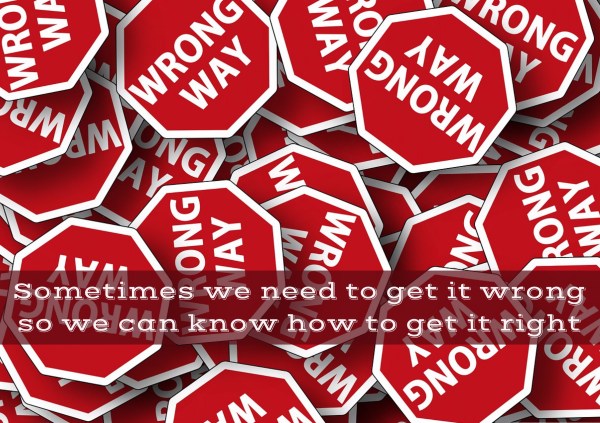
It can be crippling sometimes and really hold people back if they do not feel comfortable or supported to take a chance on something that at best could bring huge dividends but at worst, we might feel it could affect our credibility or damage our reputation.  The thing is though, mistakes and failure are critical for success.  Sometimes, we need to get it wrong so that we can know how to get it right.

If we consider learning and how this takes place, we can see it takes a number of forms.  Firstly, we are all used to learning by being taught.  Most of us have grown up in a classroom being told by a teacher how things are and what we should do.  Secondly, we can go and find information previously through reading books and mostly now by accessing the internet – Google knows everything, right?!!

And Google has often provided me with the answers and ideas I need to make things happen and keep on track.  In today’s world, people love to share and so we can find out the major pitfalls in advance and try to make sure these don’t happen within our project.

Looking in the dictionary for a clear definition of learning it does indeed include these two things but it also includes another major vehicle for learning and that is experience.  The first learning we do as a baby or a toddler is through trial and error.  For example, how do we learn to walk?  By trying it and falling down A LOT of times!!  Eventually, most babies manage to find balance and walk for themselves without falling over although this can take some time and we can still forget sometimes or get it wrong and lose our step.

In terms of the workplace, one of the key things that stuck with me from my study of political philosophy back in the day is taken from John Stuart Mill’s arguments around free speech.  He says that everyone needs to be able to have their say because if they are allowed to express their opinion, then it can be discussed alongside any counter arguments and ultimately, if they are then persuaded they are wrong then the learning is greater.

 “If the opinion is right, they are deprived of the opportunity of exchanging error for truth: if wrong, they lose, what is almost as great a benefit, the clearer perception and livelier impression of truth, produced by its collision with error.”  (On Liberty, John Stuart Mill)

It’s the same for making mistakes.  As children, how many of us were confronted with a naked flame and told not to touch it because it’s hot?  And how many of us touched it anyway because we needed to learn for ourselves?  The learning is greater from touching the flame than being told not to.

There’s a reason we have sayings like ‘we learn from our mistakes’ or ‘you live and learn’.  It’s because we are programmed to learn by doing and we need to do so to fully experience the world and all it has to offer.  Learning in this way means it won’t all go smoothly and we may fall down from time to time but getting comfortable with getting it wrong is absolutely key to success.


Do you have an example of learning through mistakes at work? Are you a Manager or CEO in an organisation that encourages people to try new things even if it might go wrong? Tell us your tory in the comments below.


3minuteleadership.org


Blog at WordPress.com.

Up ↑