What ‘The Handmaid’s Tale’ teaches us about power and engagement

“Now I’m awake to the world.  I was asleep before.  That’s how we let it happen.  When they slaughtered congress, we didn’t wake up.  Then they blamed terrorists and suspended the constitution.  We didn’t wake up then either.  They said it would be temporary.  Nothing changes instantaneously.  In a gradually heating bathtub you’d be boiled to death before you even knew it.”

This monologue sets the scene for an episode of the recent television drama ‘The Handmaid’s Tale’, attempting to explain how the leaders of the Republic of Gilead came to be in power.  It suggests that they gained control by making small changes, bit by bit, until nothing was the same and they had so much hold over everything, there was no choice but to do what they said.

In the story, a religious dictatorship has taken control and its leaders introduce a strict regime within which, women’s rights are removed and a caste system introduced.  One morning, the main character ‘Offred’ has her debit card declined when attempting to buy a coffee.  She later discovers that this is because ‘they changed the law’ and women are no longer allowed to have assets.  Instead, they find that their money and any estate must be handed over to their male next of kin.

We are told that there is a serious problem with infertility in the Republic of Gilead and so fertile women are sent to families with standing in the regime where they find themselves forced to bear children for the family.  When the women are taken by the regime, they lose their identity.  Offred is literally ‘of Fred’ and we see in the programme that when a handmaid is reassigned, their name changes according to the man they belong to.

Children are taken away and second marriages are dissolved.

The dramatization brings to life the famous book by Margaret Atwood which was published in 1985.  Since its release, the book has won a number of awards and is a standard course text for English Literature students across Britain and maybe even further.  What makes the tale so chilling is the knowledge that when Atwood wrote the novel, she committed to only writing things that have actually happened in the world.  It’s quite scary to think that what we see in this show is or has been a reality for some.

The novel tells a cautionary tale of totalitarianism and setting it in Trump’s America makes it scary to watch as it feels conceivable that civilisation could crumble, allowing power to settle in the wrong hands.  As we watch the President’s first year, we see many rising up against a perceived threat to civil liberties and growing unrest makes many fearful for the future.

So how on earth can anyone gain so much power that they can make people live as we see in Gilead?

It begins with the construction of ‘them and us’ using negative for ‘them’ and positive for ‘us’, creating an enemy which people can easily be turned against.  The President’s travel ban is a good example of this as he sought to ‘protect the nation from terrorist attacks by foreign nationals’.  It created unrest across America and uneasiness amongst those ‘foreign nationals’ who live in the US and those who value diversity.  He has also been criticised for comments about other groups such as women (see Trump sexism tracker) and those with disabilities.

Those who agree with these views take strength from such comments and show how easy it is to ‘us’ against ‘them’ as we saw during the election campaign and more recently in Charlottesville.   Of course what these perpetrators don’t realise is in a culture where this kind of power has taken hold, no one is safe.

One of the key techniques in a totalitarian regime is encouraging people to turn each other in when they are not respecting the regime or its leader.  We only have to look to Nazi Germany, communist China and North Korea to see that a central part of retaining power is encouraging people to report those who have done something wrong.  Even a small misdemeanour can lead to death.  Punishing those who have done wrong and rewarding those who turned them over is the perfect way to reinforce the status quo.  An example of this is the so called ‘slut-shaming’ which encourages women to rat each other out and expose others who are then subject to further abuse.

I’m sure it isn’t just me that wants to hold on to my freedom and so the most important thing is to pay attention to what’s going on in the world and not be asleep while things are changing beyond your control.

Have you been watching The Handmaid’s Tale?  Let us know what you think it teaches us about leadership in the comments below.


3minuteleadership.org
 

Why it matters that we finally have a woman playing The Doctor

It’s been a long time coming but many women across Britain have finally realised a dream which I wasn’t sure would ever come true a female lead in the British cult series – Dr Who.

A few years ago, I remember talking to a producer of Dr Who and asked the question ‘when is the Doctor going to be a woman?’. She advised me that it would never happen because the fans didn’t want it and the ratings would fall if that decision was made.

We now get to find out if that is a valid concern or indeed if the change means the series can inspire a whole new audience.

Why does it matter whether we have a female Doctor?

It isn’t just a nice thing to do for women, it really matters that we have female role models who are visible and leading the way. Being able to see women in prominent roles and breaking new ground is an inspiration for girls everywhere. It tells our daughters that anything is possible and they can actually be whatever they want to be.

Role models help to raise aspirations and show girls they can succeed. Whether it’s leadership, media, engineering or something else, we need to see that women can achieve in whatever they choose and this character provides someone for our girls to look up to.

For those girls watching Jodie Whittaker taking on the Daleks, it tells them they can have leading roles, become action heroes and achieve what seems impossible if they want to. We see far too little of girls having adventures so many of us are cheering this turn of events and hope that it marks the beginning of an era where girls can get right in the thick of it too.

Typically, women are seen as not having power so hopefully having a woman play an extraterrestrial Time Lord who zips through time and space to solve problems and battle injustice across the universe will help to change this.

Do women have equal opportunities in the media?

It’s been a big week for women with names and salaries of the BBCs highest paid stars being published in a bid to improve transparency of the public service. Reading the news articles ahead of the release, I was disappointed to see this quote: ‘It’s good to see some women on the list too’. This is the type of attitude that creates inequality in the first place and allows it to continue. It’s shocking to discover that women account for just 1/3 of the list and men exclusively hold the top 12 highest paid roles.

What impact does a lack of female role models have on wider society?

An article published by Forbes explains the need for role models perfectly:

“Seeing few people who look and act like them in industries like science and politics discourages girls from pursuing their interests if those interests are not popular. This robs the world of future talent that has massive potential to feed innovation, create change, and boost the economy”

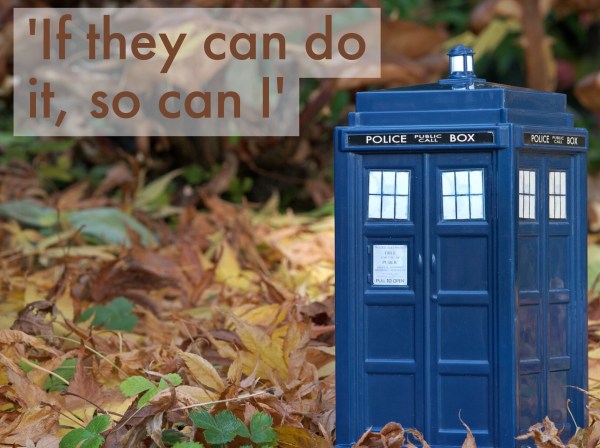
When young women and girls see Jodie Whittaker or other leading lights taking on new challenges and succeeding in the chosen field, they think ‘if they can do it, so can I’. So thank you to the BBC for taking diversity seriously and finally appointing a female Doctor to show our girls they have options.

What can you do to help ensure we have good role models for girls to look up to?

You can be visible – if you have any kind of role that challenges gender stereotypes, do what you can to make it known to others so you can inspire girls coming though.

You can be the change – when you secure a role in an area where women are under-represented, you can help to create a space where women are welcome and judged on their own merits.

You can help others – if you make it to a position of authority or even achieve something that others admire, you can share your story and experiences to help others do the same.

If you have any thoughts about what more needs to happen to promote female role models or have an experience to share with us, please post in the comments below.


3minuteleadership.org
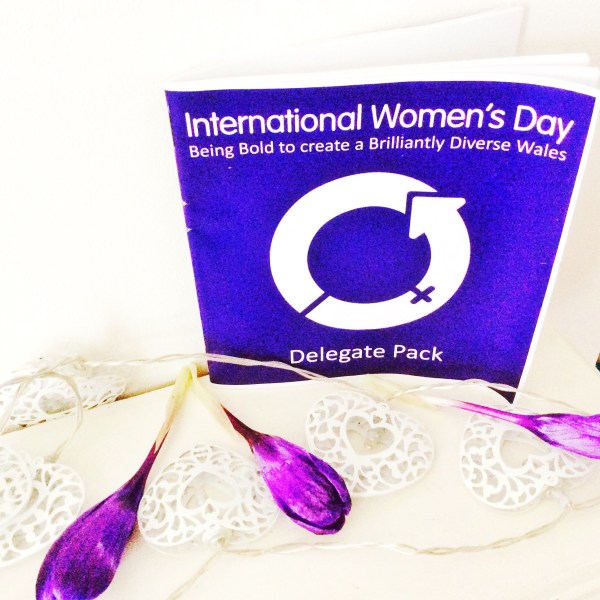
 

Photo credit: Pixabay

Thoughts from top women in Wales on increasing representation in leadership & decision-making

This week, I joined colleagues from across the Civil Service and Local Government in Wales to mark International Women’s Day at the Senedd (Welsh Parliament). An impressive line-up of leading ladies shared their own career journey and experiences to inspire others to follow in their footsteps.

Just a few days earlier, the Assembly Research Service published figures on gender equality. These figures show that slightly fewer women than men are economically active (72.4% compared with 83%) and a higher proportion work part-time (41.3% compared with 12.7%). Of those sectors prioritised for investment by the Welsh Government within their economic strategy, women account for just 32.7% of the workforce.

When we look at our public service leaders, we can see that despite accounting for 72% of Local Government staff,only 18% of Local Authority Chief Executives are female. Of our elected representatives, less than one-third of councillors are female and whilst women account for nearly half of our Assembly Members (41.7%), this has slipped from an admirable 52% during 2005 – 2007.

The Deputy Presiding Officer, Ann Jones AM, welcomed delegates and reminded us that the Welsh Assembly has a history of leading the way on gender equality. Despite this, she noted that everything that we have achieved as women has been achieved because we have been willing to stand together and fight for women’s causes.

The figures above show that there is still a great deal of work to do if we are to achieve gender equality in Wales.

A number of prominent women addressed the audience from the HR Director of DVLA to the Chief Executive of the National Assembly for Wales. Here are some of the things suggested throughout the event that would help to increase the number of women at the top:

1. Appoint a gender champion – change comes from the top and someone needs to take the lead to ensure gender is on the agenda in your organisation. Consider finding someone senior to take on the role of gender champion to push for fair representation of women.

2. Develop a positive intervention – sometimes the pace of change is too slow and we need positive interventions to accelerate progress. In particular, organisations in receipt of public money should be leading the way.

3. Create an inclusive environment – typically, women have a different style and the workplace should encourage everyone to contribute to the best of their ability and in their own way.

4. Pay attention to language – language shapes the world around you. If you are using ‘Chairman’, ‘guys’ (to mean everyone), or ‘he’ (to refer to a person male or female), then just stop. Right now.

5. Job advertisements and interview questions – evidently, boys associate more with verbs and girls with adjectives. Jargon and any language of power possibly put women off so consider getting a specialist to ‘gender lens’ your recruitment processes to make sure you aren’t unintentionally excluding women in this way.

6. Role models – you can’t be what you can’t see. Women need access to inspirational role models who are visible to encourage women to follow in their footsteps. And I don’t mean those women who conform to masculine norms and/or pull the ladder up behind them but those who have managed to succeed whilst staying true to their own identity and maintaining their integrity.

 7. Challenge – if we don’t challenge when we see actions or hear views that disadvantage women or reinforce stereotypes then change will be slow to happen. If you think something is wrong or unhelpful then say so. This will help to raise awareness and hopefully lead to better decisions.
Think I’ve missed something? Share your thoughts in the comments below.

Want to read more articles like this? Subscribe to the blog.


3minuteleadership.org


How Donald is trumping Hillary in the ultimate leadership race

As I sit in the airport lounge waiting to head home from the US, there is yet more analysis of Clinton and Trump being broadcast ahead of the final presidential debate which takes place tonight. The election is a hot topic which has been evident everywhere we have visited on our trip and a regular topic of conversation as we’ve travelled around Massachusetts.
In terms of the analysis, I have been most interested in the discussion around non-verbal communication and what that means for the leadership contest. How these candidates present themselves is probably even more important than the policy positions they are trying to promote. Conversely, women are even more likely to be subject to analysis on these terms, judged not only on what they say but also what they wear and how they come across.

So what can we say about Clinton and Trump from their performance within these debates?

Watching the third and final debate, what struck me first was the way they try to convey power and authority. As I watched them both at their lecterns, it brought to mind a TED talk I saw a while back by Amy Cuddy which explains how the power pose can increase testosterone. What I’ve noticed since then is that men tend to naturally take a bigger position when they speak. They might put their hands on their hips or elbow on the chair next to them so they take up more space. On the other hand, women quite often remain quite small with their hands on their lap and their legs crossed.

Watching the debates, I noticed exactly this.  Trump is already much bigger that Clinton and he builds on this by holding on to either side of the lectern which communicates strength and power. Clinton has her arms in side the lectern and hands together. What I get from her stance is more of a feeling of grounding. She is already smaller and stands steady and confident as she tries to communicate that she is reliable and grounded.

Commentators in the US are saying that Clinton isn’t doing well when it comes to authenticity. Watching her in action, I can see why this is that case. She comes across as a stateswoman – immaculately groomed and well polished with an air of constant calm and serenity. This is next to Trump with his crazy hair and ridiculous facial expressions which makes her look like she is wearing a mask to hide what she truly feels.

She may look presidential but this doesn’t appeal to many voters who have had enough of politicians who they believe tell lies and waste public money. Trump on the other hand isn’t afraid to make outrageous statements and even though he may not always have his facts straight, he shares his views with such passion and conviction, he gets away with it because people are currently seeming to prefer candidates who have no care for political correctness rather than those who toe the line.

From the rise of UKIP in Britain, the shock EU referendum result and now the very real possibility that Trump could become the next President of the United States, it is very clear that people want something different. Fed up with the political establishment telling them what to do and making decisions they don’t agree with, voters are starting to take a stand.

What the outcome will be of this next election, no-one can be quite sure but we do know that the world will be watching on November 8th to see what happens next.

3minuteleadership.org 


You might also be interested in: Authenticity and believing what you say 

But women have babies don’t they?

Last week, the Labour party announced a mentoring scheme for women in the name of Jo Cox MP which aims to support over 600 women leaders who will be able to make a strong contribution to public life.

The announcement made me think about the wide range of programmes in place and to wonder why we have seen a raft of women’s development schemes and still have a significant under-representation of women in leadership roles, even in sectors where women dominate.

Now, I am in favour of this and similar programmes as I know from personal experience that they are extremely valuable in developing self-confidence which women often seem to lack and is vital for putting yourself forward for opportunities and making your voice heard.

For women to be able to discuss the challenges is absolutely necessary in tackling this issue as they realise they are not alone and are able to learn from the experiences of others. Prominent women have begun sharing their own lessons and this can be invaluable. For example, ever since I read Sheryl Sandberg’s ‘Lean In’, I make sure I sit at the table, not at the periphery, and believe that my view is as valid as any other.

When you notice something that makes a difference, it’s important to pass on the message and encourage other women to do the same. For too long, women who have made it to the top have pulled the ladder up behind them and those of us climbing the ladder today have a duty to look back and help others to follow.

My belief is that whilst investment into development initiatives is to be welcomed, there are further commitments organisations can make if the really want to make an impact.

An article on women in British politics declares that ‘women aren’t the problem, the parties are’ and I have to agree that there is an entrenched gender bias which holds women back. It’s true in other organisations too.

Over the last seven years, I have been supporting organisations with gender equality initiatives, talking to a wide range of different groups about the barriers for women. You would be amazed by some of the comments I have heard along the way. A common assumption has been ‘but women have babies don’t they?’ and the most recent justification for women not getting involved in committees was ‘they don’t like driving at night’ (I was pretty stunned too).

It’s positive that I am starting to hear of individuals who commit to ensuring gender balance on recruitment panels or refusing to speak at events if there are no women on the programme. Women and indeed male supporters of our plight need to start refusing to participate unless there is gender balance in order to highlight the issue and show that it is important.

We also need to create an environment that women want to be part of. It was a few years ago that I was watching a debate in the House of Commons which was actually about the under-representation of women in parliament. The debate was playing in the office and a colleague said to me ‘what are you watching? The football?’ because she could hear jeering and cheering in the usual Westminster/football stadium style.

It isn’t enough to state an aspiration to support women and provide another leadership programme. We need to develop cultures which allow women to participate and succeed on their own terms.

We need to see a true commitment to breaking down the barriers for women and ensure change happens at a rate that will make a difference.


3minuteleadership.org

Authenticity and believing what you say

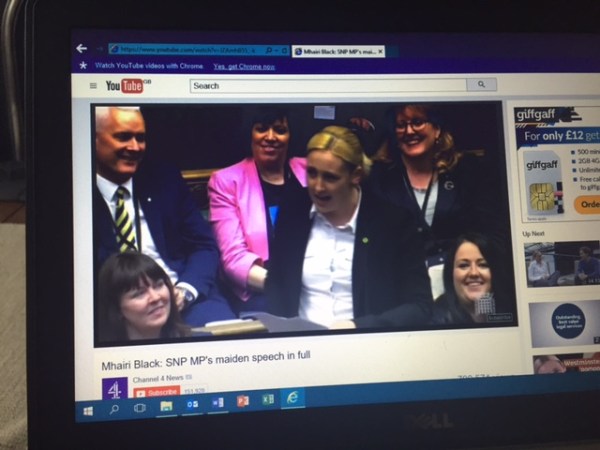
Over the last few days, I’ve been developing a speech writing workshop which has involved trawling through videos on you tube to find a range of public speakers that my group can study.

In trying to get gender and political balance, I’ve had to look particularly hard for footage of women. My search eventually led me to watch some clips of Mhairi Black and I couldn’t help thinking what a great leader she is. So what does she have that makes her stand out? What is it that gives her authority and makes people want to support her?

Well, the first thing is that she commands attention. When she speaks, people listen. She’s given some great performances lately and that makes us want to hear more.

The next thing is that she comes across as standing up for people and raising issues that matter on the ground. The speeches I watched were about pensions and Trident in which she highlights the negative impact of policy decisions on constituents. She really seems to care about the issues and doing the right thing for people.

What she does very cleverly is draw comparisons with things that everyone can relate to. For example, in her speech on pensions, she talked about mobile phone contracts which made the pensions issue that is so real for the WASPI women, something which felt real to everyone listening.

And she’s inclusive. She tries to bring people together by setting out her vision and inviting others to join her by focusing on the issues and transcending political boundaries.

All of this from the youngest Member of Parliament in the House of Commons who also happens to be female and a proud LGBT rights activist. Challenging every stereotype there is around politicians, you can’t help wanting to be just like her making her a fantastic role model for others.

All of these things together, I would argue, make her an excellent example of the authentic leader we hear so much about today. She has a real sense of honesty and integrity that instils confidence.

I think it was Tony Benn who said ‘if you say what you believe and believe what you say’ you can’t go far wrong and this certainly seems to be true in this case and a truth I think all leaders would do well to keep close to their heart.
3minuteleadership.org

Blog at WordPress.com.

Up ↑